
Gemstone Laboratory Testing
Today, gemology is increasingly focused on detecting new treatments that may be applied to lower-grade gemstones to artificially enhance their appearance. As treatments evolve, so too must the methods used to identify them.
There are numerous variables that must be carefully analyzed to verify the quality and authenticity of each gemstone. While advanced technology has significantly improved the speed and precision of testing, developing the expertise of a skilled gemologist still requires years of experience and significant investment.
The Natural Emerald Company works with a network of reputable gemological laboratories worldwide. It is essential to rely on well-established and trusted labs, as the market also includes unreliable or fraudulent entities that may issue inaccurate reports. Understanding a lab’s credibility is key when evaluating gemstone certification.
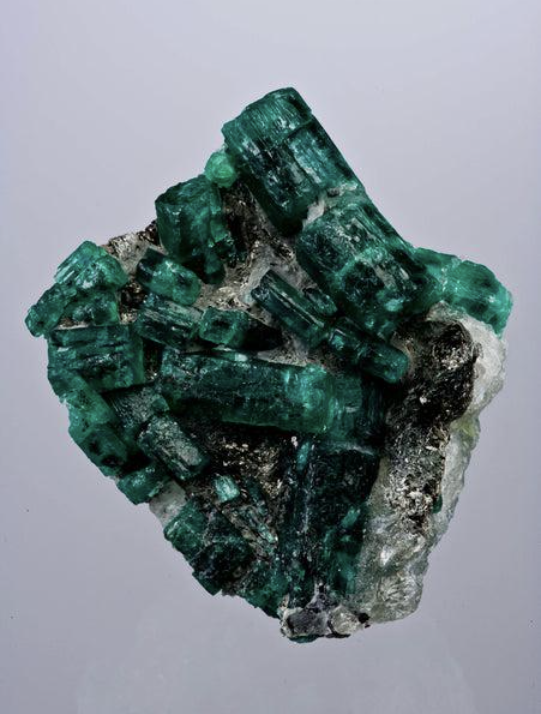
Identification Processes
The identification and characterization of gemstones are based on several important gemological and mineralogical criteria:
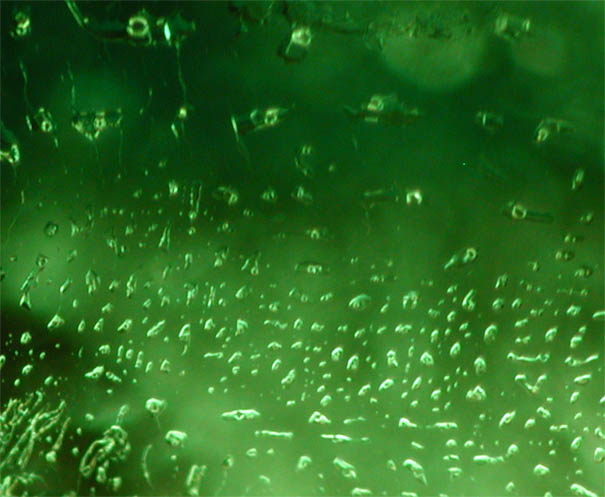
Inclusion Features
These refer to internal characteristics such as cavity fillings, growth patterns, and other visible features within a gemstone. Many inclusions can be observed using a microscope, while more advanced instruments may be required for deeper analysis.
Chemical Fingerprinting
This involves analyzing the major, minor, and trace elements that make up a gemstone. Even tiny amounts of trace elements can influence a gem’s color and origin.
Spectral Fingerprinting
This technique examines how a gemstone interacts with different wavelengths of light, including ultraviolet, visible, and near-infrared. It helps determine the gemstone type, origin, and whether any treatments have been applied.
While traditional tools like microscopes, spectroscopes, and refractometers remain useful, they are often insufficient for identifying today’s advanced synthetic or treated gemstones. As a result, modern laboratories rely on sophisticated scientific instruments for accurate analysis.
Non-Destructive Testing Methods
Preserving the integrity of a gemstone during testing is essential. Emeralds, in particular, can be delicate and highly valuable, making non-destructive testing methods critical.
Most modern testing techniques use light-based analysis, which allows gemologists to gather detailed information without causing any damage. These methods involve directing different types of light onto the gemstone and measuring how the light is absorbed, transmitted, or reflected.
By analyzing these interactions, experts can uncover key details about the gemstone’s physical and chemical properties. Combining the results from multiple tests provides a comprehensive understanding of the gemstone’s identity and formation history.
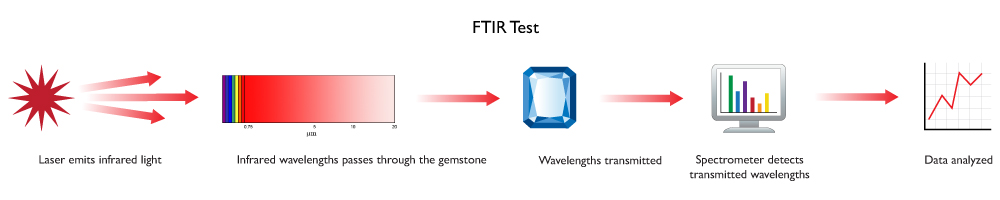
Fourier Transform Infrared Spectroscopy (FTIR)
Fourier Transform Infrared (FTIR) spectroscopy measures how infrared light interacts with a gemstone. The resulting spectrum acts as a molecular “fingerprint,” revealing the internal composition of the material.
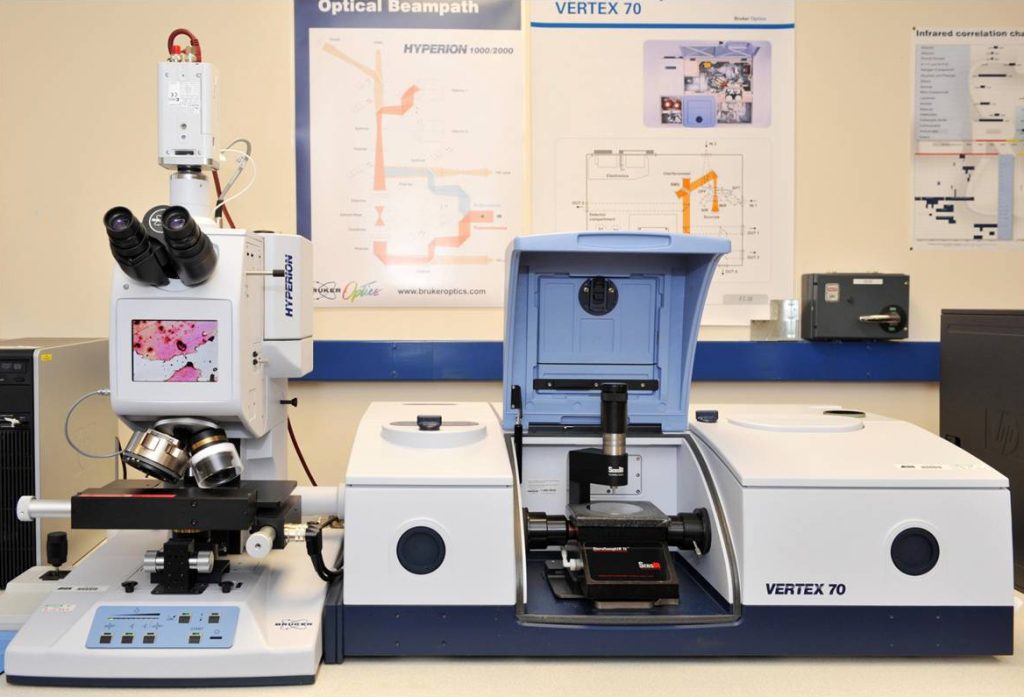
This method is highly effective for:
- Identifying substances used in gemstone treatments, such as oils or resins in fracture-filled emeralds
- Distinguishing between natural and synthetic gemstones
- Detecting heat treatments that alter a gemstone’s appearance
Because each material produces a unique infrared signature, FTIR is a powerful and widely used tool in gemological research and analysis.
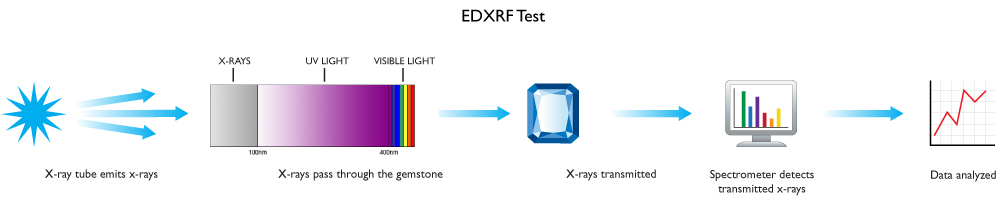
Energy Dispersive X-Ray Fluorescence (EDXRF)
Energy Dispersive X-Ray Fluorescence (EDXRF) is used to determine the chemical composition of a gemstone. When exposed to high-energy X-rays, the gemstone emits secondary X-rays that are characteristic of its elemental makeup.
This technique is particularly valuable for:
- Identifying the chemical elements present in a gemstone
- Distinguishing between natural and synthetic emeralds
- Analyzing trace elements to help determine geographic origin
EDXRF is widely used not only in gemology but also in fields such as geology, archaeology, and forensic science due to its precision and reliability.
Final Thoughts
Understanding Gemstone Laboratory Testing methods can greatly enhance your confidence when making a purchase. By relying on advanced scientific analysis and reputable laboratories, buyers can ensure the authenticity and quality of their gemstones.
Learning about these processes empowers you to make informed decisions and select gemstones that offer both beauty and genuine value.