
The cat’s-eye effect in gemstones
Some gemstones seem to come alive when moved beneath a light. The cat’s-eye effect in gemstones is a fascinating optical phenomenon in which a bright line appears across the surface and slides from side to side as the gemstone or light source moves. This remarkable effect gets its name from its resemblance to the narrow pupil of a cat.
In gemology, the phenomenon is known as chatoyancy. It is most famously associated with chrysoberyl, although several other gemstones can also display it.
The effect develops when light interacts with numerous parallel internal features within a gemstone. When the material is correctly oriented and cut, these tiny structures work together to produce a concentrated band of reflected light.
What is the cat’s-eye effect?
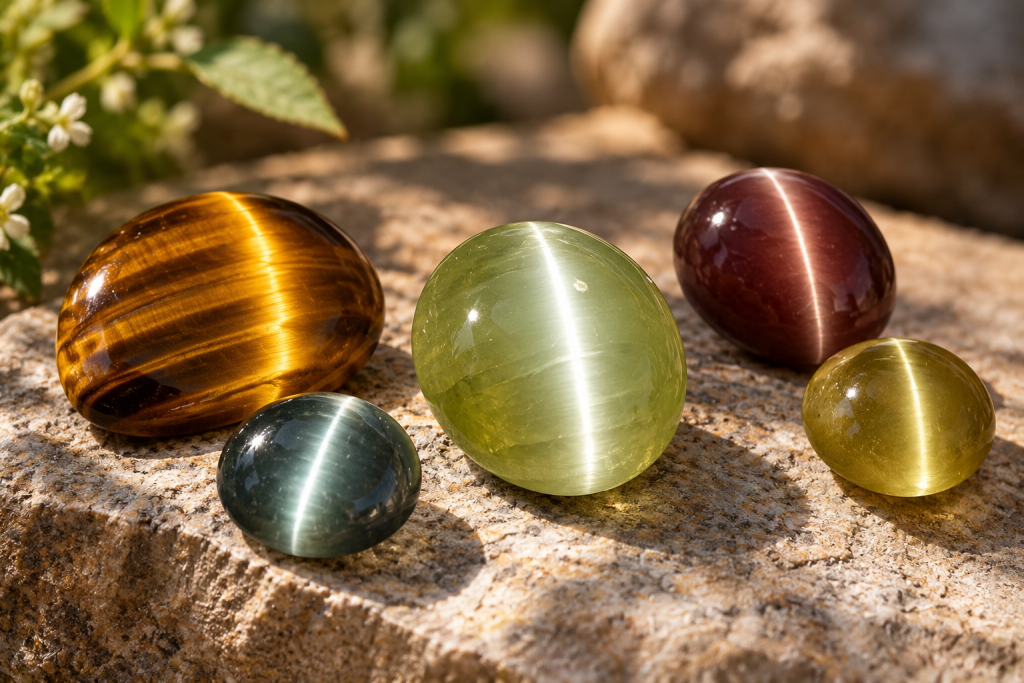
Chatoyancy is an optical phenomenon in which a narrow band of reflected light appears across the surface of a gemstone.
The effect is normally displayed in a cabochon, a gemstone cut with a smooth, rounded surface rather than flat facets.
When the gemstone is moved beneath a concentrated light source, the bright band appears to travel across its surface. The internal features producing the reflection do not actually move. Instead, the angle at which light reaches the observer changes as the stone or light moves.
This creates the distinctive appearance of an eye opening, closing, or moving across the gemstone.
How can you visually identify the cat’s-eye effect?
The best way to recognize chatoyancy is to examine a cabochon-cut gemstone under a single concentrated light source.
Hold the stone face-up and slowly tilt it from side to side. Look for one bright, narrow band of light crossing the gemstone.
A clearly displayed cat’s-eye effect generally has these visual characteristics:
- a single bright line extending across the cabochon
- a line that contrasts with the surrounding body color
- movement of the eye as the gemstone or light source moves
- a band that becomes sharper under concentrated lighting
- an effect that appears to float across the curved surface rather than being physically drawn or fixed within it
Direct sunlight, a small flashlight, or another focused light source can make the eye much easier to observe.
Under broad, diffused lighting, the band may become wider, weaker, or less distinct. This is why a cat’s-eye gemstone is better evaluated in motion than from a single photograph.
What causes chatoyancy?
Chatoyancy develops when a gemstone contains large numbers of fine, parallel internal features.
Depending on the gemstone, these may include needle-like inclusions, fibers, tubes, channels, or other elongated structures.
When light reaches these aligned features, their reflections become concentrated into a narrow band. The gemstone must also be correctly oriented during cutting so that this reflected band appears across the top of the finished cabochon.
The exact internal structures responsible for chatoyancy are not identical in every gemstone species, even though the resulting eye can look similar.
Why are cat’s-eye gemstones cut as cabochons?
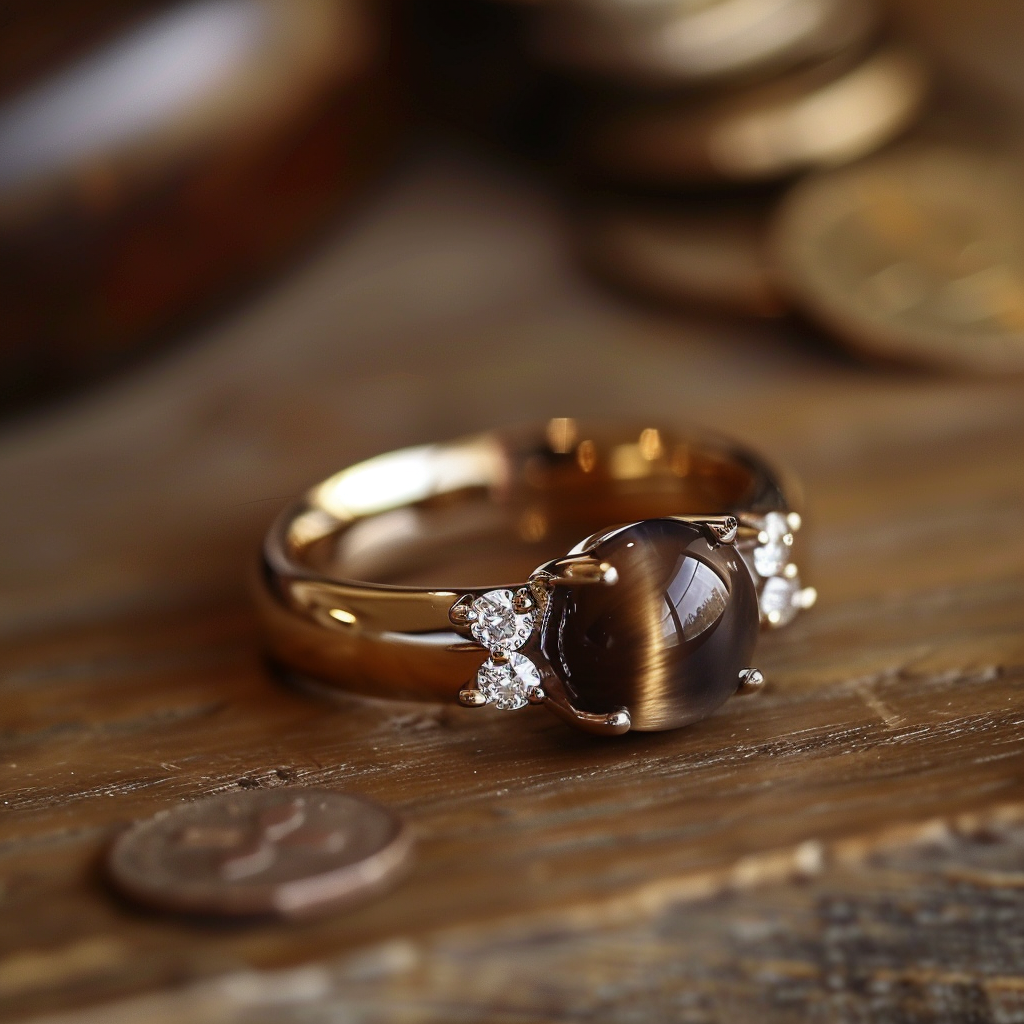
The curved surface of a cabochon helps concentrate reflected light into the characteristic eye.
Orientation is equally important. A cutter must examine the direction of the parallel internal features before deciding how to position the stone.
When properly oriented, the finished gemstone can display a sharp and well-positioned eye. Poor orientation may produce a weak, broken, off-center, or barely visible band.
Cutting therefore reveals the phenomenon but does not create the internal structures responsible for it.
What does the term “cat’s-eye” mean in the gemstone trade?
There is an important naming convention to understand.
When the standalone term “cat’s-eye” is used in the gemstone trade without the name of another gemstone, it traditionally refers to cat’s-eye chrysoberyl.
When chatoyancy occurs in another gemstone, the gemstone name should be stated. For example:
- cat’s-eye sapphire
- cat’s-eye ruby
- cat’s-eye emerald
- cat’s-eye aquamarine
- cat’s-eye tourmaline
- cat’s-eye apatite
- cat’s-eye garnet
- cat’s-eye diopside
This distinction prevents confusion because many different gemstones can display chatoyancy, but chrysoberyl has the strongest traditional association with the standalone name “cat’s-eye.”
Which gemstones can display the cat’s-eye effect?
Chatoyancy has been documented in a variety of gemstone materials. Important examples include:
- chrysoberyl
- alexandrite
- sapphire
- ruby
- emerald
- aquamarine
- other beryl varieties
- tourmaline
- apatite
- garnet, including almandine
- diopside
The frequency and quality of the phenomenon vary considerably between gemstone types. Chrysoberyl is the classic example, while in some other gemstones the effect is considerably less common.
Not every specimen of these gemstones will display chatoyancy. Suitable parallel internal structures, correct orientation, and appropriate cutting are required for the eye to become visible.
Cat’s-eye chrysoberyl
Chrysoberyl is the gemstone most strongly associated with chatoyancy and can produce some of the sharpest and most attractive cat’s-eye effects.
Fine examples display a distinct band that moves smoothly across the cabochon as the stone is tilted.
Some cat’s-eye chrysoberyl also displays the celebrated “milk-and-honey” effect. Under appropriate lighting, one side of the eye can appear lighter while the opposite side appears darker. When the light or gemstone moves, the relationship can change.
The combination of an attractive body color, sharp eye, strong movement, and good contrast can create a particularly striking gemstone.
Cat’s-eye alexandrite
Alexandrite is the color-changing variety of chrysoberyl, and rare material can display chatoyancy as well as color change.
A cat’s-eye alexandrite can therefore show two distinct phenomena: a moving eye produced by reflected light and a change in apparent body color under different types of illumination.
The quality of these two effects varies between individual stones. A strong cat’s-eye does not necessarily guarantee a strong color change, and vice versa.
Cat’s-eye sapphire
Sapphire can display chatoyancy when appropriately oriented internal inclusions produce a single concentrated band of reflected light.
Because sapphire can also display asterism, it is useful to distinguish the two effects visually.
Cat’s-eye sapphire shows one prominent moving band. Star sapphire shows multiple intersecting bands forming a star.
Cat’s-eye sapphires can occur in different colors, reflecting the broad color range of sapphire itself.
Cat’s-eye ruby
Ruby, the red variety of corundum, can also display chatoyancy.
When suitable internal features are aligned in a way that produces one dominant reflected band, a cat’s-eye appearance can become visible in a properly oriented cabochon.
Ruby is particularly well known for star stones, but cat’s-eye ruby demonstrates how different arrangements of internal features can produce a different optical result within the same mineral family.
Cat’s-eye emerald
Chatoyancy can occur in emerald, although it is uncommon.
Emerald is the green variety of beryl and frequently contains a complex range of inclusions and growth features. In unusual material, elongated internal structures can be sufficiently aligned to produce a concentrated band of light.
When correctly cut as a cabochon, the resulting eye moves across the emerald’s green body color as the gemstone is tilted.
Cat’s-eye aquamarine and other beryls
Aquamarine is another member of the beryl family capable of displaying chatoyancy.
Although transparent aquamarine is usually faceted, material containing suitable parallel internal structures may instead be fashioned as a cabochon to reveal a cat’s-eye effect.
Chatoyancy can also occur in other beryl material when the appropriate internal structures are present.
These examples demonstrate that the phenomenon is determined by internal structure and orientation rather than simply by the gemstone’s color.
Cat’s-eye tourmaline
Tourmaline is particularly suited to developing chatoyancy because its crystals can contain elongated growth tubes and other parallel internal features.
When these features are sufficiently numerous and correctly oriented, they can create a distinct moving eye.
Chatoyant tourmaline occurs in different colors, including green material. When the gemstone is described commercially, the variety or color designation should accompany “cat’s-eye” where appropriate rather than calling the stone simply a cat’s-eye.
Cat’s-eye apatite
Apatite can also display chatoyancy.
Material containing appropriately oriented parallel structures can produce a distinct band of reflected light when fashioned as a cabochon.
Apatite occurs in several colors, so the appearance of the eye can vary considerably depending on the body color and transparency of the individual gemstone.
Because apatite is relatively soft compared with many popular jewelry gemstones, appropriate care is important when it is used in jewelry.
Cat’s-eye garnet
Some garnets can display chatoyancy, including examples of almandine.
When suitably oriented inclusions occur within the material, a moving band can become visible across a cabochon.
Because garnet represents a group of related mineral species rather than one single gemstone variety, the exact appearance and internal features associated with the phenomenon can vary.
Some garnets can also display asterism, depending on the arrangement of their internal structures.
Cat’s-eye diopside
Diopside is another gemstone capable of displaying chatoyancy.
When suitable oriented features are present and the gemstone is correctly fashioned as a cabochon, a moving eye can appear across its surface.
Diopside can also display asterism in some material, again demonstrating how the arrangement and orientation of internal features influence the optical phenomenon that becomes visible.
What makes a good cat’s-eye effect?
Not every chatoyant gemstone displays an equally strong eye.
A visually attractive example generally has a distinct and relatively narrow band that extends continuously across the cabochon. The eye should be positioned attractively and move smoothly as the gemstone is tilted.
Strong contrast between the eye and body color can make the phenomenon easier to appreciate.
The gemstone itself remains important as well. Body color, transparency, proportions, surface quality, and overall cutting all contribute to its appearance.
Cat’s-eye effect versus star effect
Chatoyancy and asterism are related optical phenomena because both can result from light interacting with directionally arranged internal features.
Their visual appearance, however, is easy to distinguish.
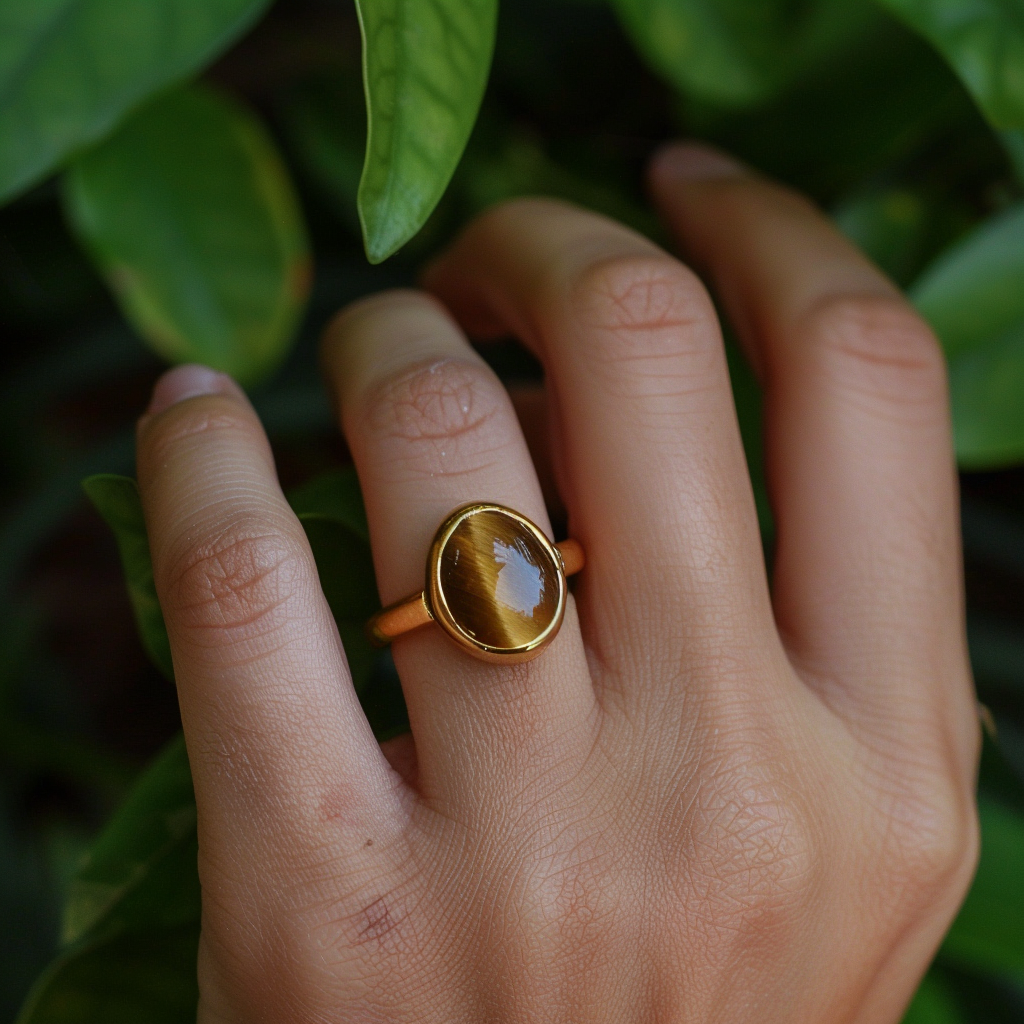
A cat’s-eye gemstone displays a single prominent band of reflected light.
A star gemstone displays multiple intersecting bands that form a four-, six-, twelve-, or occasionally another type of star.
Both are generally best displayed in cabochon-cut gemstones and become easier to observe under concentrated lighting.
Can synthetic materials display a cat’s-eye effect?
The presence of chatoyancy alone should not be considered proof that a gemstone is natural.
Synthetic gemstones and manufactured materials can also display cat’s-eye appearances, including effects intentionally produced to resemble natural chatoyant stones.
Gemologists therefore consider the identity and origin of the gemstone separately from the presence of the optical phenomenon.
Internal features, growth structures, physical properties, chemical composition, and laboratory testing where necessary can help determine whether a gemstone is natural, synthetic, or an imitation.
Does the cat’s-eye effect increase value?
A strong and attractive cat’s-eye effect can contribute to the beauty, rarity, and collector interest of a gemstone, but chatoyancy alone does not determine its value.
The quality of the eye itself is important. A sharp, continuous, well-centered eye with strong contrast and smooth movement is generally more visually desirable than a weak or poorly positioned effect.
However, other characteristics must also be considered, including the gemstone species, body color, transparency, size, cut, treatment status, natural or synthetic origin, durability, rarity, and overall quality.
A fine cat’s-eye effect should therefore be viewed as one important characteristic of the gemstone rather than an automatic indication of high value.
A remarkable interaction between gemstone and light
Chatoyancy demonstrates how features that are microscopic and hidden within a gemstone can become its most noticeable visual characteristic.
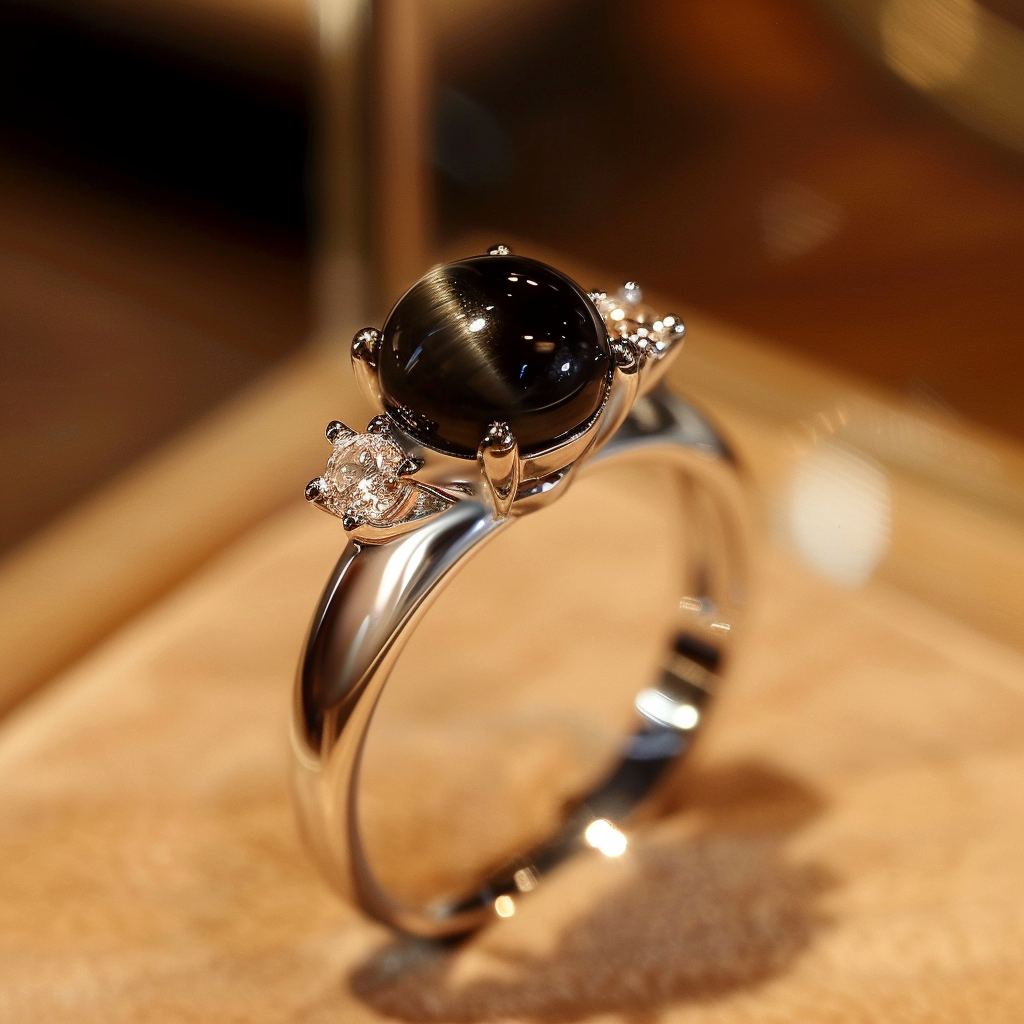
Thousands of tiny parallel structures can interact with light as a single optical system. When the material is correctly oriented and shaped into a cabochon, their combined reflections create a bright line that appears to move across the gemstone.
Chrysoberyl provides the classic example and is the gemstone traditionally meant when “cat’s-eye” is used alone. Sapphire, ruby, emerald, aquamarine, tourmaline, apatite, garnet, diopside, and other suitable materials show how the same general phenomenon can appear in different mineral environments.
The next time you examine a cat’s-eye gemstone, place it beneath a concentrated light and move it slowly. The bright eye that seems to follow the light is the visible expression of internal structure, careful cutting, and optics working together.