
Why Emeralds Have Their Own Cut
Why do emeralds have their own cut? The emerald cut, a rectangular step cut with cropped corners, developed around emerald’s own traits: the cropped corners protect a stone that is often included and prone to chipping, the simple parallel facets are gentle on fractured rough and fit its elongated crystals, and the broad, flat facets work like windows that show body color, which matters most in emerald. It is still the shape to start with when you want color displayed clearly, though other shapes suit other rough and other tastes.
What Is the Emerald Cut?
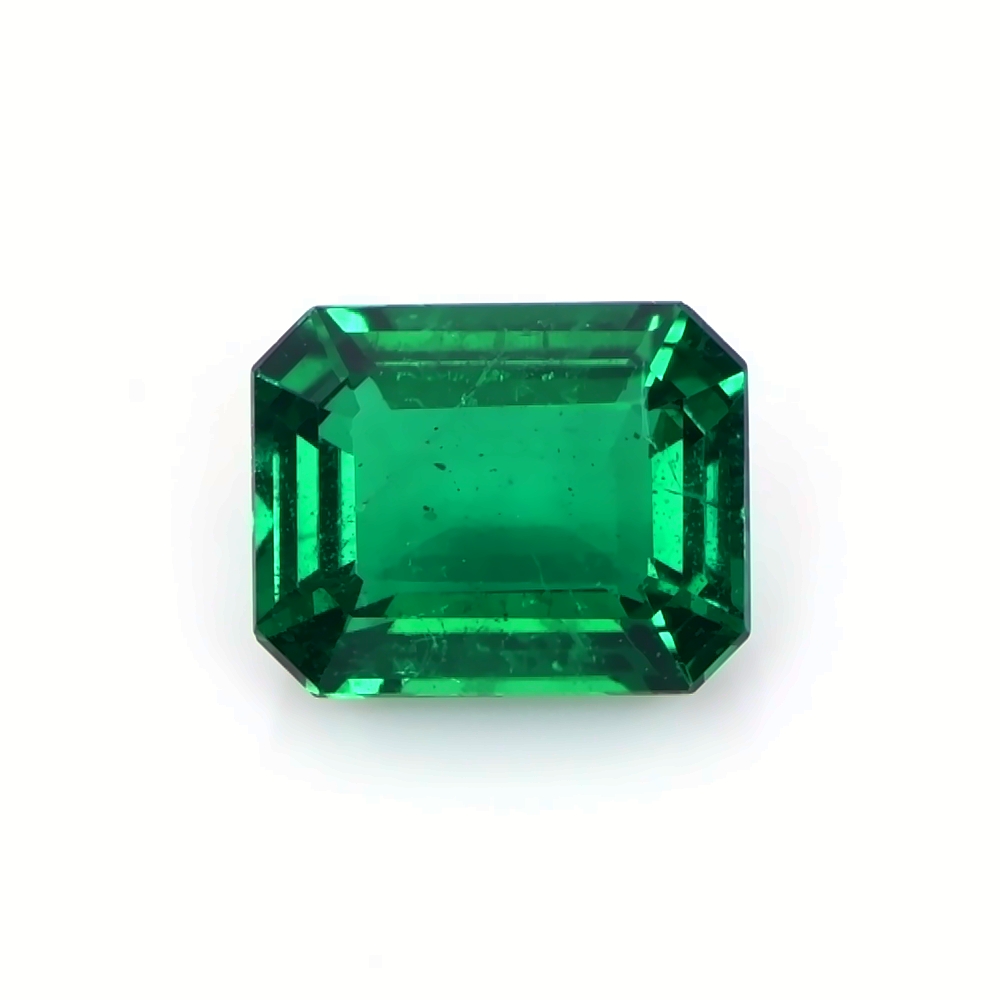
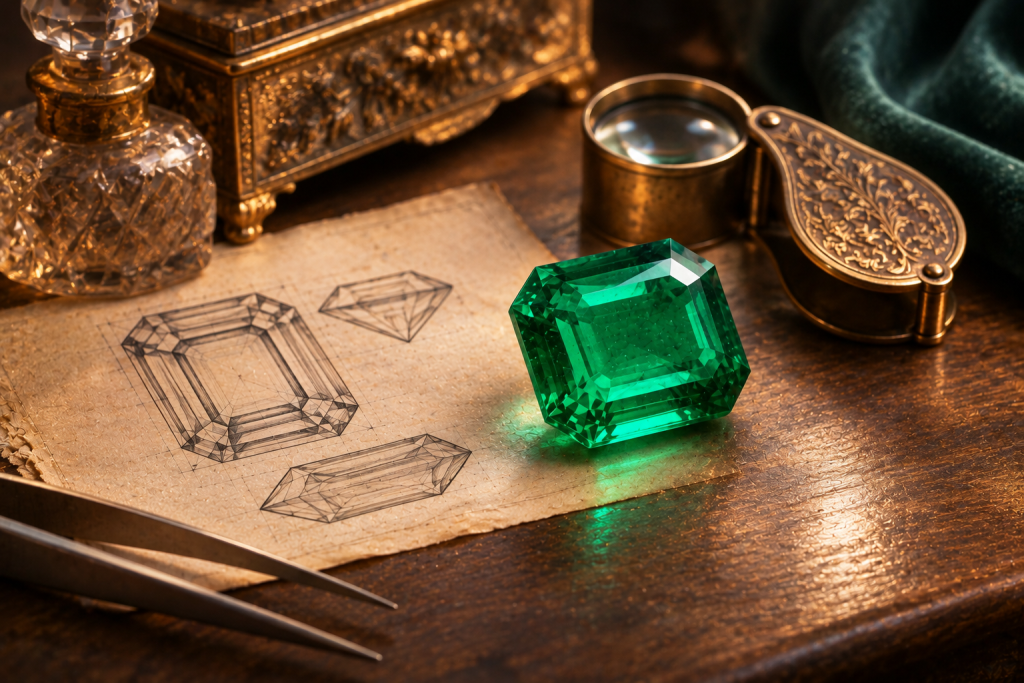
The emerald cut is a type of step cut. Instead of the triangular and kite-shaped facets of a brilliant cut, it uses long, rectangular facets arranged in parallel rows, like steps, on both the crown and pavilion. Its outline is usually rectangular or square, with the corners cut off at an angle.
The result is a calm, architectural look. Rather than sparkling with many small flashes, an emerald-cut stone shows broad flashes of light and dark as it moves. Many people describe this as a “hall of mirrors” effect.
Why the Shape Suits Emerald
Protecting a More Vulnerable Gem
Emerald is a variety of beryl and rates about 7.5 to 8 on the Mohs hardness scale, which is reasonably hard. However, most emeralds contain inclusions and fractures, and the stone can be more prone to chipping than its hardness alone suggests.
Sharp corners are vulnerable points in any gem. By cropping the corners, the emerald cut removes those weak spots, reducing the risk of chipping during cutting, setting, and wear. This practical benefit is one of the main reasons the cut became associated with emerald.
Reducing Stress During Cutting
Cutting and polishing put mechanical stress on a gemstone. With heavily included material, aggressive cutting can cause fractures to spread. The simple, regular facet pattern of a step cut can be gentler on the rough and easier to control.
Following the Natural Crystal Shape
Emerald crystals typically grow as six-sided, elongated prisms. A rectangular step cut often fits this shape efficiently, allowing the cutter to preserve weight while producing a well-proportioned finished gem.
A Cut That Puts Color First
Color is generally the most important value factor for emerald. The emerald cut is excellent at showing it.
Broad Windows of Color
The large table and wide, flat step facets act like windows into the stone, displaying its body color clearly and evenly. Brilliant cuts break light into many small reflections, which can be lovely, but which can also distract from color in a gem where color matters most.
Orientation and Pleochroism
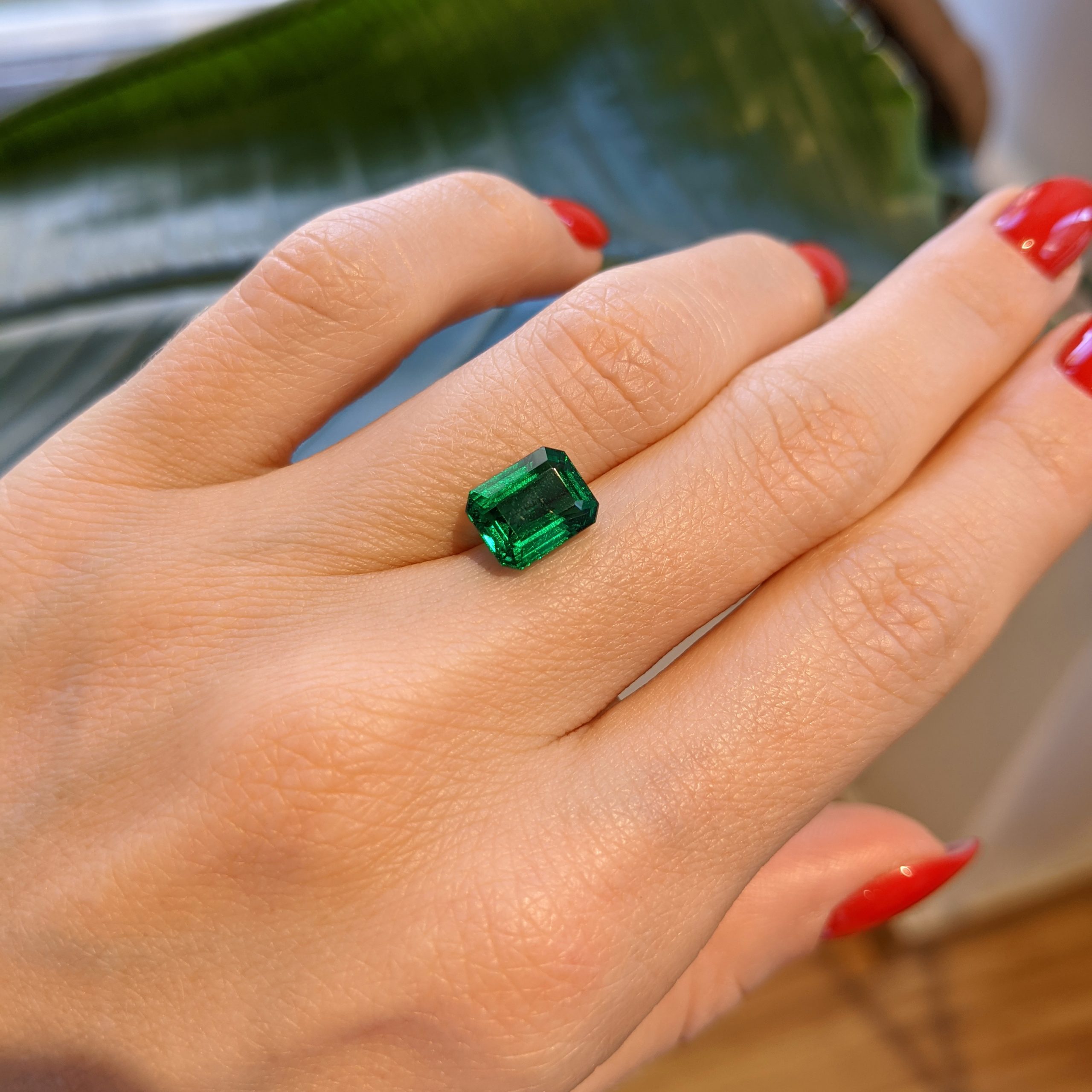
Emerald is pleochroic, appearing slightly bluish green in one direction and yellowish green in another. Cutters orient the rough to place the most attractive color face-up. With long, prism-shaped crystals, they often have to balance the best color direction against how much weight a given orientation will keep, and the rectangular step cut gives them flexibility to do both.
For how that color then shifts under different lighting, see How Light Changes the Appearance of an Emerald.
What About Inclusions?
Emeralds almost always contain inclusions, and step cuts are sometimes called unforgiving because their open facets make inclusions easier to see. In emerald that is part of the stone’s accepted character, and most emeralds are also clarity enhanced, which should be disclosed. We cover what the inclusions are and how enhancement works in Inside an Emerald.
Common Emerald Cut Variations
Not every emerald-cut stone is identical. Variations include:
- Length-to-width ratio. Some are nearly square; others are long and slender.
- Number of steps. More rows of facets can add brightness; fewer can create a bolder, more graphic look.
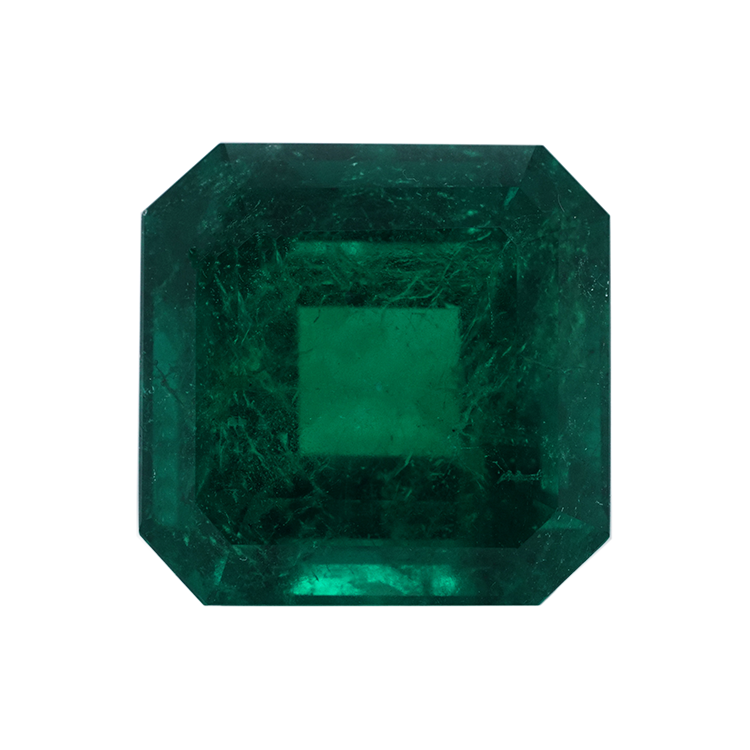
- Square step cuts, sometimes called Asscher-style when they have a higher crown and deeply cropped corners.
Cuts Compared in Our Inventory
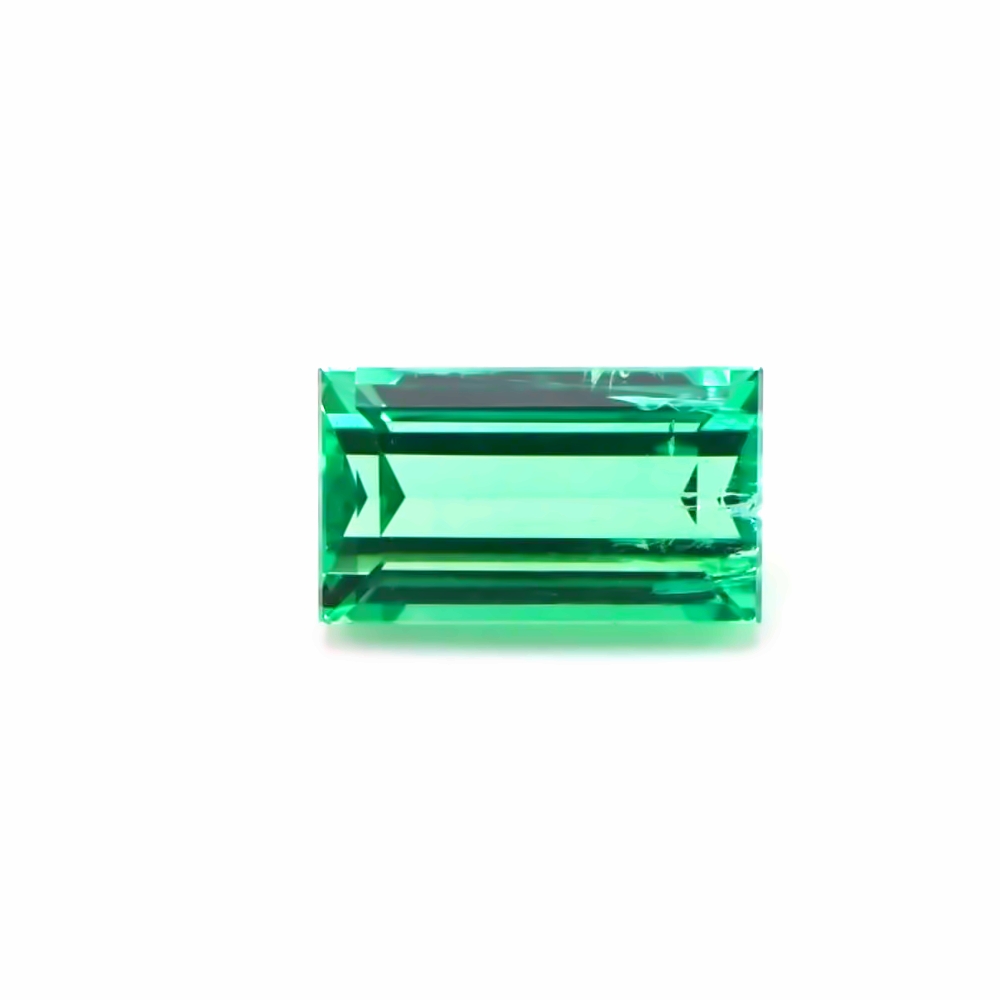
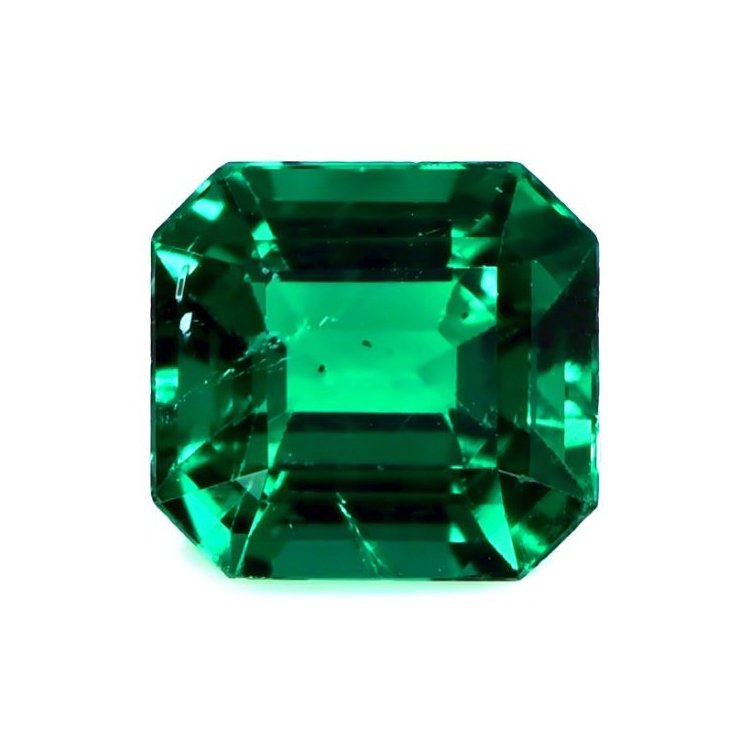
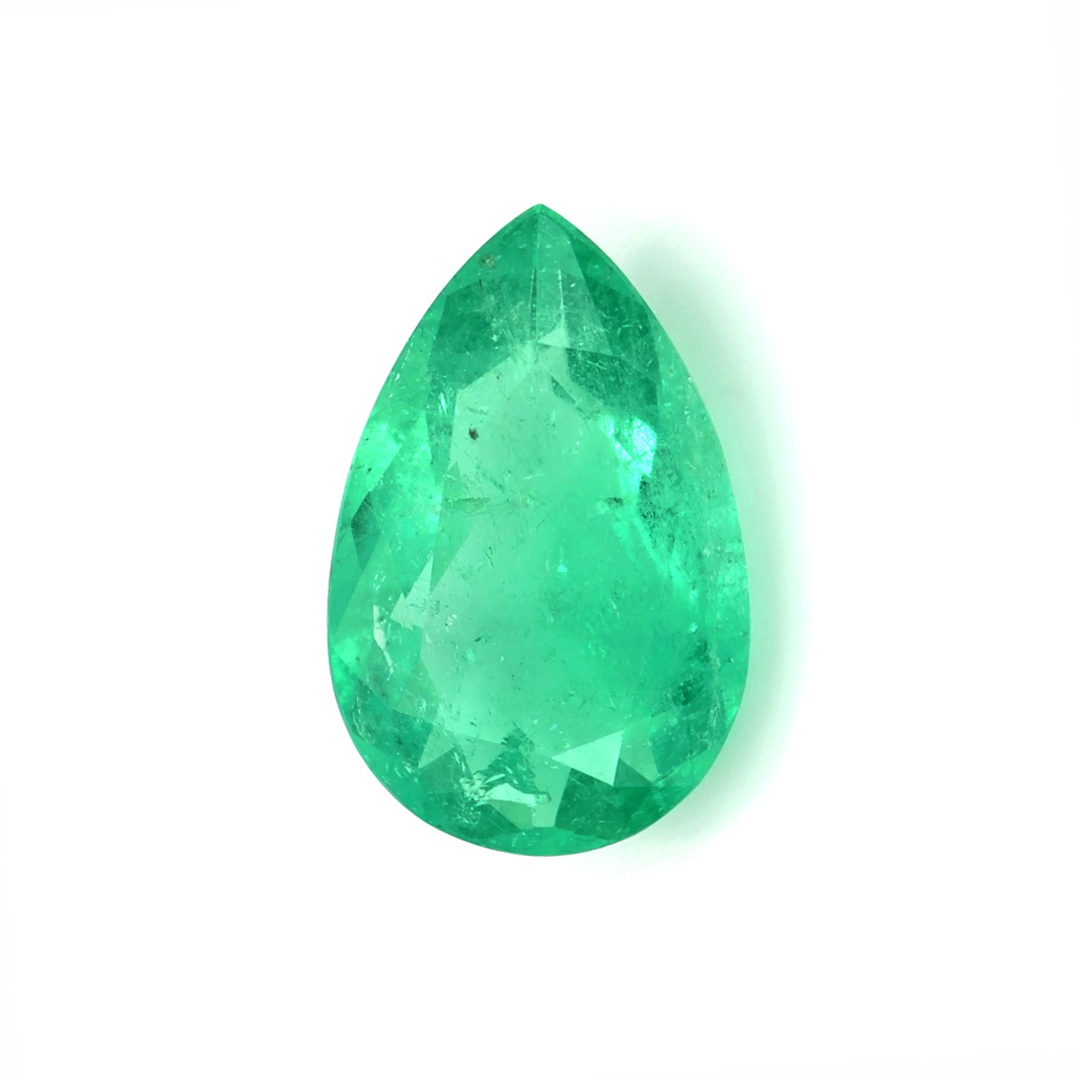
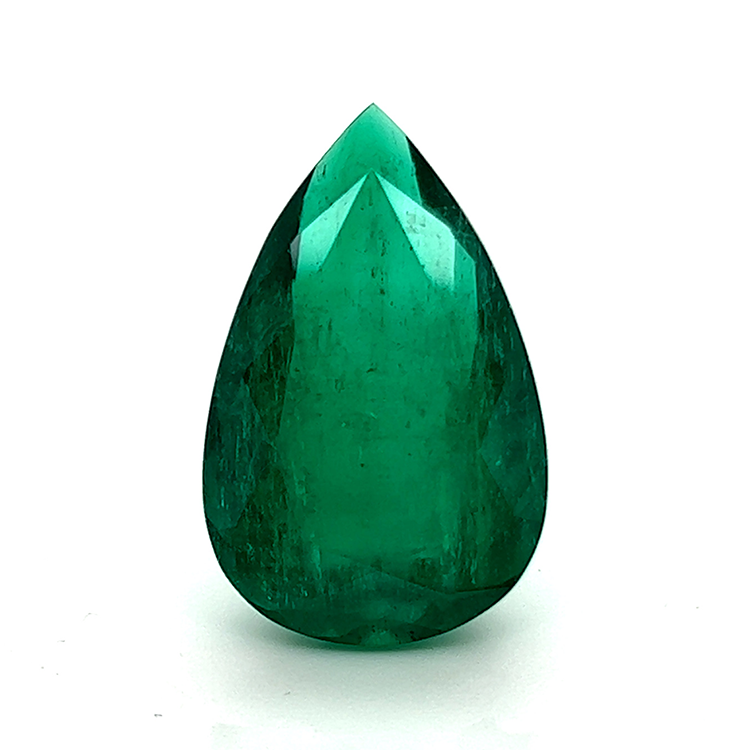
Real stones show how much the proportions vary. The 3.84 ct Colombian emerald cut E3498 measures 11.22 × 6.51 mm, so it is about 1.7 times as long as it is wide, while the 2.58 ct Zambian emerald cut E6192 measures 9.00 × 7.11 mm, a ratio of about 1.3. The 2.94 ct Zambian Asscher E2253 is an octagonal step cut of 9.02 × 8.45 mm, and the 3.82 ct Colombian pear E1894 is a pear-shaped step cut of 14.29 × 9.27 mm.
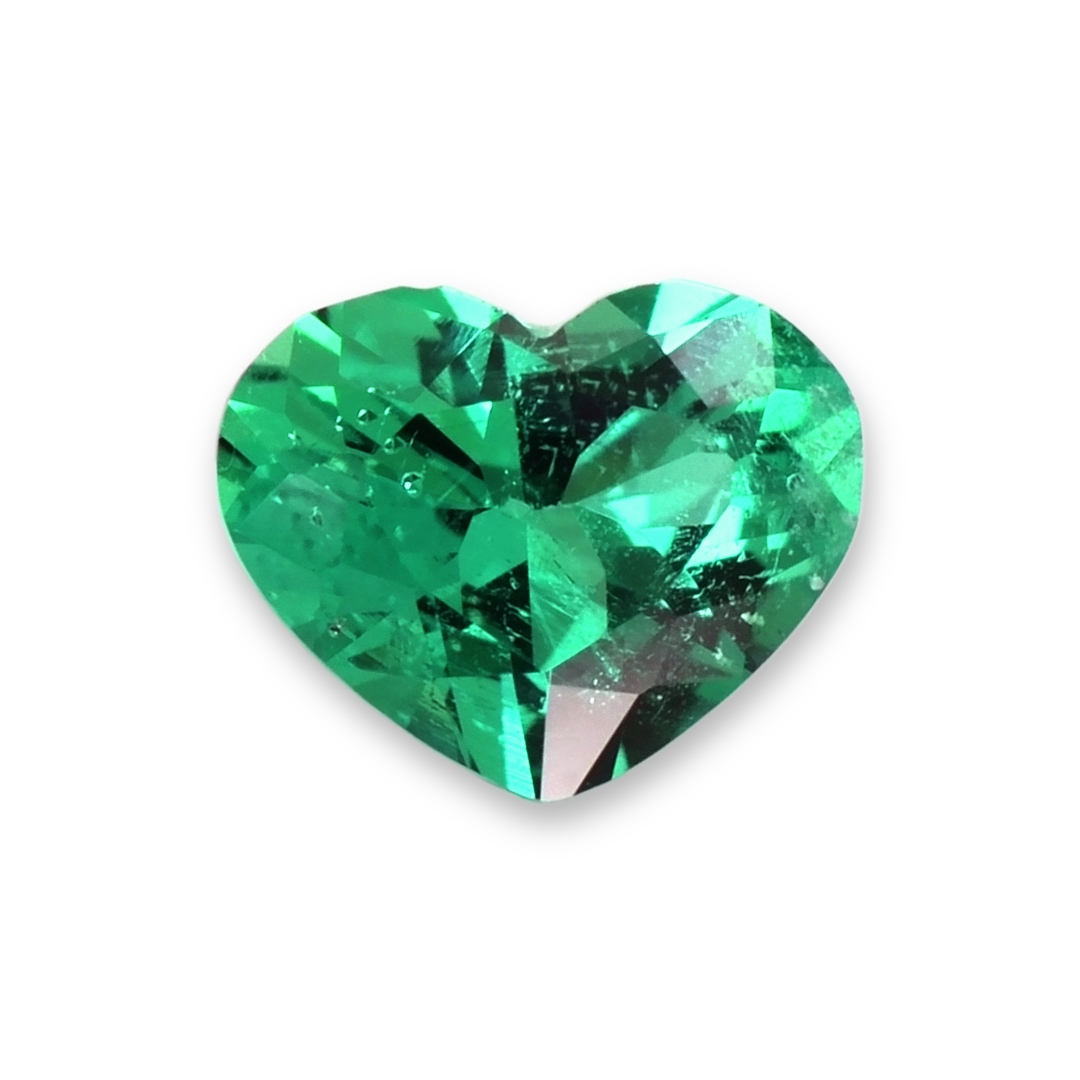
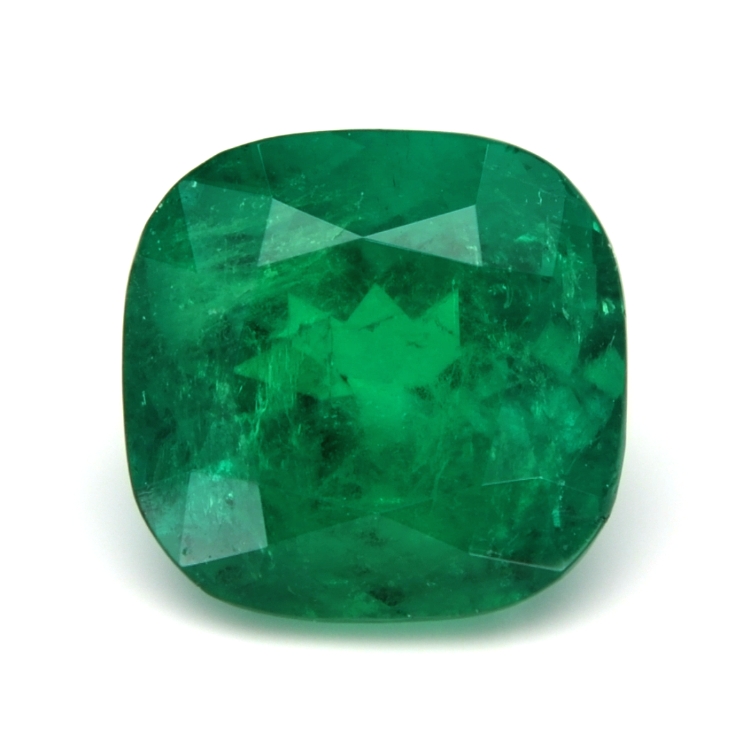
Other shapes show other strengths. The 3.21 ct Zambian cushion E4237 and the 4.85 ct Zambian oval E3857 are faceted with brilliant-style cutting, and the 0.65 ct Colombian heart E8878 shows the same green in a romantic outline.
When Other Cuts Make Sense
Although the emerald cut is classic, emeralds are cut in many other shapes, including ovals, rounds, pears, cushions, and hearts. Cutters choose shapes based on the rough, the goal of saving weight, and the look the customer wants.
Cabochons
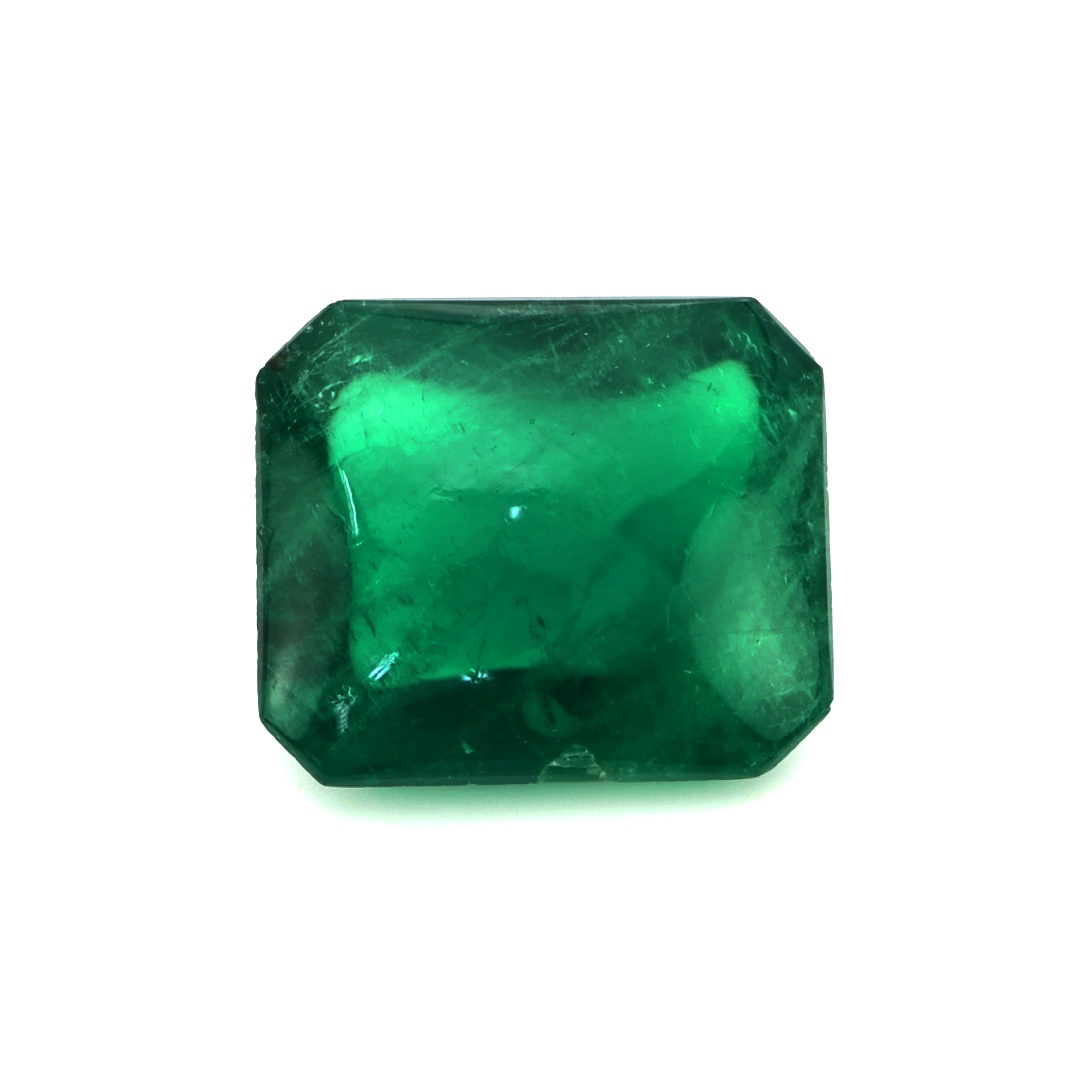
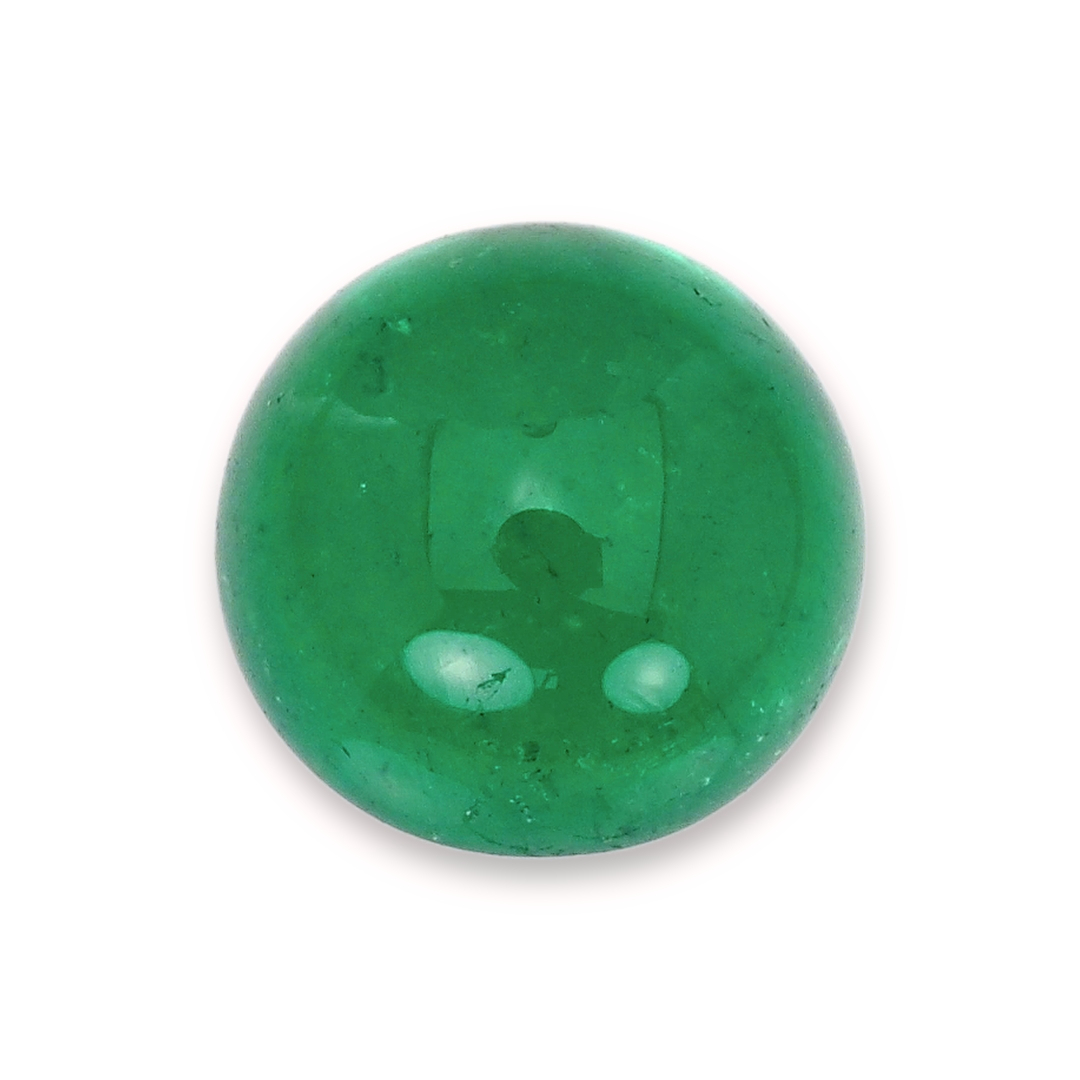
Heavily included or translucent emerald rough is often cut as smooth, domed cabochons. Cabochons can display rich color without facets and are less prone to showing inclusions. They are also traditional in many historical jewelry styles.
Two examples are the 3.50 ct Colombian sugar-loaf cushion cabochon E4550 and the 1.61 ct Colombian round cabochon E10312.
Brilliant-Style Cuts
Round and oval emeralds with brilliant-style faceting can show more sparkle. They may hide some inclusions within the play of light, though they may also expose more corners and points to wear.
Cuts at the Top End: Our Highest-Priced Emeralds
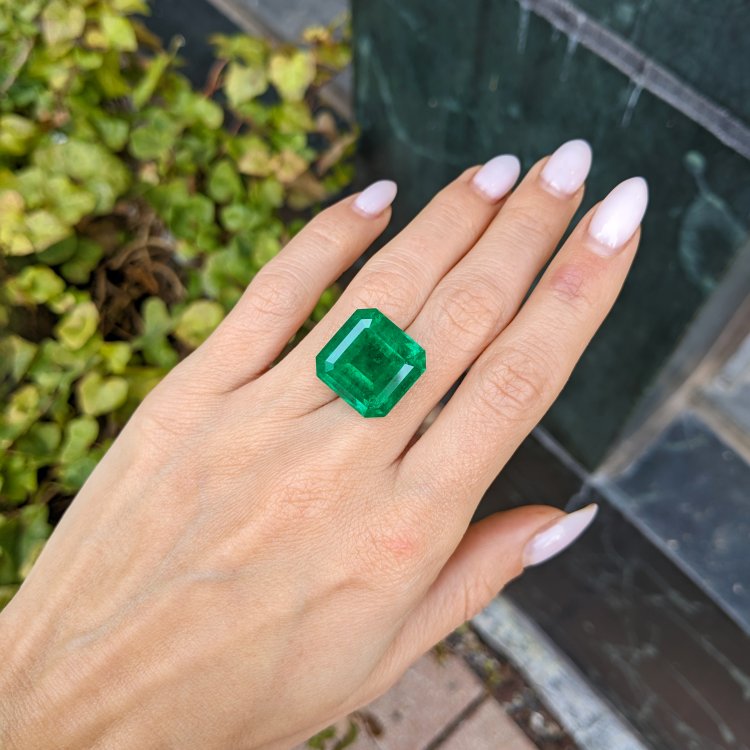
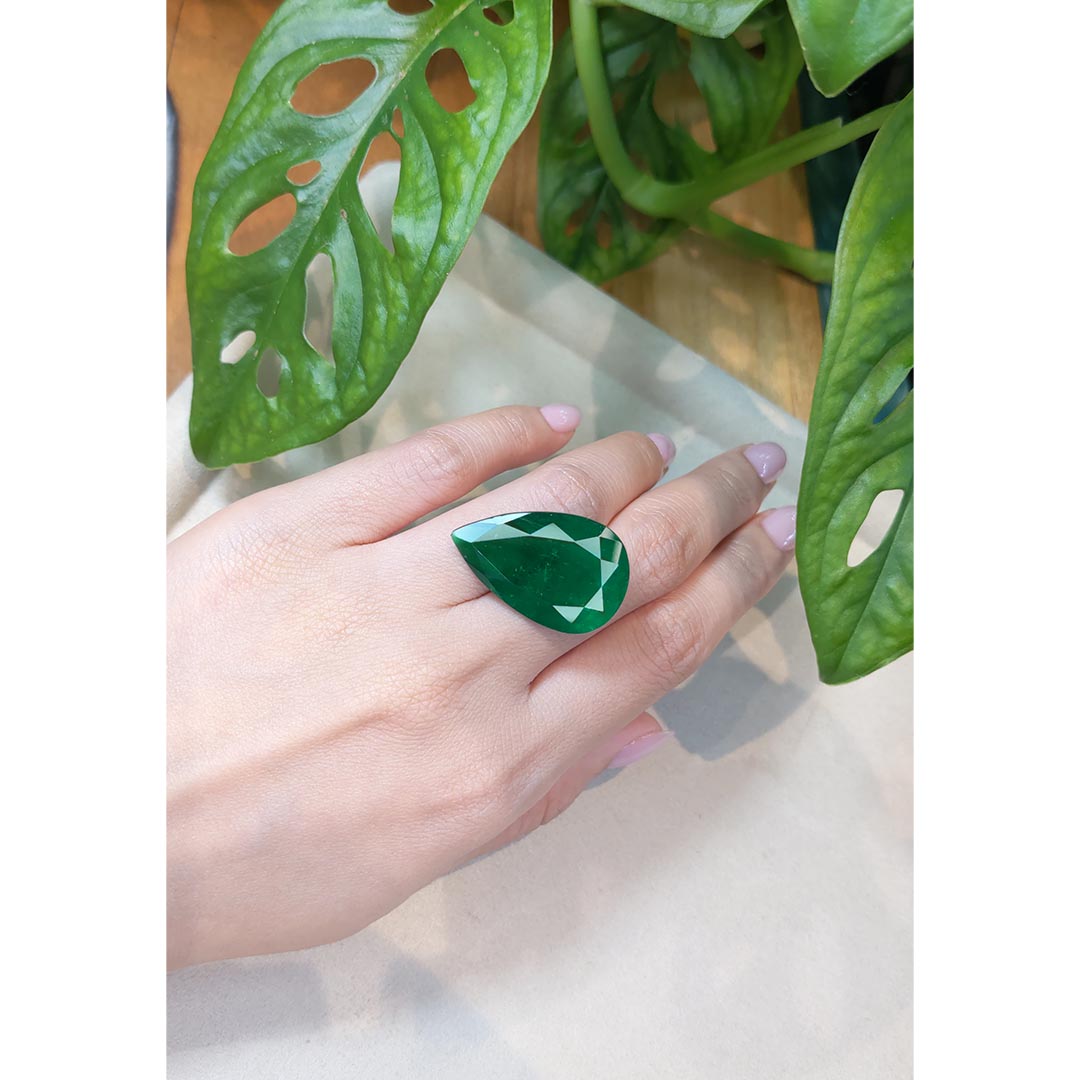
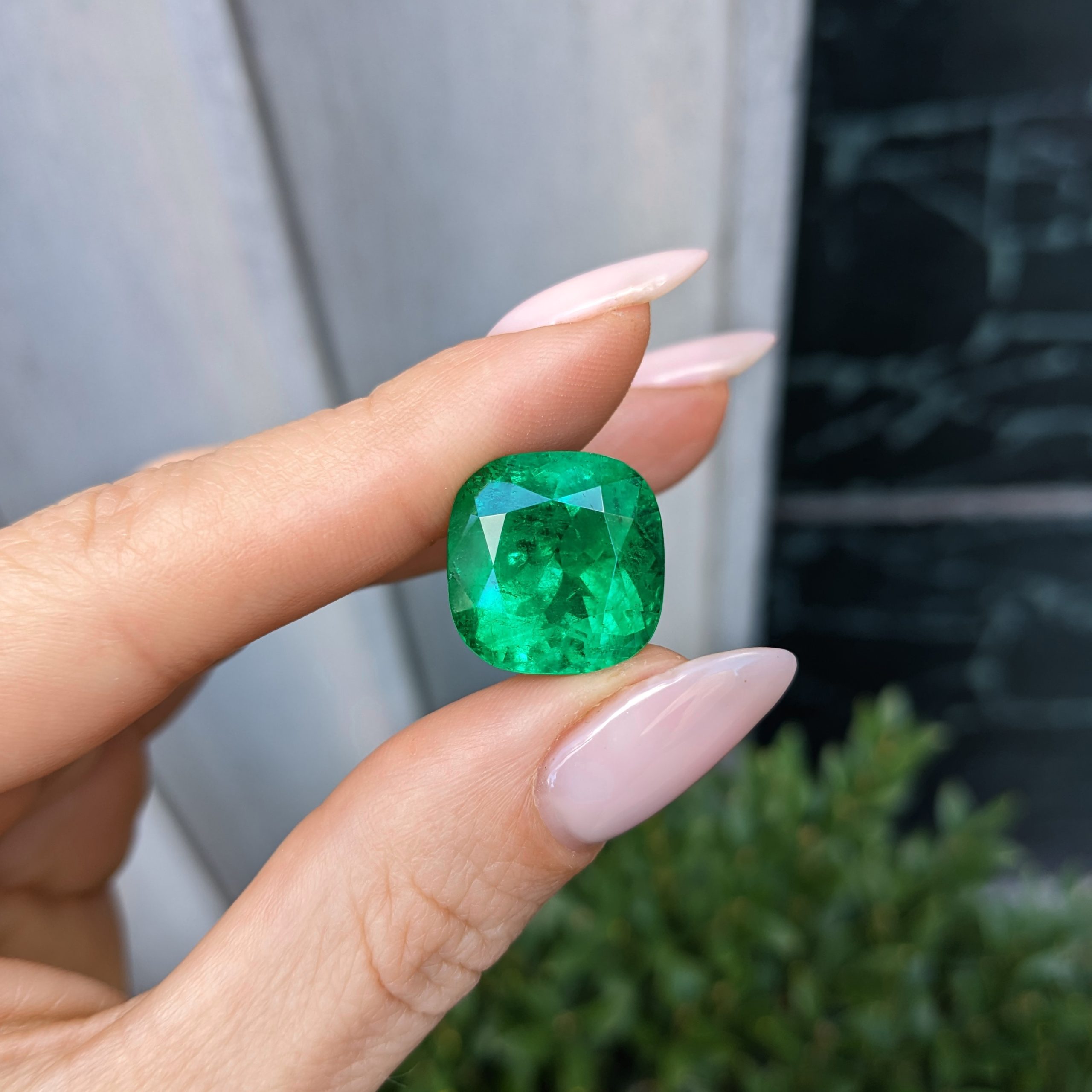
An Asscher cut, a pear shape and a cushion cut sit among the highest-priced emeralds in our inventory at the time of writing. Each is shown on white and on the hand; use the links for current details.
Setting an Emerald-Cut Emerald
Because protecting the corners matters, emerald-cut emeralds are often set with:
- V-shaped prongs or claw prongs at each corner.
- Bezel settings that encircle the stone.
- Low profiles in rings worn daily, to reduce knocks.
Setters work carefully, since excessive pressure can damage an emerald. Heat, steam, and ultrasonic cleaners should be avoided, as they can affect fillers and stress fractures.
For finished examples, see the 10.95 ct emerald-cut emerald ring in platinum 950 (J12732) and the 5.28 ct Asscher emerald ring in 18K white and yellow gold (J11973). For setting trends, see Emerald Engagement Ring Trends.
Cuts in Motion: Handheld Videos
Facets only make sense when the stone moves. Watch how each of these three emeralds returns light as it turns in the hand.
Frequently Asked Questions
Why is it called the emerald cut?
The cut became strongly associated with emerald because it suits the gem’s crystal shape, protects it from chipping, and showcases its color.
Are emerald-cut emeralds more expensive?
Price depends mainly on color, clarity, size, and overall quality. Shape can affect price, but a high-quality emerald in any shape will command a premium.
Does the emerald cut show more inclusions?
Its open facets can make inclusions more visible than brilliant cuts. In emeralds, some visible inclusions are normal and widely accepted.
Can other gemstones be emerald cut?
Yes. Diamonds, sapphires, aquamarines, tourmalines, and many other gems are cut in the emerald style, especially when the goal is to display color and clarity.
How long and narrow should an emerald-cut emerald be?
It is a matter of taste. In our inventory, E3498 is about 1.7 times as long as it is wide, a slim, elegant shape, while E6192 is about 1.3 times, a more compact one. Try both in your hand to see which suits you.
Conclusion
Emeralds have their own cut because the stone itself demanded it. Cropped corners protect a gem that is often included, the step facets work gently with the rough, and the broad, open design puts emerald’s celebrated color center stage. It is a perfect example of form following the nature of a material.
If you are considering an emerald-cut emerald, or another shape, our team at The Natural Emerald Company would be glad to help you compare. Explore our collection at emeralds.com.