
How Light Changes the Appearance of an Emerald
How does light change the appearance of an emerald? Diffused daylight shows an emerald’s most balanced green, warm incandescent or warm-white light pushes it toward yellowish green and can make it look a little darker, and cool-white LEDs push it toward bluish green and can make it look brighter. The stone itself does not change: emerald absorbs parts of the red and violet-blue spectrum, so the color you see depends on which wavelengths the light supplies. Knowing this helps you judge, photograph and enjoy an emerald in every setting.
Why Light Matters for Colored Gemstones
The color we see in any gemstone is the light that remains after the stone absorbs some wavelengths. In emerald, chromium and vanadium absorb parts of the red and violet-blue regions of the spectrum, letting green pass through.
But this only works with the light that is available. If a light source is rich in yellow and red, as many warm bulbs are, or rich in blue, as some cool LEDs are, the balance of what reaches your eye shifts. The emerald itself has not changed, but the color you perceive has.
Emerald in Daylight
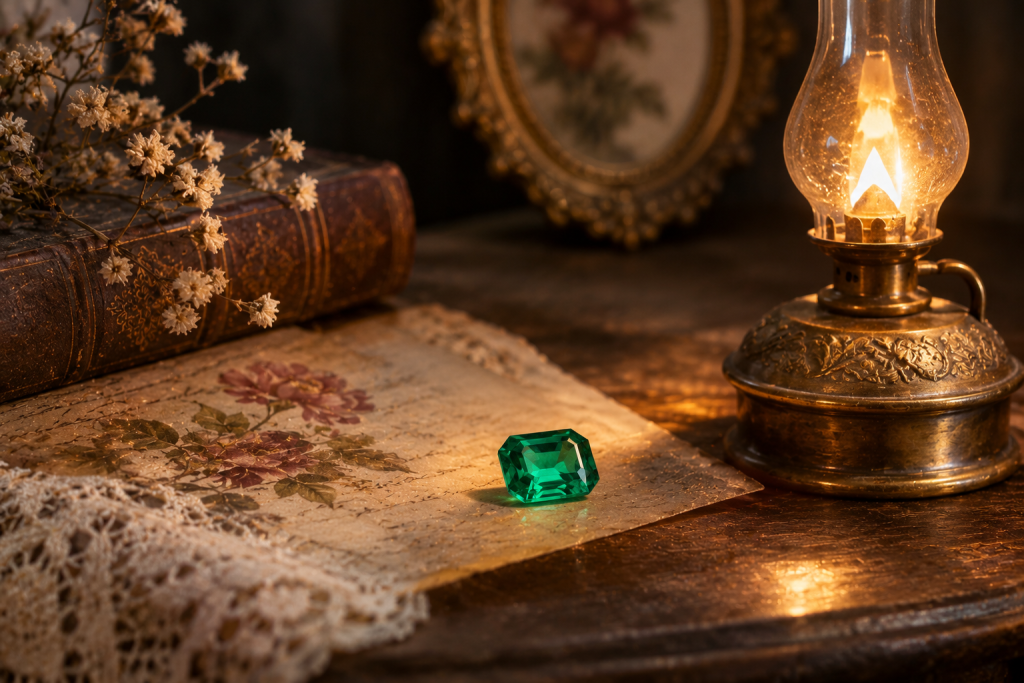
Daylight is often considered the reference for judging gemstone color, because it contains a broad and fairly balanced spectrum. Diffused daylight, such as light from a north-facing window in the Northern Hemisphere or an overcast sky, is especially useful because it reduces harsh reflections.
In daylight, emeralds typically show their most balanced green. Fluorescence from chromium, triggered by the ultraviolet component of daylight, can add vividness in some stones, particularly those with low iron content.
Direct Sunlight
Direct sun is very intense and can create strong reflections and bright flashes. It may make an emerald look lighter or reveal inclusions more clearly. It is a lovely way to see an emerald come alive, but it is not ideal for judging color.
Emerald Under Warm Light
Incandescent and warm-white light contain relatively more red and yellow. Under this lighting, many emeralds appear slightly more yellowish green or warmer in tone. Some stones look a little darker, because there is less blue-green light available for them to transmit.
Emeralds with a slightly bluish hue can benefit from warm light, which balances them toward pure green. Emeralds that already lean yellowish may shift further in that direction.
Emerald Under Cool and LED Light
LED lighting varies widely. Cool-white LEDs are richer in blue and can make an emerald appear more bluish green and sometimes brighter. Warm-white LEDs behave more like incandescent light. Some LEDs have an uneven spectrum, which can make color look less natural.
Jewelry showrooms often use strong, cool lighting that makes gems sparkle. It is worth asking to see a stone in more than one light, including near a window, before making a decision.
Same Emerald, Different Light: Examples From Our Photography
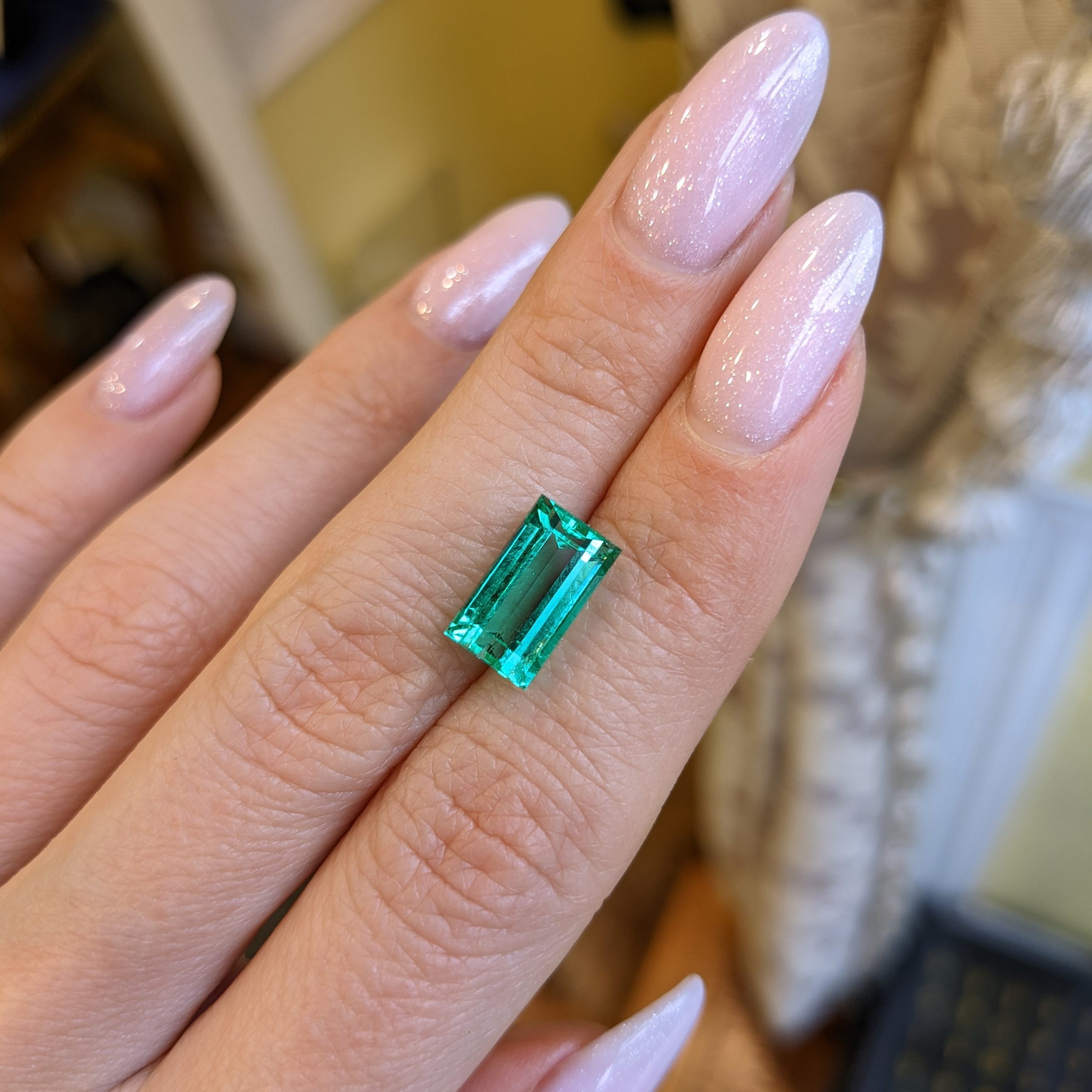
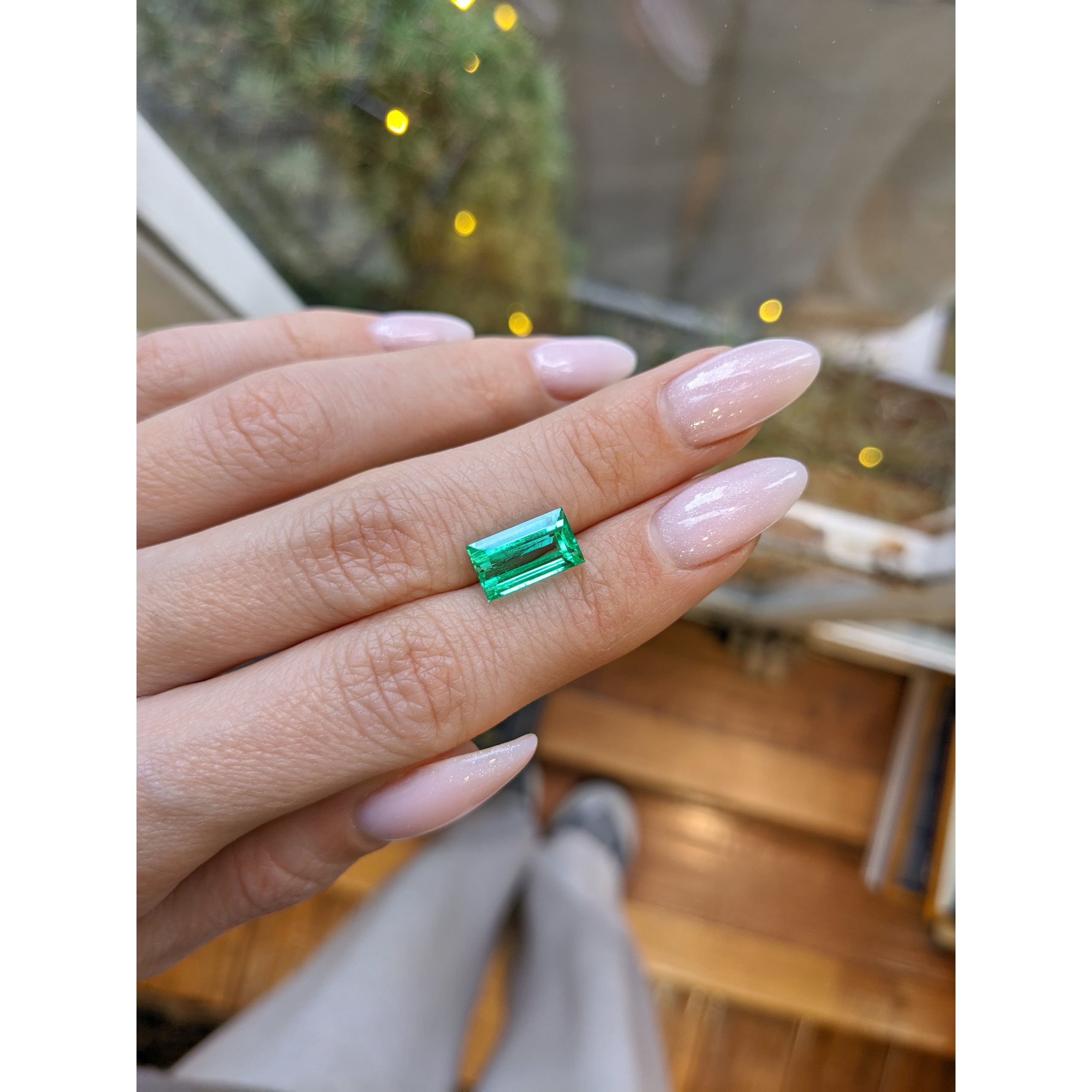
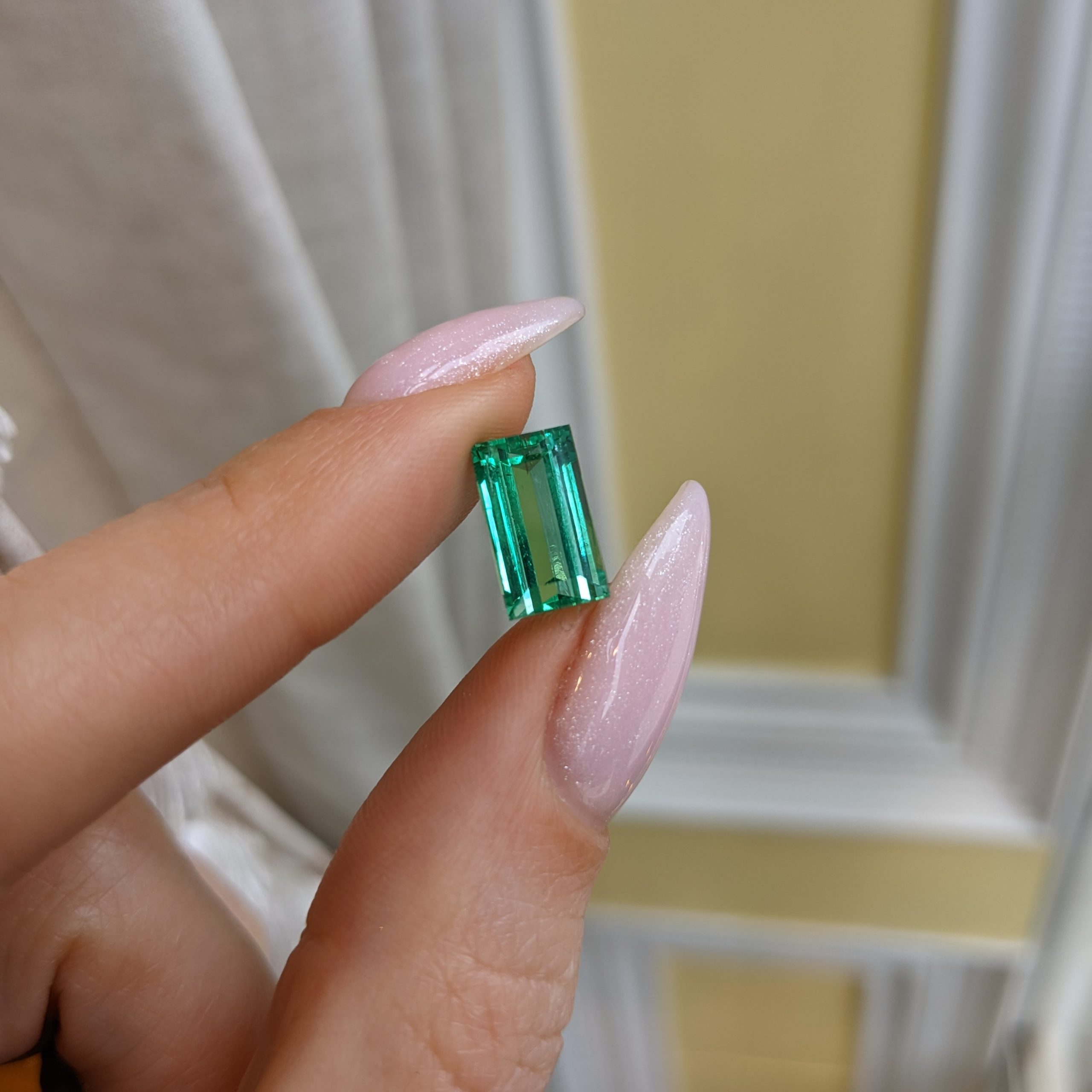
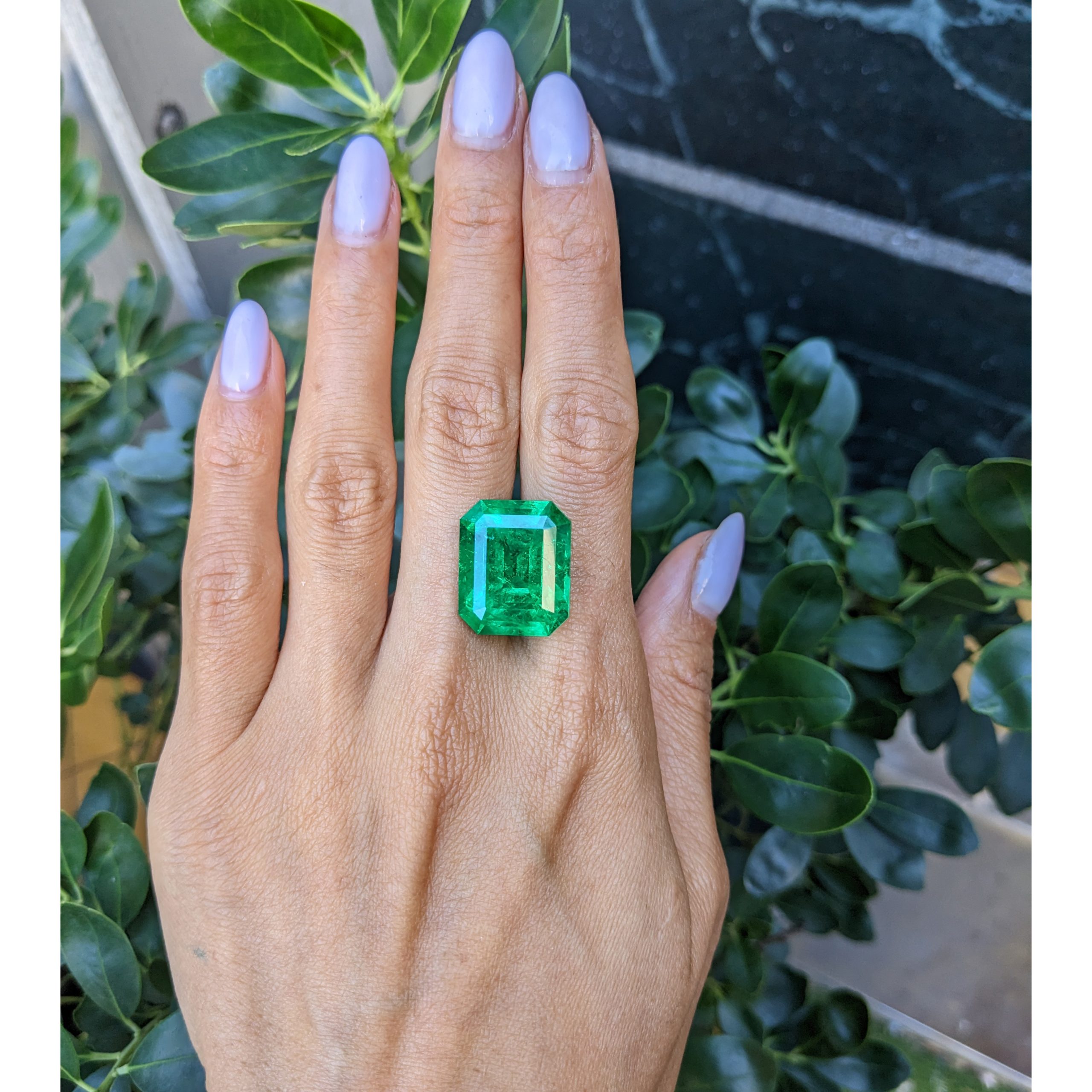
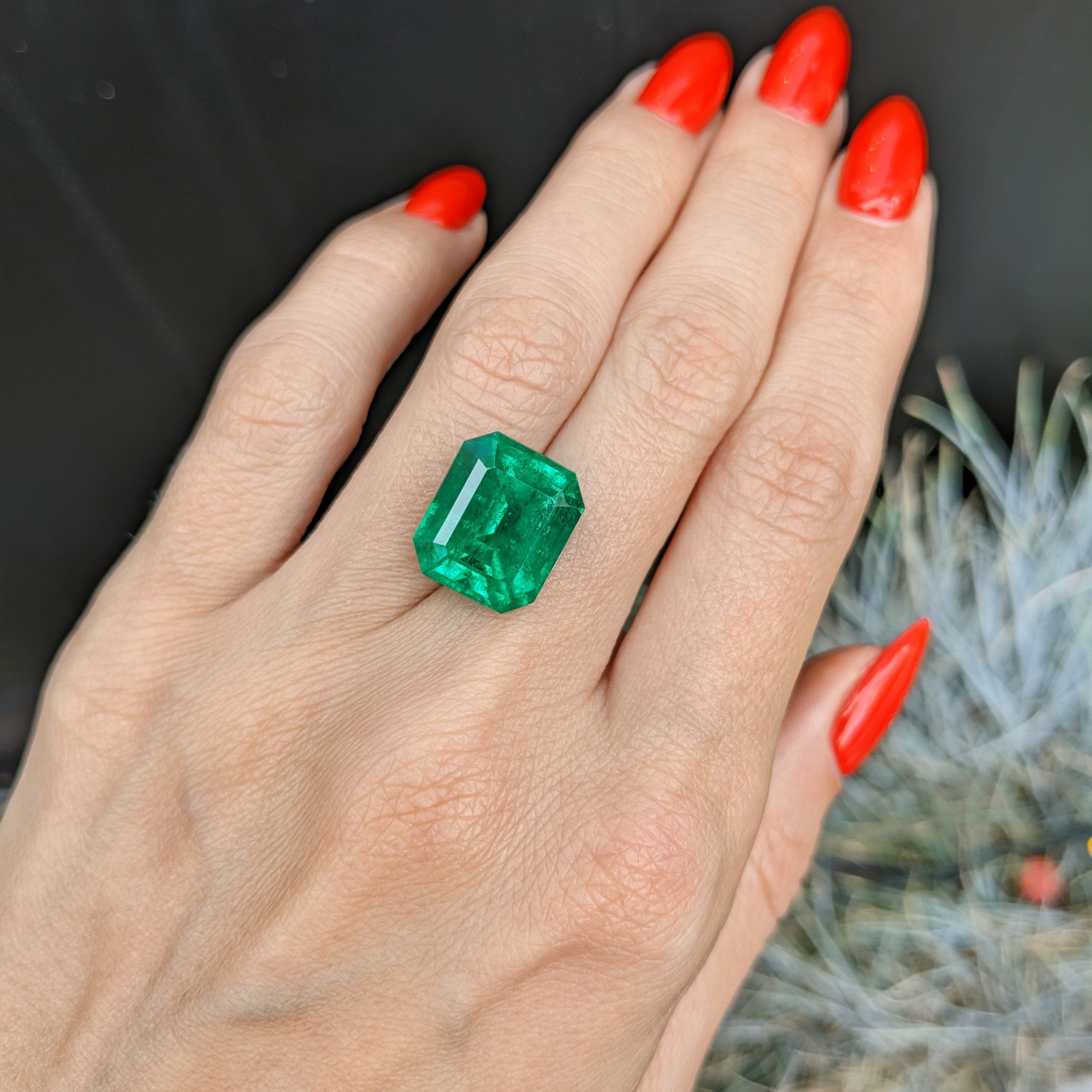
Our product photography gives a ready-made comparison. The 3.84 ct Colombian emerald cut E3498 (listed as Medium green, VVS and No Enhancement) is photographed on the hand in three different rooms, and the green looks different in each. The 2.58 ct Zambian emerald cut E6192 (listed as Vivid green) shows a similar change between its white-background image and its photo on the hand. These photos were taken with ordinary cameras in everyday settings, so they illustrate how much light and surroundings matter and are not a measured color comparison. In person, check any emerald in the light where you will wear it, and ask us for extra photos or a video if you are buying remotely.
Light on the Largest Stones: Our Highest-Priced Emeralds
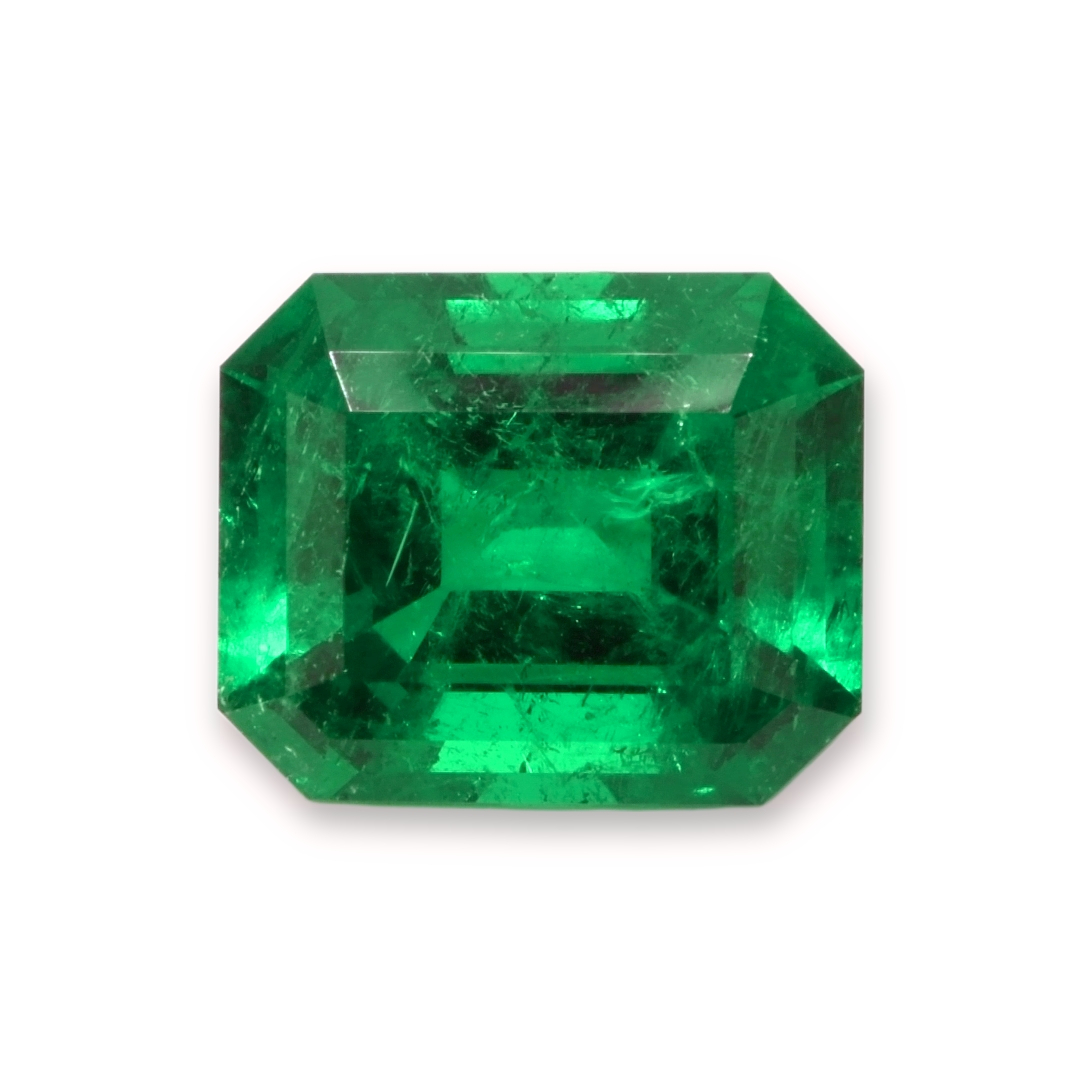
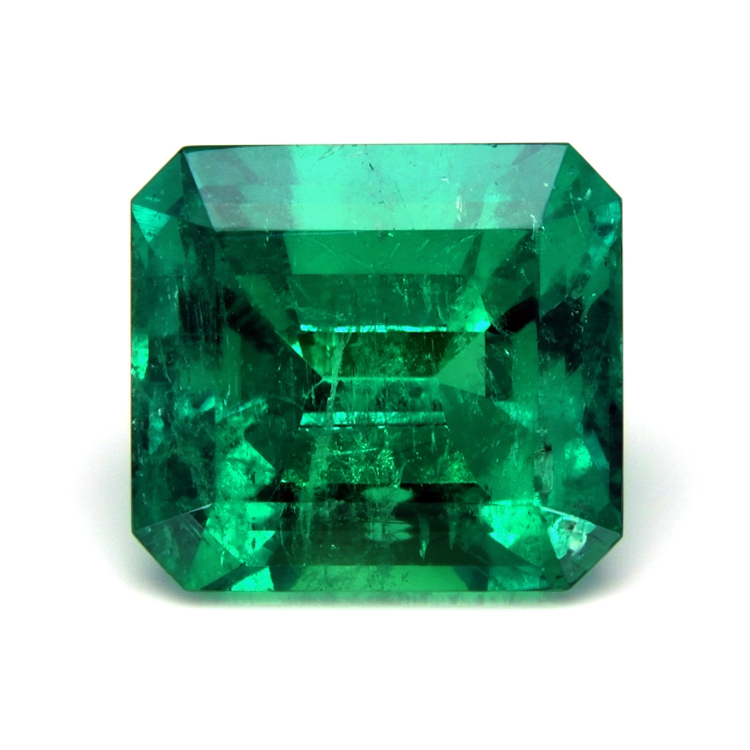
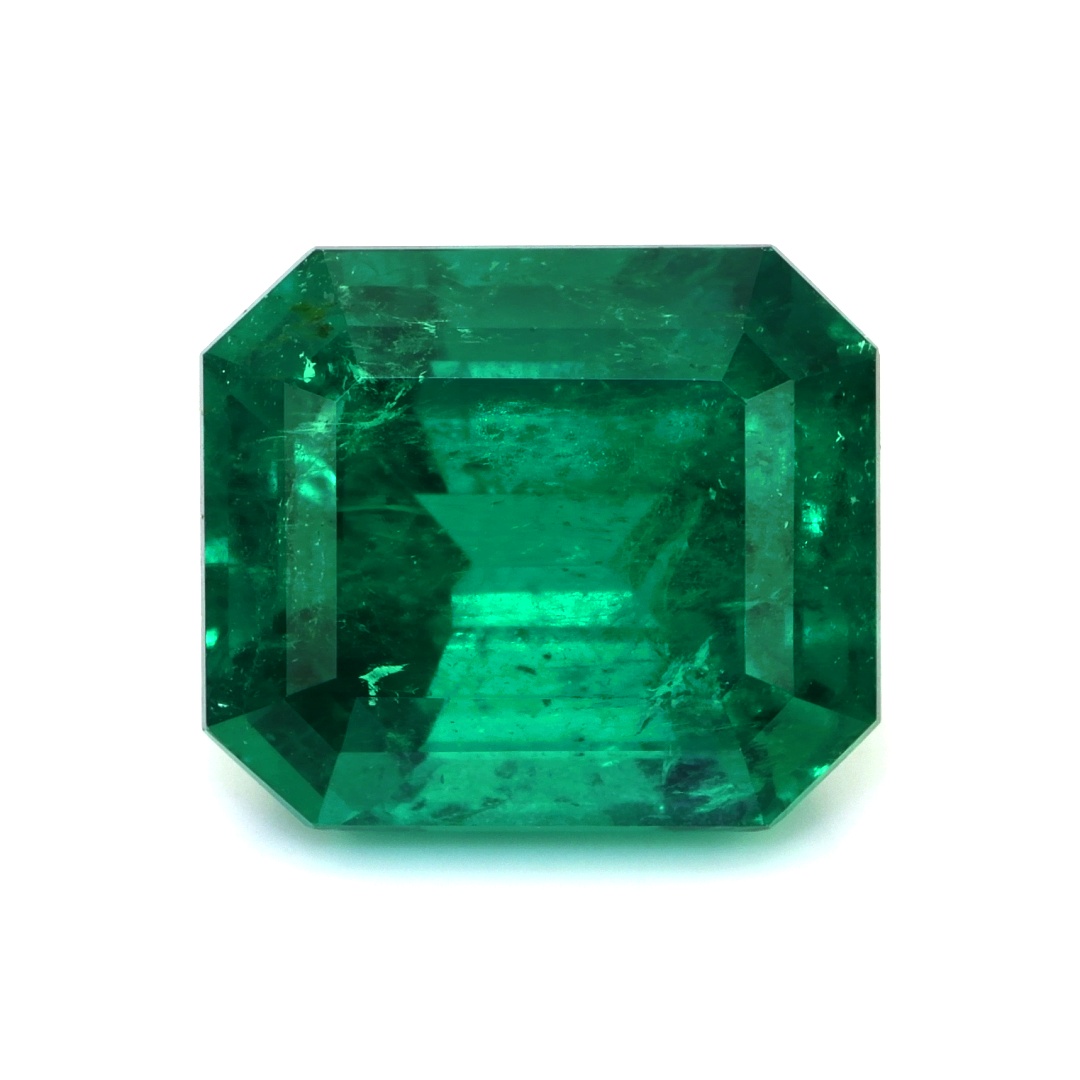
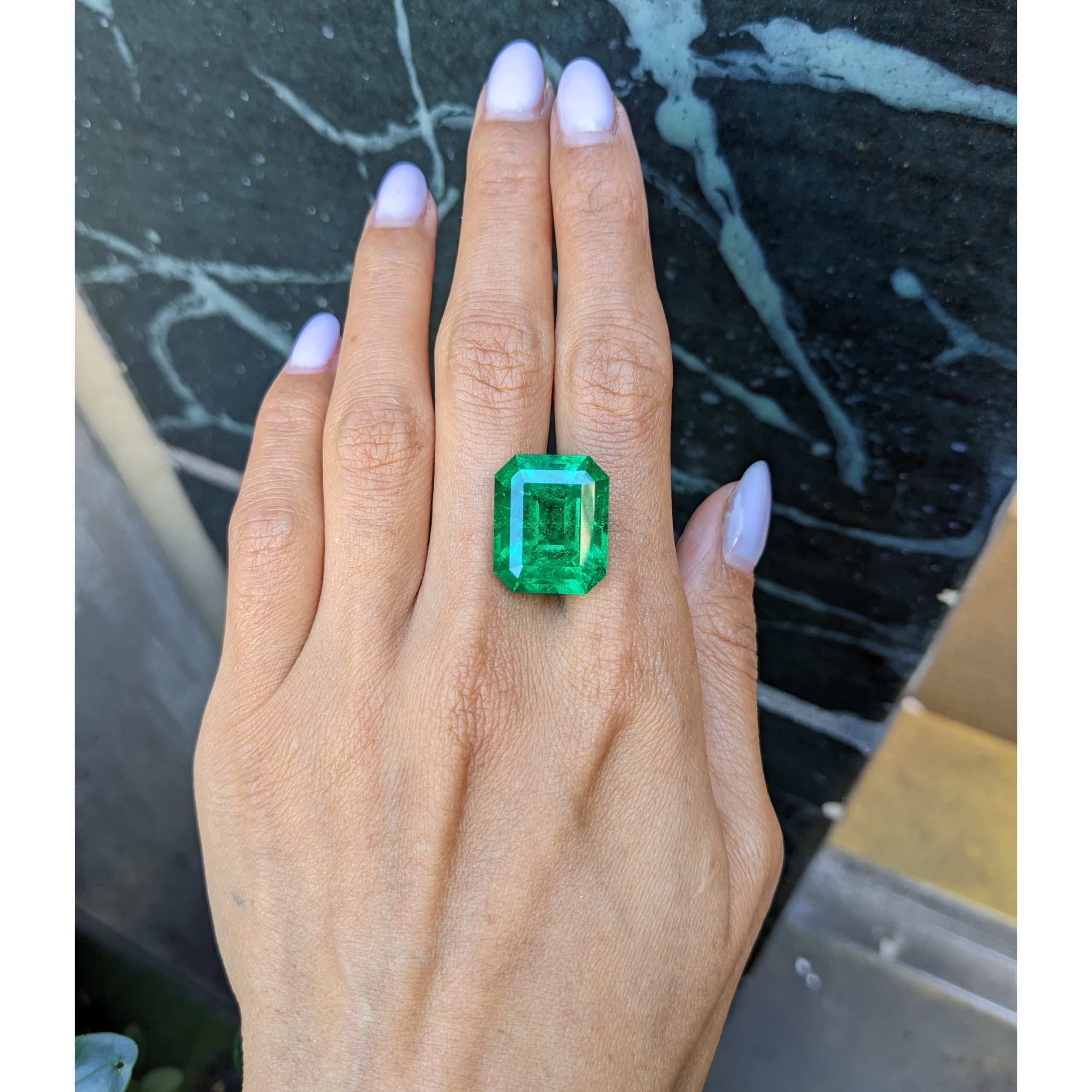
Here are three of the highest-priced emeralds in our current inventory, each photographed on white and on the hand outdoors. Compare how the same stone reads in the two settings, and use the links for current details.
How Clarity and Inclusions Interact With Light
Emeralds almost always contain inclusions, called “jardin,” and strong, direct light tends to make them more visible, while diffused light makes them less noticeable. Fine inclusions can scatter light for a soft, velvety glow; too many make a stone look cloudy. For what the inclusions are and how enhancement affects how they look, see Inside an Emerald.
The Role of Cut in How Light Behaves
A cut affects how light behaves in an emerald. The classic step cut shows broad flashes of light and color, while brilliant cuts produce more scintillation, and proportions that are too shallow or too deep can show a washed-out window or dark areas. We explain why emerald has its own cut in Why Emeralds Have Their Own Cut.
Turn the Stone: Handheld Videos
Handheld video is the closest thing to holding a stone up to a window. Watch each emerald as it turns and notice where the color deepens, lightens or goes quiet.
Tips for Judging an Emerald’s Color
- View in diffused daylight, near a window but out of direct sun.
- Check under warm and cool lights to see how it behaves where you will wear it.
- Use a neutral background, such as white or light gray.
- Tilt the stone to see brightness and color across the face.
- Be cautious with photos and videos, which can be affected by lighting, camera settings, and screen calibration.
Photographing Your Emerald Accurately
If you want to share your emerald with friends or compare it with another stone, photography adds its own challenges. Cameras interpret color automatically and can push greens toward yellow or blue. For the most faithful results, photograph the stone in diffused daylight, against a white or neutral gray background, and turn off filters or beauty modes. Take a few shots from slightly different angles, since pleochroism and reflections change from one position to the next. Comparing your photos with the stone in hand will quickly show you which settings capture its true color.
Frequently Asked Questions
Why does my emerald look darker at night?
Indoor lighting at night is typically less intense and warmer than daylight. With less light overall and less blue-green light, many emeralds appear darker.
Which light is best for viewing emeralds?
Diffused daylight is generally best for judging true color. It is also helpful to see the stone under the lighting where you expect to wear it most.
Do emeralds glow under UV light?
Some emeralds show weak to moderate red fluorescence under ultraviolet light, linked to chromium. Iron tends to reduce this effect, so many emeralds show little or none.
Does lighting affect how inclusions look?
Yes. Strong, direct light can make inclusions more visible, while diffused light tends to make them less noticeable.
Conclusion
An emerald’s appearance is a partnership between the stone and the light around it. Daylight reveals its most balanced color, warm light deepens it, and cool light can brighten its blue-green tones. Knowing this helps you choose an emerald you will love in every setting.
If you would like to see emeralds under different lighting before you choose, our team at The Natural Emerald Company is happy to help. Explore our collection at emeralds.com.