
Inside an Emerald
What is inside an emerald? Most emeralds contain a network of fractures, fluid-filled cavities and tiny crystals, together called jardin (French for garden), because the stone grew in turbulent, fluid-rich geological conditions. These features are expected in emerald, and what matters is whether they are visible face-up, cloud the stone or put durability at risk. Most emeralds are also clarity enhanced with oils or resins, which should always be disclosed, and the stone needs gentler care as a result.
Why Emeralds Are Usually Included
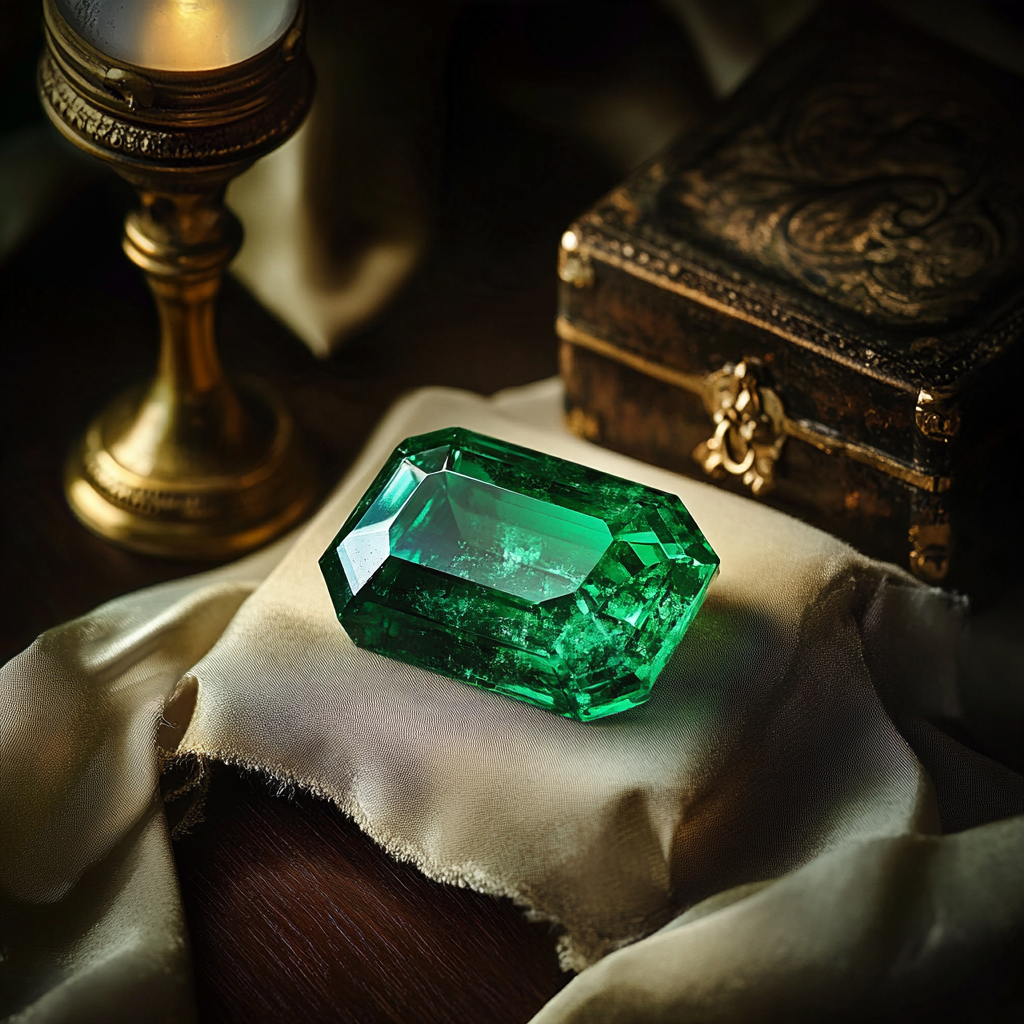
Emerald forms where beryllium-bearing fluids meet chromium- or vanadium-rich rocks, a chemistry we explain in The Science Behind Emerald’s Green Color. Those conditions are well suited to creating color but not to growing clean crystals: as emeralds grow they trap fluids and neighboring minerals, and the stresses of their surroundings often cause fractures. Clean emeralds are therefore rare, and visible inclusions are considered normal.
Common Features Inside an Emerald
Fractures and Fissures
The most common features are fractures, sometimes called fissures or feathers. Many reach the surface. They can range from tiny, almost invisible lines to larger planes that reflect light. Fractures are an important consideration for both beauty and durability.
Fluid Inclusions
Emeralds frequently contain cavities filled with fluid. Some hold a single fluid; others contain two or more phases.
Three-Phase Inclusions
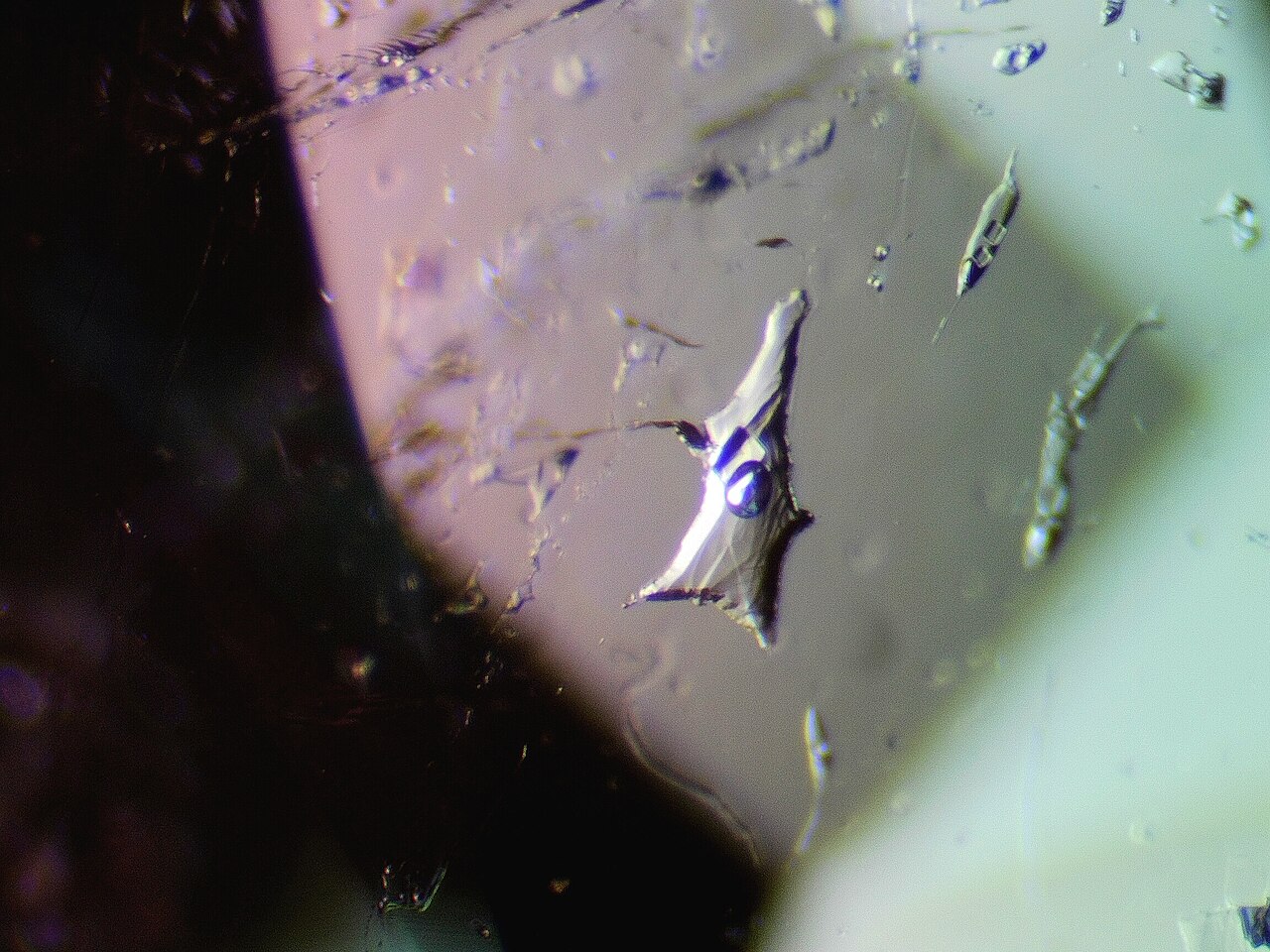
A classic feature in many Colombian emeralds is the three-phase inclusion: a jagged cavity containing a liquid, a gas bubble, and a small crystal, often of halite (salt). These are formed from the salty hydrothermal fluids from which Colombian emeralds grew. Similar inclusions can occur in emeralds from other localities, so they are a useful clue rather than proof of origin.

Mineral Crystals
Emeralds can host small crystals of other minerals, depending on their geological environment. Emeralds formed in schists, for instance, may contain mica or other minerals associated with those rocks. Laboratories use these, along with chemistry and spectroscopy, when forming opinions on origin.
Growth Features
Color zoning, growth tubes, and fine parallel structures can also appear. These record changes in the crystal’s growth over time.
Clarity Enhancement: The Common Treatment
Because so many emeralds have surface-reaching fractures, clarity enhancement is widespread. Fractures are filled with a substance closer in optical properties to emerald than air, so they become less visible.
Oils
Colorless oils, such as cedarwood oil, have been used for a very long time. Oils can improve appearance considerably but may slowly dry out or seep from fractures over time.
Resins
Artificial resins and polymers are also used. Some are more stable than oils. Like oils, they can be affected by heat, solvents, and harsh cleaning.
Disclosure and Degree
Clarity enhancement is generally accepted in the trade when disclosed. Laboratories often describe the degree of enhancement, such as minor, moderate, or significant. A minor amount of enhancement generally has less effect on value than significant enhancement. Untreated emeralds with good clarity are rare and valued accordingly. Colored fillers, which add green, are a less accepted practice and must be disclosed.
Our listings use two enhancement terms. “Standard” is explained on our site as the clarity enhancement used on the vast majority of emeralds today, using only industry-accepted materials (colorless oils, wax or polymers/resins), and “No Enhancement” means the stone has only been cut and polished from the mined rough, which our site calls exceptionally rare in the finer qualities. For more, see our education pages on emerald treatments and inclusions in emeralds.
Do Inclusions Reduce an Emerald’s Value?
Emerald is judged differently from diamond. Buyers expect inclusions, and color usually matters most. The key questions are:
- Visibility. Are inclusions visible face-up at a normal viewing distance?
- Transparency. Do they make the stone look cloudy or reduce brightness?
- Durability. Do fractures reach the surface in risky positions, such as near corners or the girdle?
- Enhancement. How much filler has been used to improve appearance?
An emerald with vivid color and a moderate, attractive jardin can be more desirable than a cleaner stone with weak color.
Clarity Grades in Our Inventory
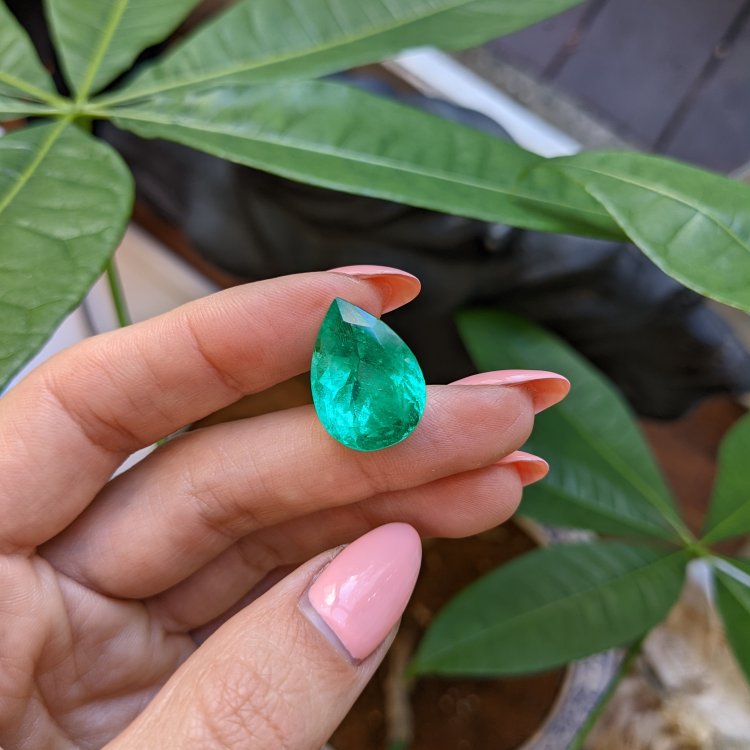
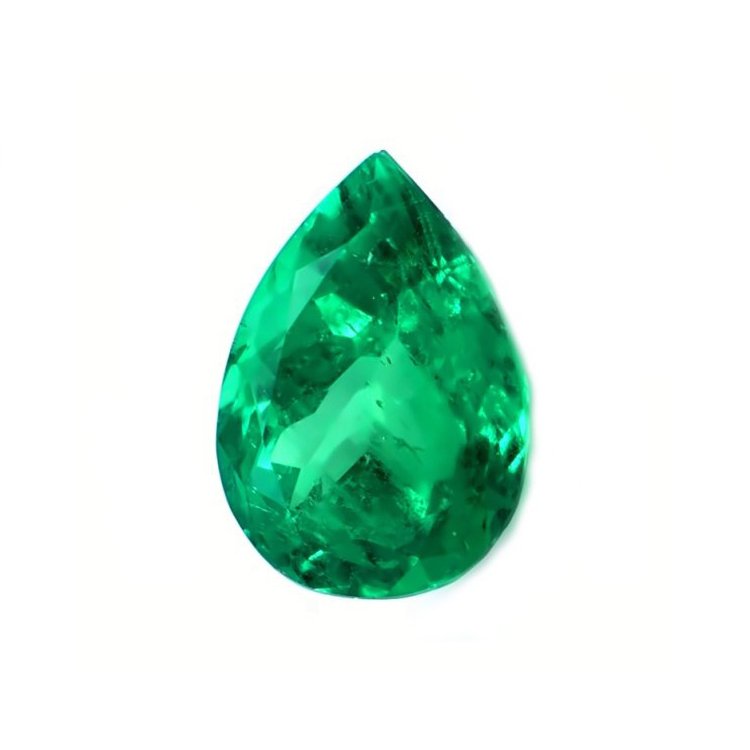
Clarity grades summarize what a gemologist sees under magnification, and the listings show the range. The 4.85 ct Zambian oval E3857 is graded Very Very Slightly Included and listed as Standard. The 14.84 ct Colombian pear E1892 is graded Slightly Included, also Standard, and its size makes features easier to see. The 1.32 ct Zambian round E945 is graded Included and Standard. Two stones are listed as No Enhancement: the 3.84 ct Colombian emerald cut E3498 (Very Very Slightly Included) and the 3.21 ct Zambian cushion E4237 (Very Slightly Included). An unenhanced stone can still carry inclusions, because enhancement and clarity are separate facts.
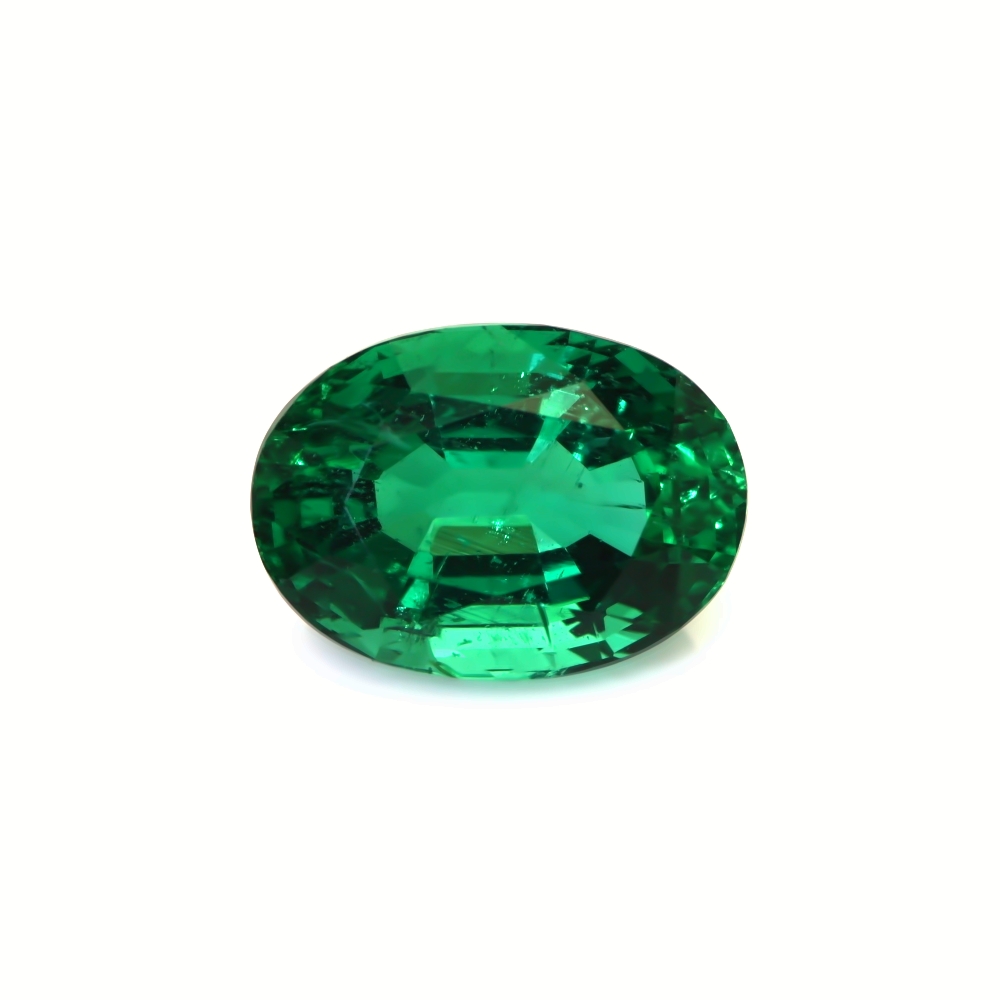
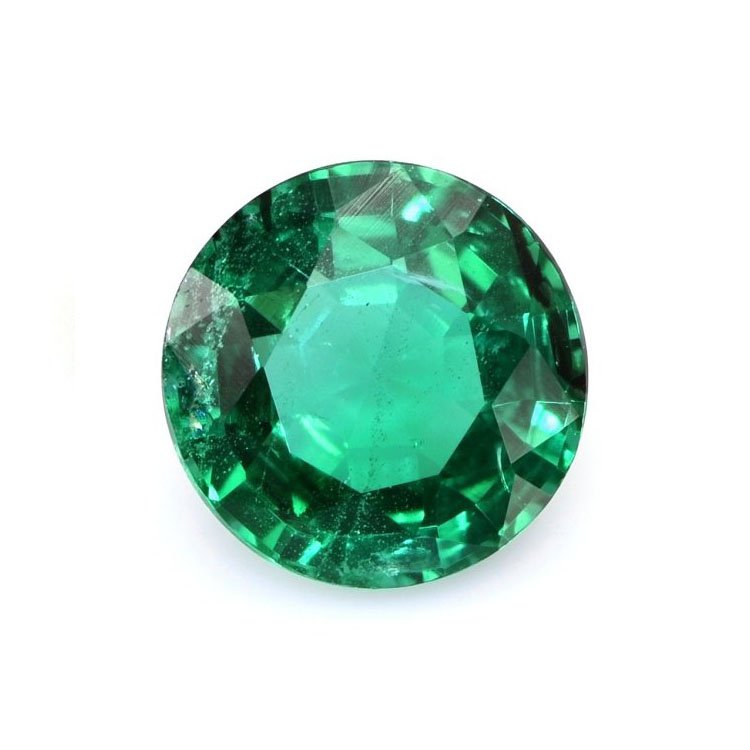
A Closer Look: Our Highest-Priced Emeralds
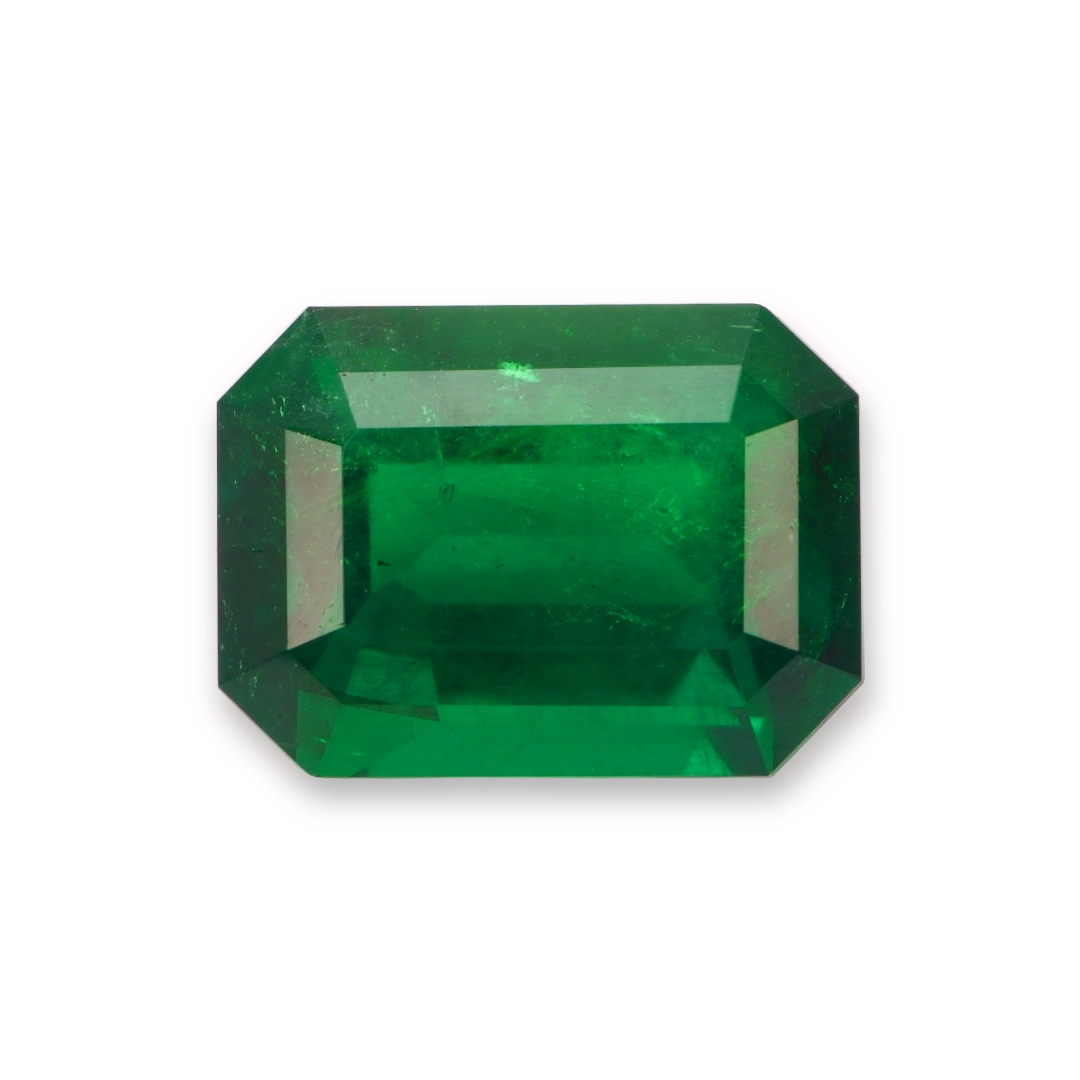
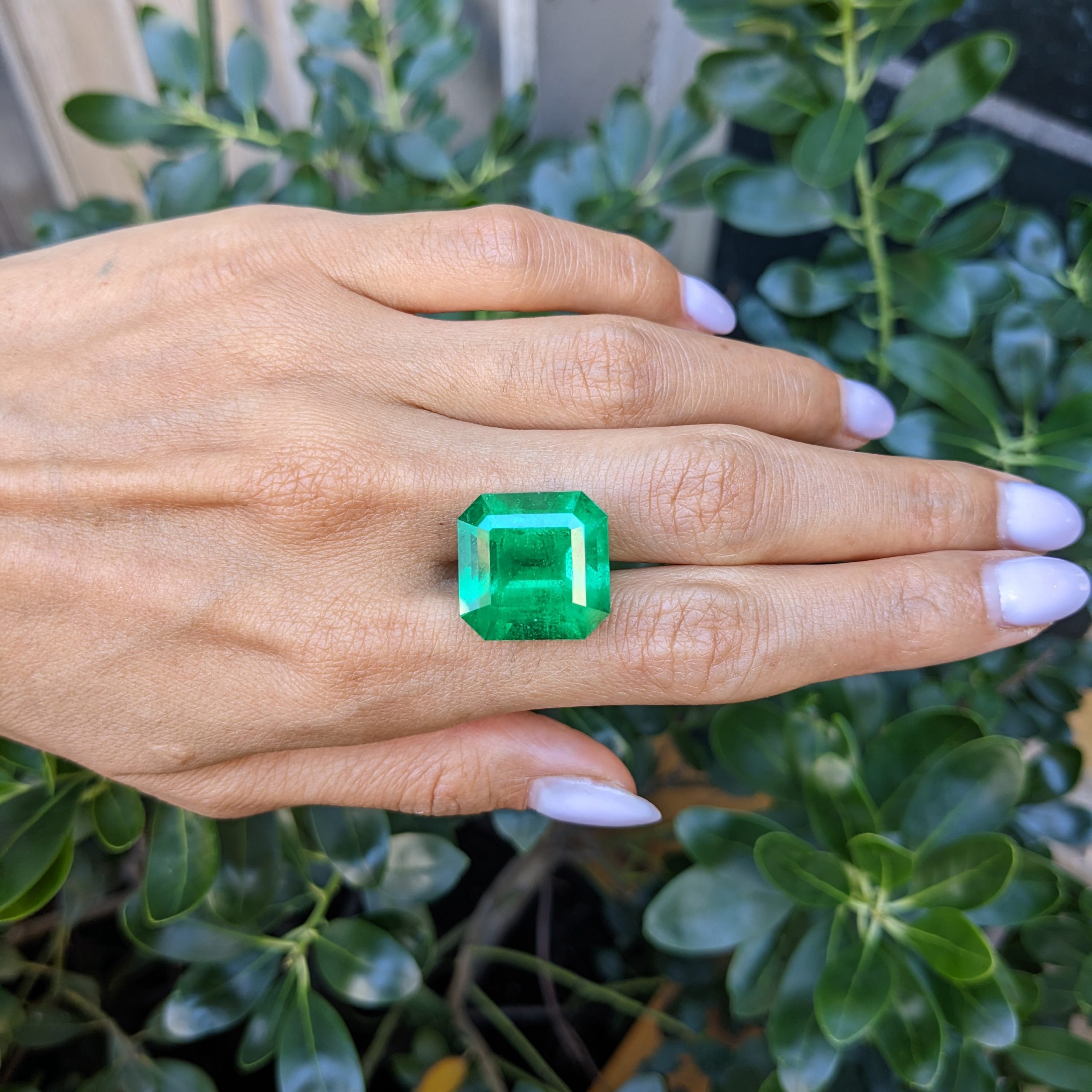
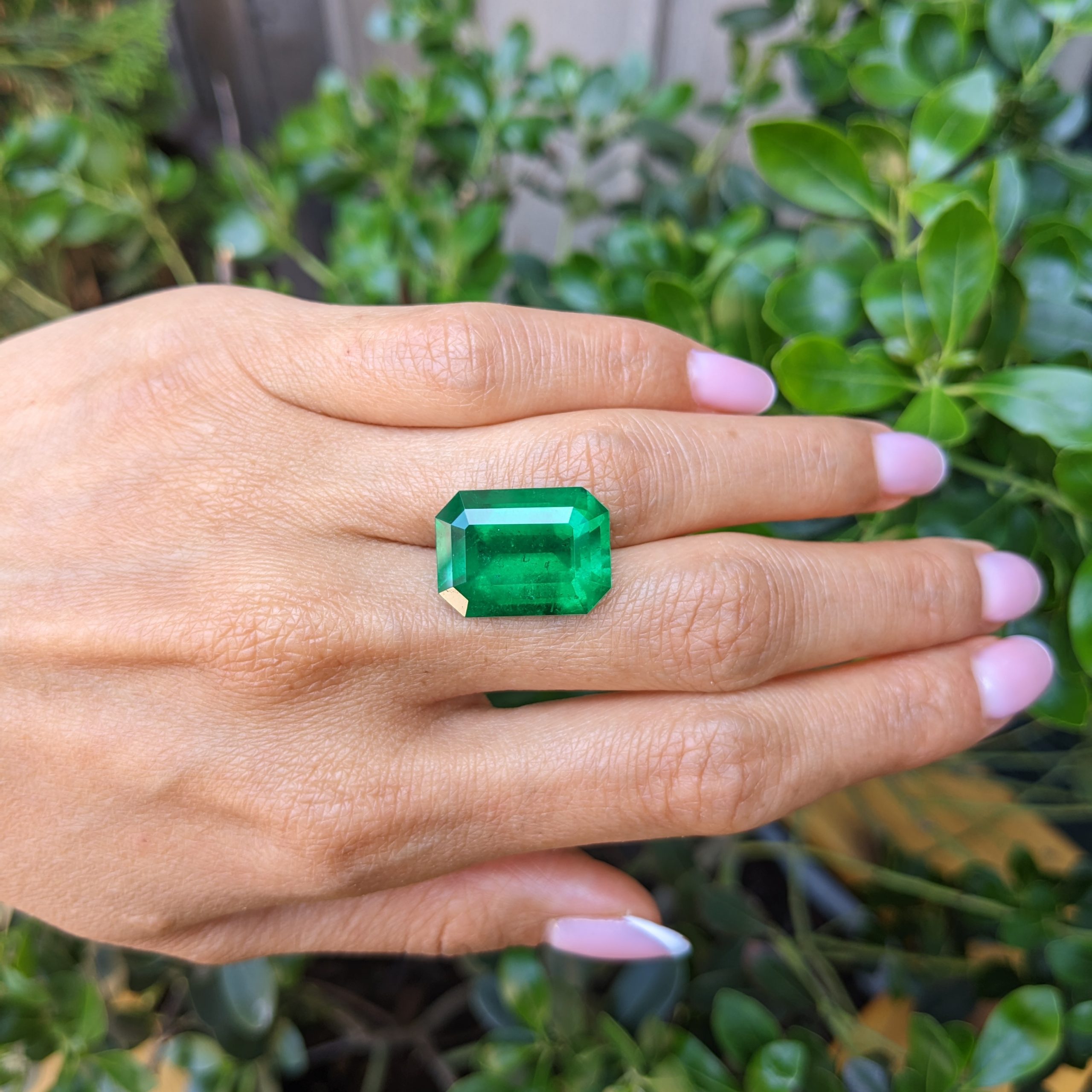
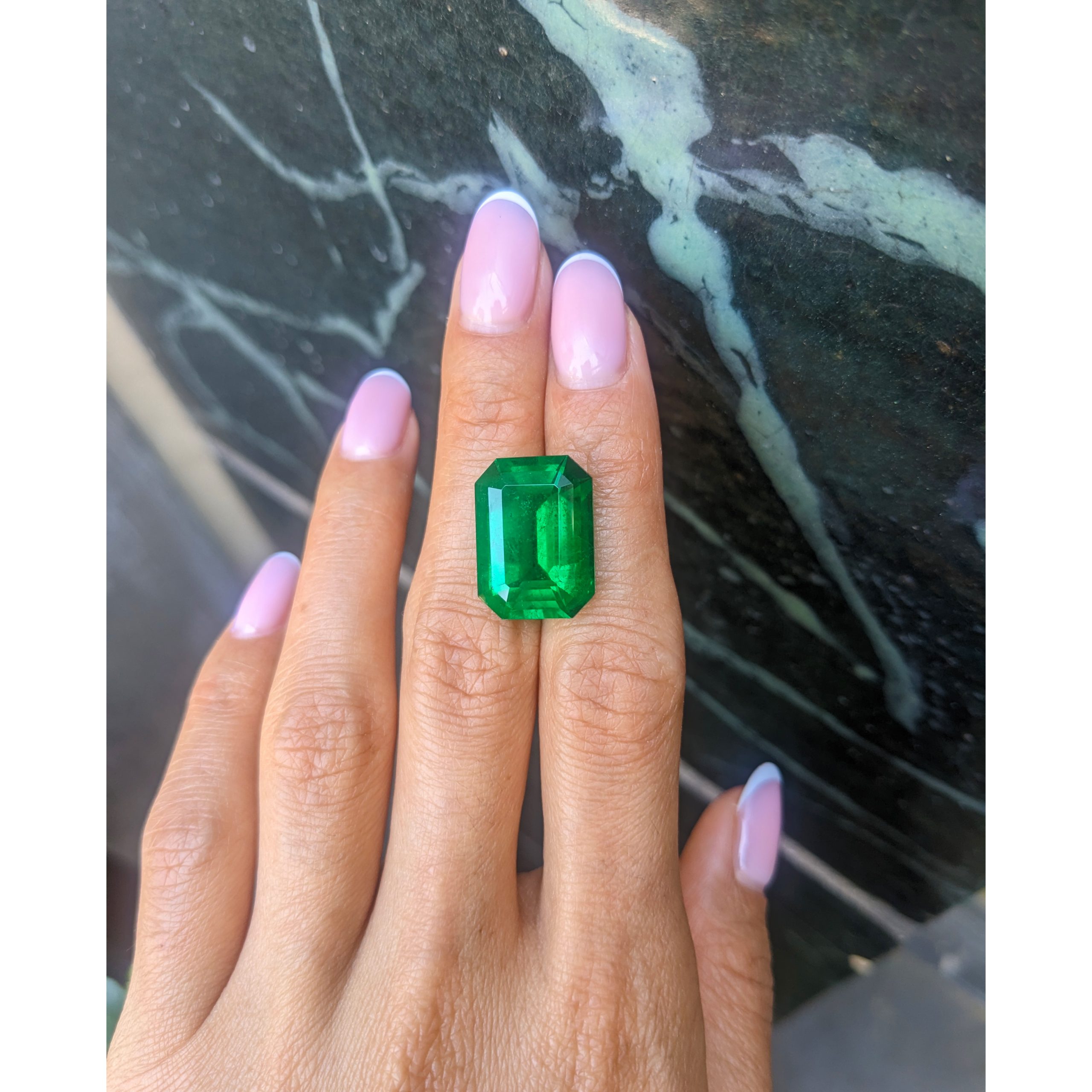
Three of the highest-priced emeralds in our inventory at the time of writing, on white and on the hand, including one from Zambia. Use the links for current details and stone-specific information.
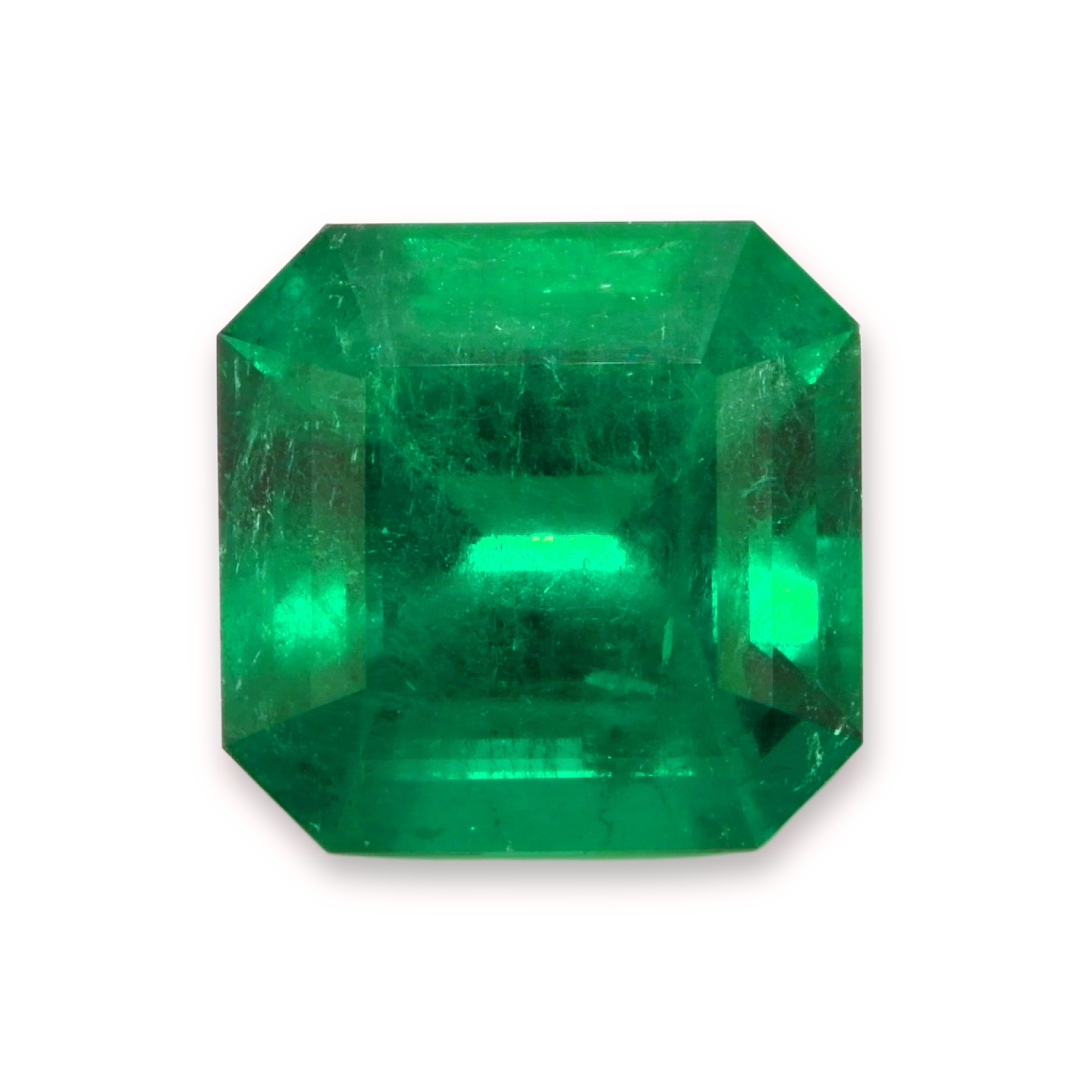
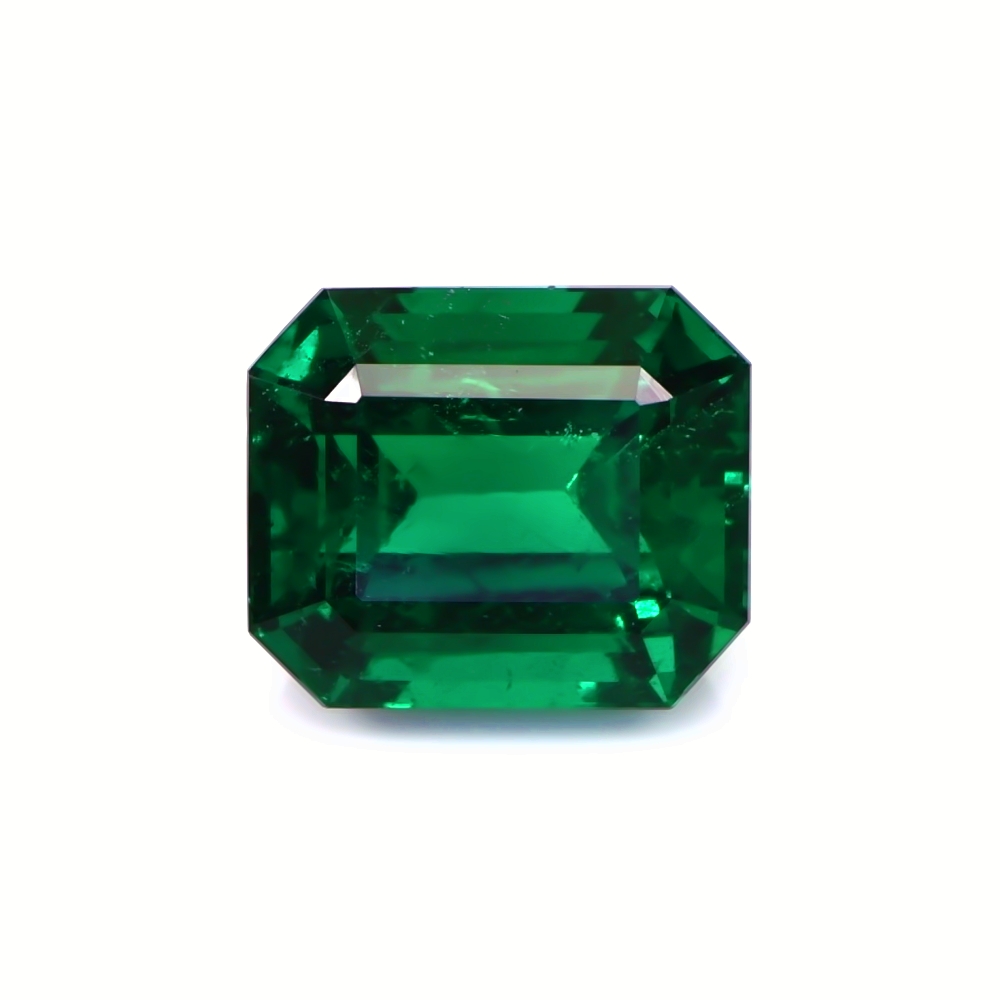
How Inclusions Help Identify Natural Emeralds
Synthetic emeralds exist and have the same basic chemistry as natural emerald. Inclusions are among the most important clues to distinguish them. Natural emeralds display inclusions consistent with growth in rock, such as mineral crystals and three-phase inclusions. Synthetic emeralds may show features related to how they were grown in the lab, such as particular growth patterns or flux remnants. For significant purchases, a report from an independent gemological laboratory is recommended.
Caring for What Is Inside
Because of their inclusions and fillers, emeralds require gentle care:
- Avoid ultrasonic and steam cleaners, which can enlarge fractures or remove filler.
- Clean with lukewarm water, mild soap, and a soft brush, then dry gently.
- Avoid heat and solvents, including household chemicals and some cosmetics.
- Remove emerald jewelry for heavy work or sports to reduce risk of knocks.
- Ask a professional about re-oiling if your emerald appears to have lost brightness over time.
Look for Yourself: Handheld Videos
Turn these emeralds in your mind as you would with a loupe in hand: watch how light travels through each stone and where it catches.
Looking Inside an Emerald Yourself
You do not need a laboratory to enjoy an emerald’s jardin. A 10x loupe and good, diffused light are enough to begin. Hold the stone steady, look through the table, and slowly tilt it. Fractures often appear as thin reflective planes, fluid inclusions as tiny dark or bright pockets, and crystals as small, defined shapes. Try not to judge the stone only by what you see under magnification. Step back and look at it at a normal viewing distance as well, because that is how you and others will see it when it is worn.
Frequently Asked Questions
What does “jardin” mean in emeralds?
Jardin is French for garden. It describes the inclusions inside an emerald, which can resemble foliage when viewed under magnification.
Are all emeralds oiled?
Most emeralds are clarity enhanced with oils or resins, but not all. Untreated emeralds exist and are rarer. Ask for disclosure and, for important stones, a laboratory report.
Can an emerald be re-oiled?
Yes. If an oiled emerald becomes dull over time, a professional can often clean and re-treat it to restore its appearance.
Do inclusions make emeralds fragile?
Inclusions, particularly surface-reaching fractures, can make emeralds more vulnerable to knocks and heat. Protective settings and gentle care help keep them safe.
What does “Standard” mean on an emerald listing?
On emeralds.com it means the stone has had the clarity enhancement used on the vast majority of emeralds today, using only industry-accepted materials such as colorless oils, wax or polymers/resins. “No Enhancement” means the stone has only been cut and polished.
Does “No Enhancement” mean an emerald has no inclusions?
No. Enhancement and clarity are separate facts. For example, E4237 is listed as No Enhancement and is graded Very Slightly Included, so it still contains inclusions, only fewer or finer than many stones.
Conclusion
Inside an emerald is a record of the stone’s dramatic beginnings: fractures, fluids, and crystals captured as it grew. Understanding this jardin helps you judge clarity in context, ask the right questions about enhancement, and care for your emerald properly for years to come.
If you would like to look inside an emerald with us and talk through what you see, our team at The Natural Emerald Company is happy to help. Explore our collection at emeralds.com.