
- Stone10
- Reports3
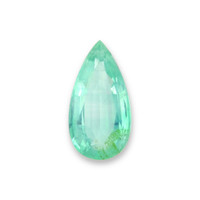


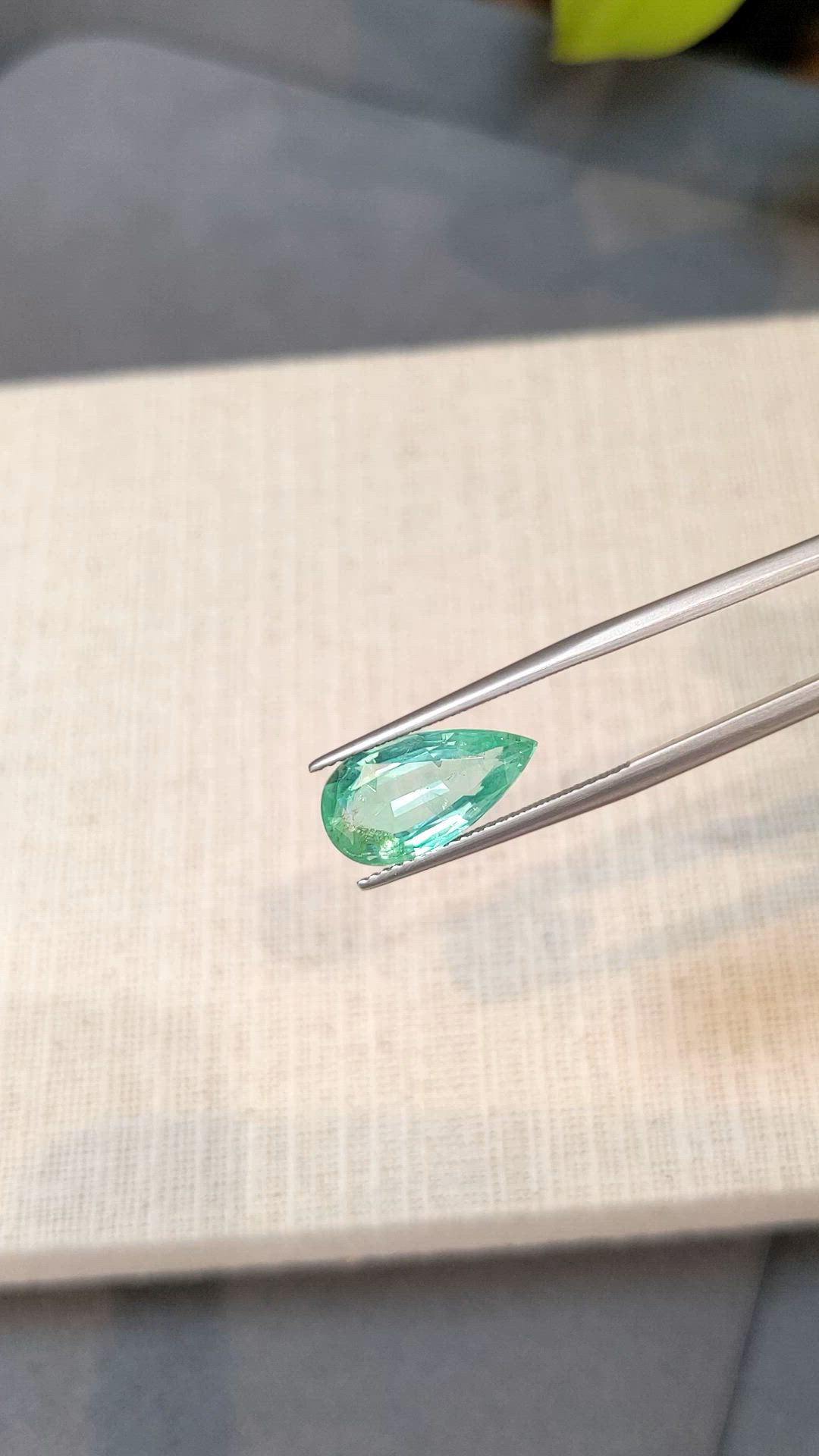
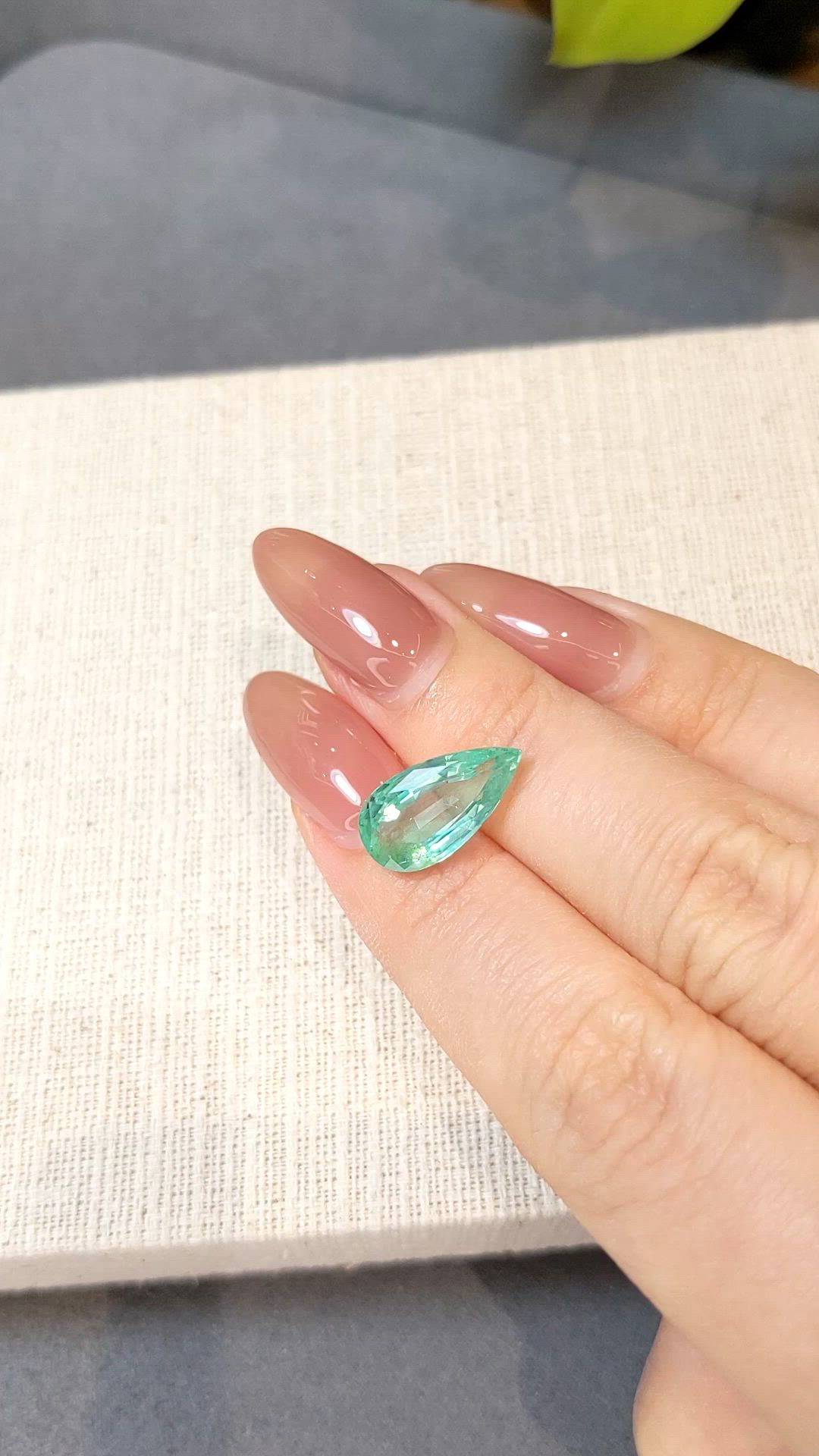


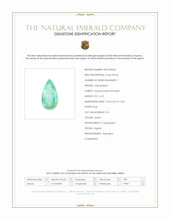


4.13 Ct. Emerald from Nigeria
This loose stone is available to ship now
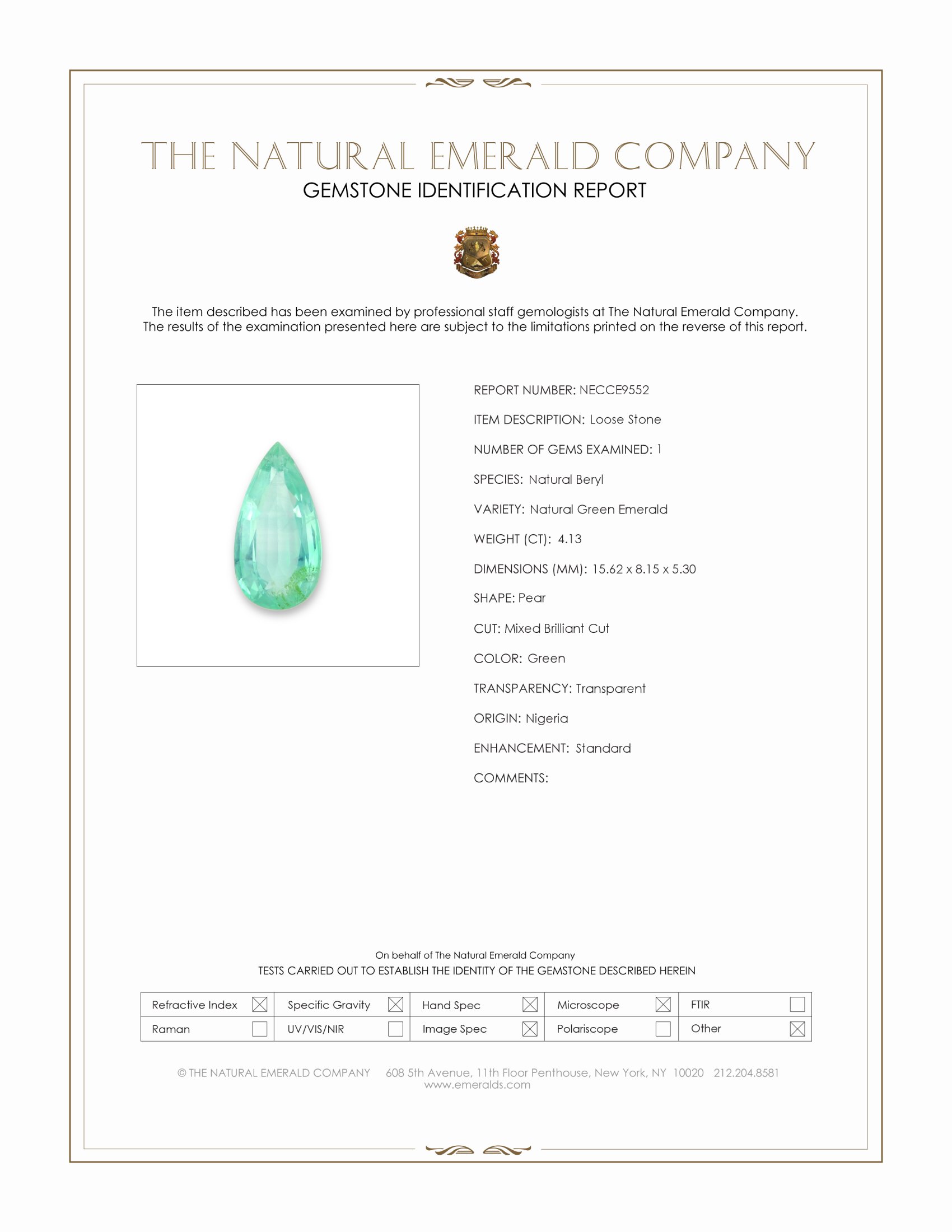
Item ID: | E9552 |
|---|---|
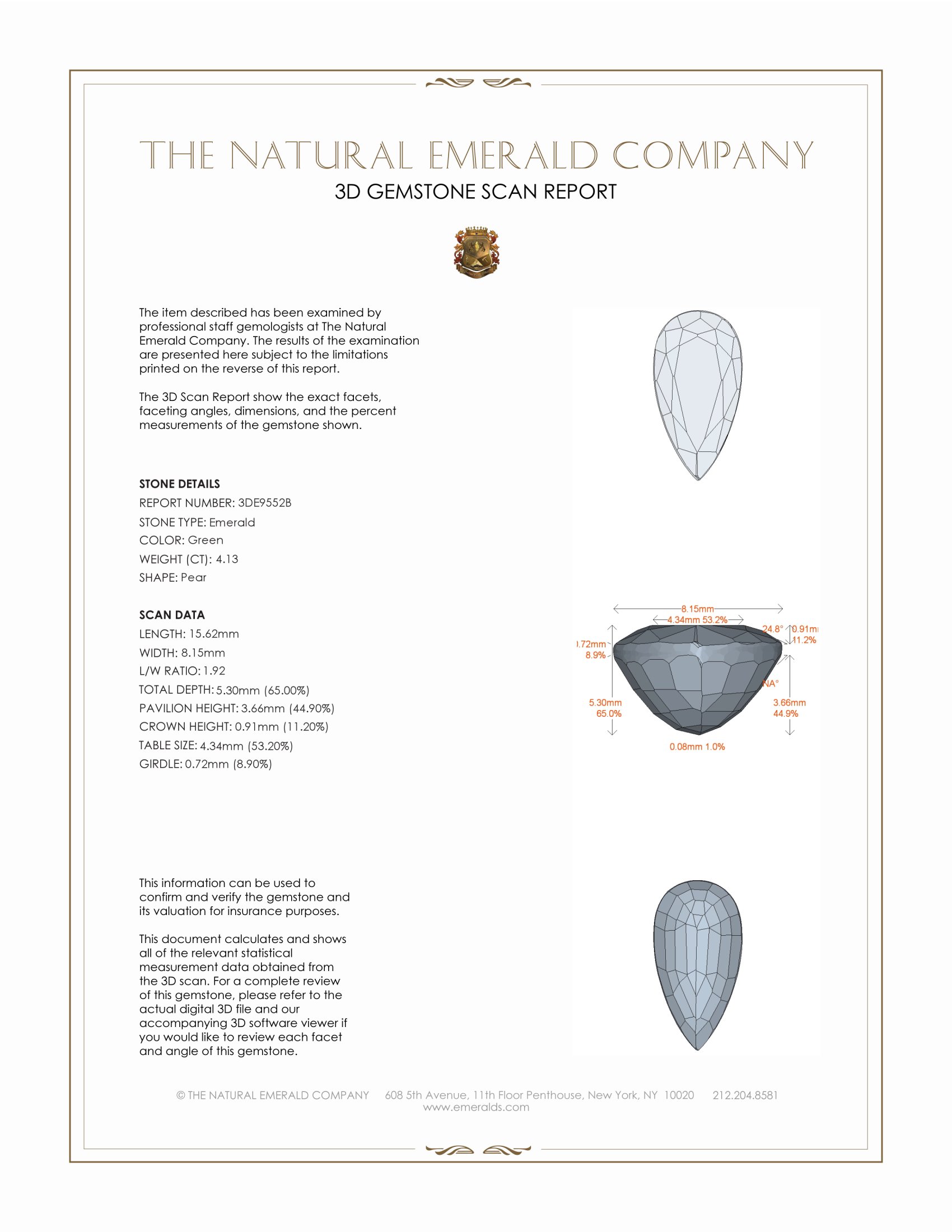
Dimensions (MM): help | Length: 15.62 Width: 8.15 Height: 5.3 |
Weight: | 4.13 Ct. |
Color: help | Green |
Color intensity: help | Medium |
Clarity: help | Very Slightly Included |
Shape: help | Pear |
Cut: | Mixed Brilliant Cut |
Cutting style: | Faceted |
Enhancements: help | Standard |
Origin: help | Nigeria |
Per carat price: help | $925 |
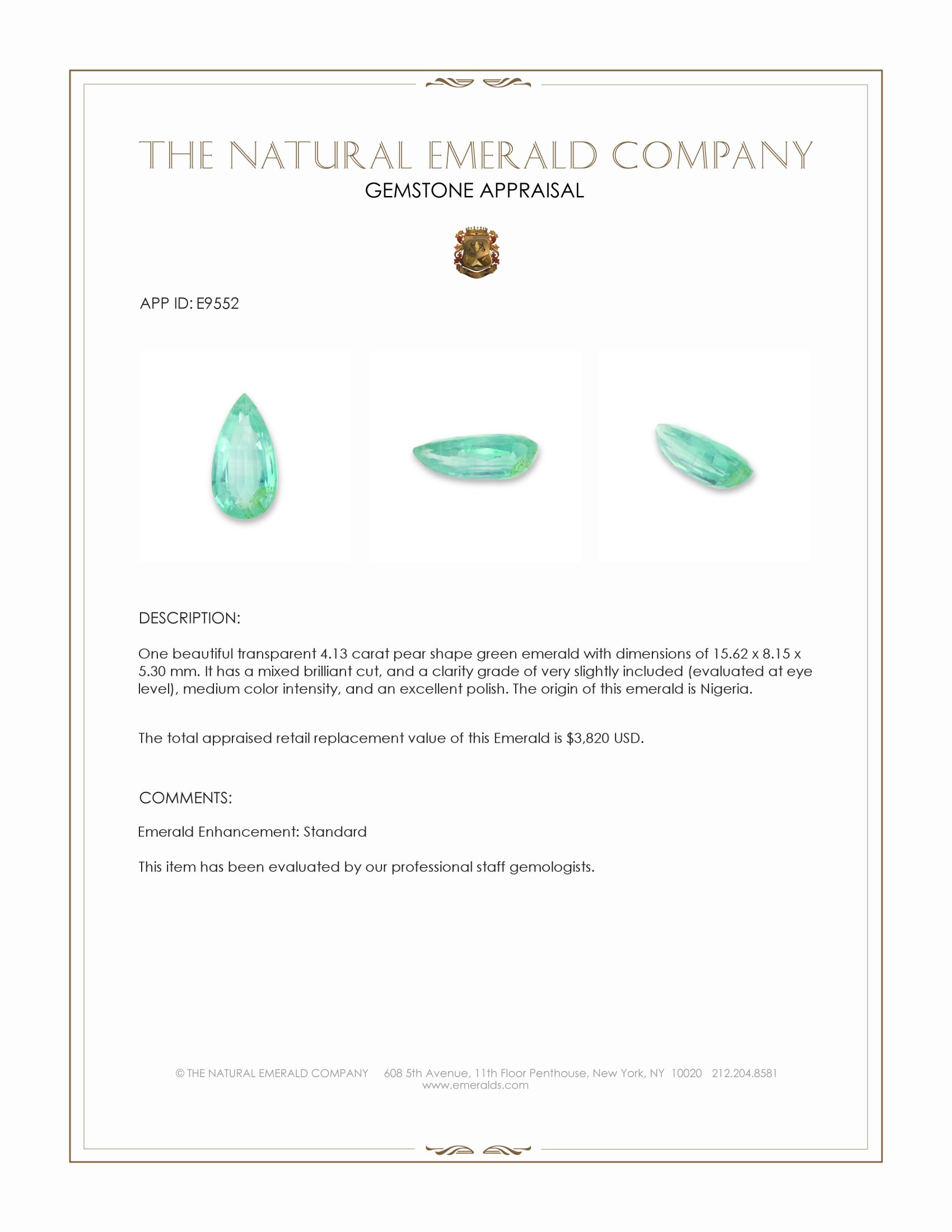
This 4.13 carat pear shape green emerald from The Natural Emerald Company is presented with precise gemological parameters to support informed design and setting decisions. The stone measures 15.62 by 8.15 by 5.30 millimeters, yielding a length to width ratio of approximately 1.92, a classic elongated pear that reads elegant and directional in mounted form. The cut is a mixed brilliant, executed to blend the scintillation of brilliant facets with the layered light control of step facets. The crown displays compact brilliant facets that maximize return from direct light, while the pavilion geometry incorporates elongated facets to preserve body color and produce a controlled flash. The clarity is graded very slightly included at eye level, confirming that natural internal features are minimal and do not compromise visual performance in typical viewing distances. Color is described as medium intensity green, with a well balanced saturation that permits both lively light play and consistent table color. The polish is excellent, delivering crisp facet junctions and a smooth finish that contributes directly to the stone s brilliance. Enhancement is standard, indicating customary filling to improve apparent clarity and stability, and the emerald s recognized origin is Nigeria, a source known for producing stones with fresh green tones and even saturation.
From a lapidary and setting engineering perspective, the pear proportions and 5.30 millimeter depth inform the mounting options most appropriate for long term security and optimal optics. The relative depth yields a moderately shallow to medium profile, meaning the pavilion may benefit from a slightly more open bezel or a lower crown mounting to allow light entry and to preserve backlight sparkle. When selecting prong settings for a ring or pendant, the junction at the pointed end should use a v shaped prong or a reinforced bezel guard that follows the contour of the apex to prevent chipping, while the broader end is well suited to three prong placement or a subtle crown of wire to stabilize the table and distribute stress. For bezel settings, minimal bezel walls that do not overcover the crown facets are recommended, particularly along the length where too heavy a bezel will reduce perceived size and light return. A tension setting is technically possible given the stone s dimensions and polish quality, but should be engineered with bevels and protective guards at the point to avoid stress concentration at the tip.
The stone s mixed brilliant faceting and very slightly included clarity make it an ideal center stone for a variety of high end configurations. As a solitaire ring it will read elongated and slimming on the finger, and can be mounted with the point either toward or away from the hand, depending on the wearer s preference for ergonomics and finger elongation. A halo of small brilliant cut diamonds with carefully selected pavilion angles will enhance perceived size and increase scintillation without overpowering the medium green tone. Side stone combinations work exceptionally well either with tapered baguettes aligned to the pear s axis to reinforce the length, or with kite shaped accents at the shoulder for a contemporary sculptural effect. For a pendant, a low profile bezel with an integrated bail or a discreet hidden halo will permit close to the throat placement that emphasizes the stone s length and avoids undue movement which could stress the apex. Drop style earrings can be created by pairing this stone with a mirror matched partner, or by using diamond tops to create vertical movement that showcases the pear shape. For a ring intended for daily wear, platinum or 18 karat yellow gold offer different but predictable outcomes, with platinum providing superior tensile support for prongs and yellow gold adding a warm contrast that can intensify the perceived green.
Customization pathways extend into multi stone and bespoke settings and should be discussed with our design team to preserve both gem integrity and aesthetic intent. For cluster compositions, offsetting small emerald melee with this pear as the focal point can produce a floral or asymmetrical dynamic. When integrating with colored gemstones, complementary saturation and tone control are paramount, and we recommend a balanced palette that keeps this stone s medium color intensity as the anchor. Metal selection influences apparent color, with warmer alloys nudging the green slightly toward yellowish green and white metals emphasizing cooler bluish undertones. Considerations for daily wear include choosing settings that protect the treated fissures typical of standard enhancement, avoiding ultrasonic cleaners and high heat processes. The Natural Emerald Company provides consultation on bespoke guard prong designs, minimal bezel profiles, and hidden support galleries that cradle the pavilion while maximizing face up area. Our craftsmen can create reversible mounts to change orientation, removable bails for interchangeable necklace arrangements, and convertible settings that transform a pendant into a ring or a brooch into an earring set. We welcome inquiries to discuss mounting tolerances, recommended prong gauges, and CAD renderings, so that this well proportioned 4.13 carat Nigerian pear emerald can be realized in a finished piece that performs beautifully and endures.


