
- Stone8
- Reports3
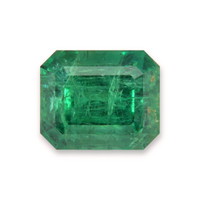
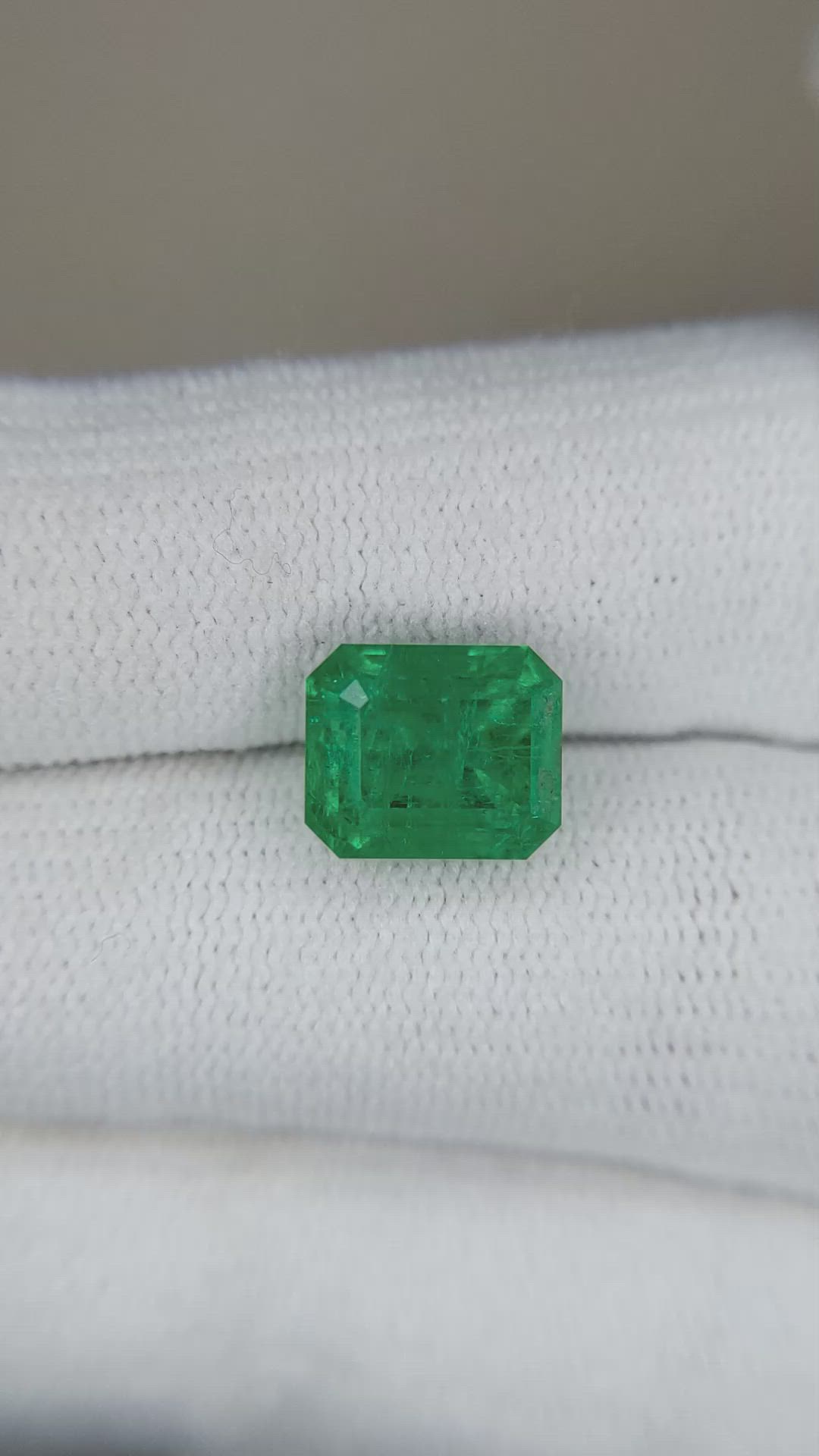
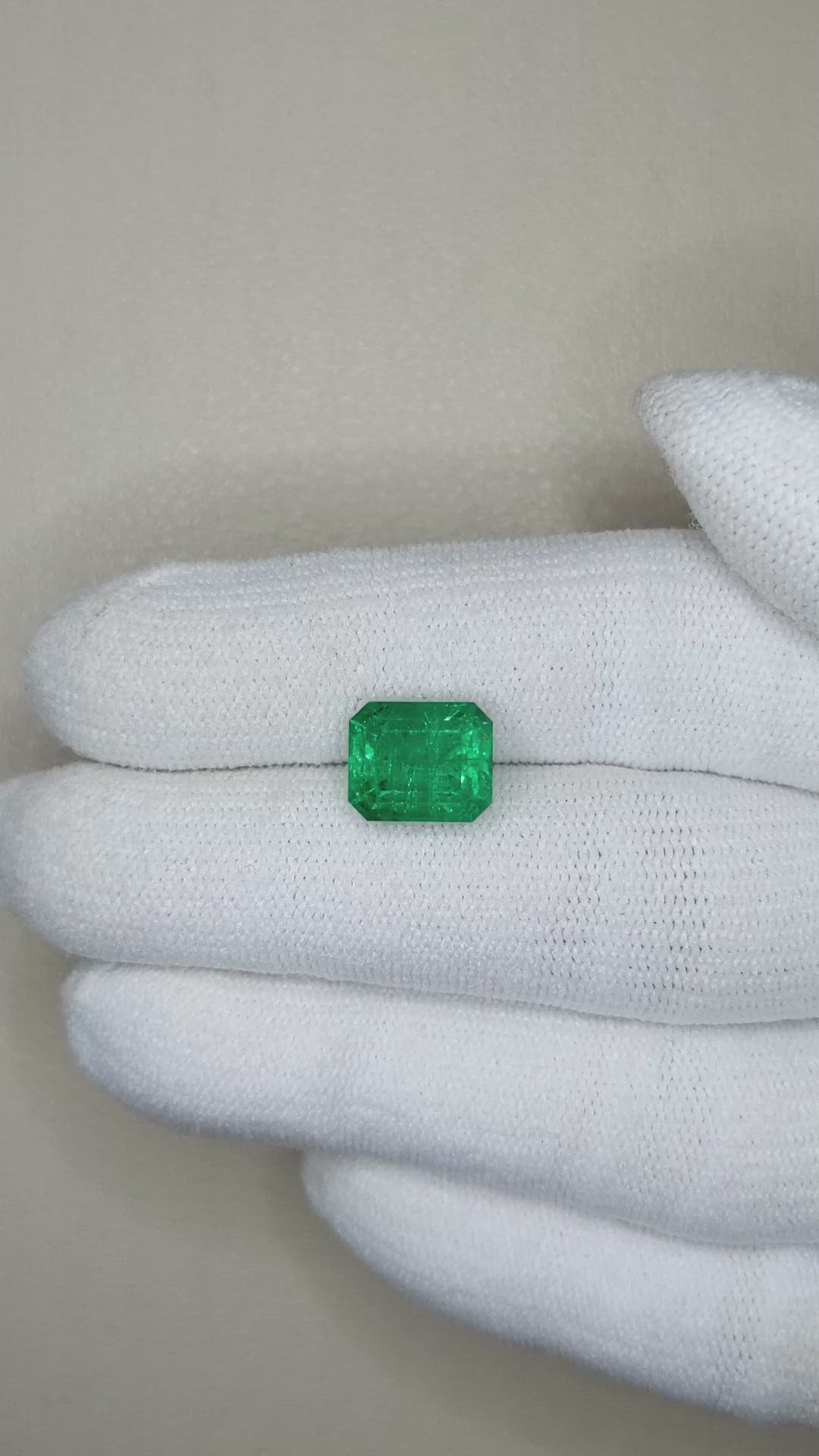

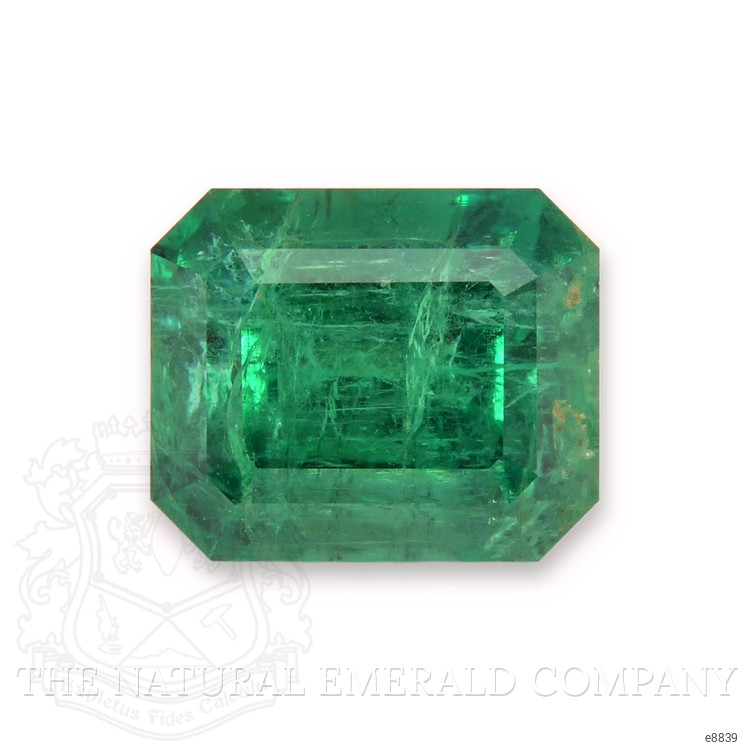

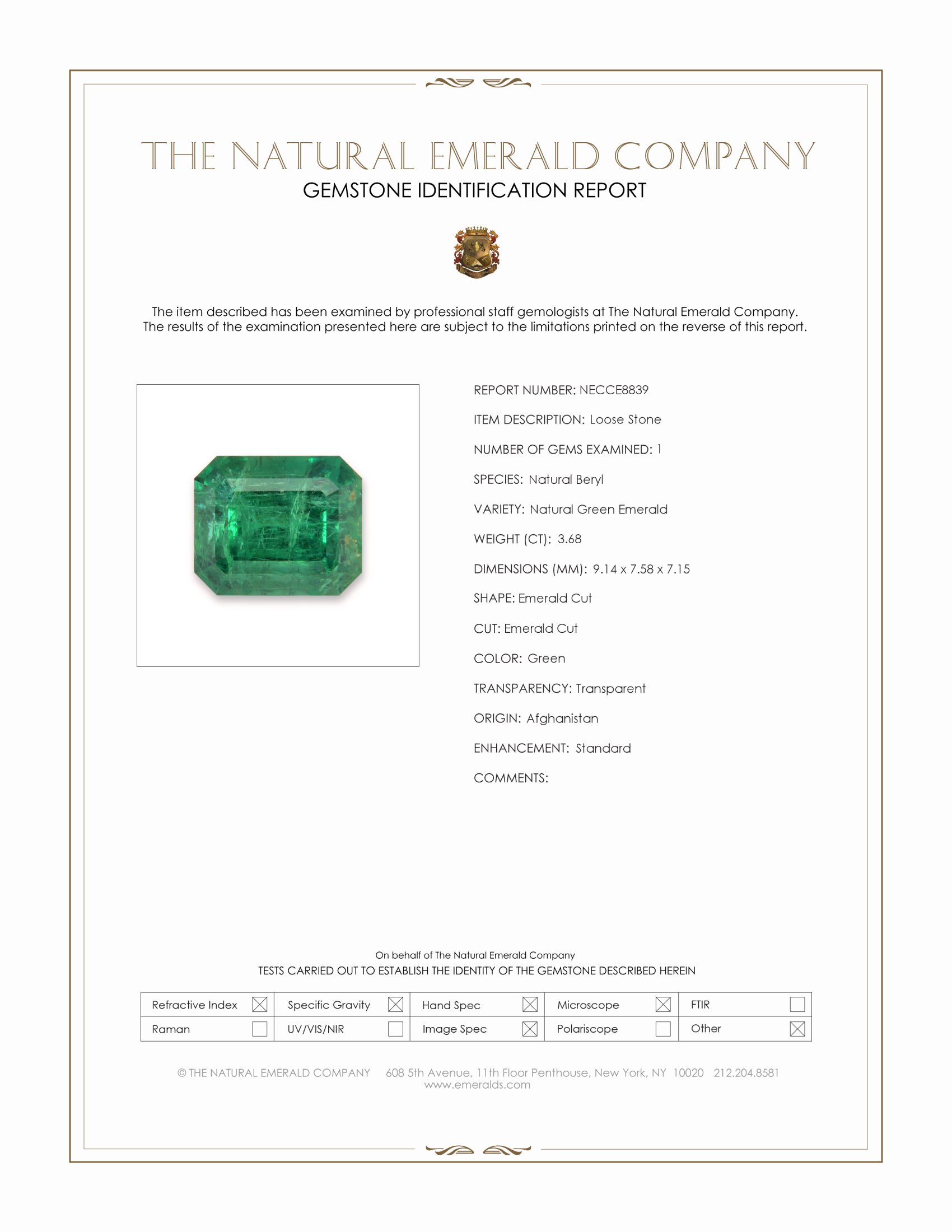
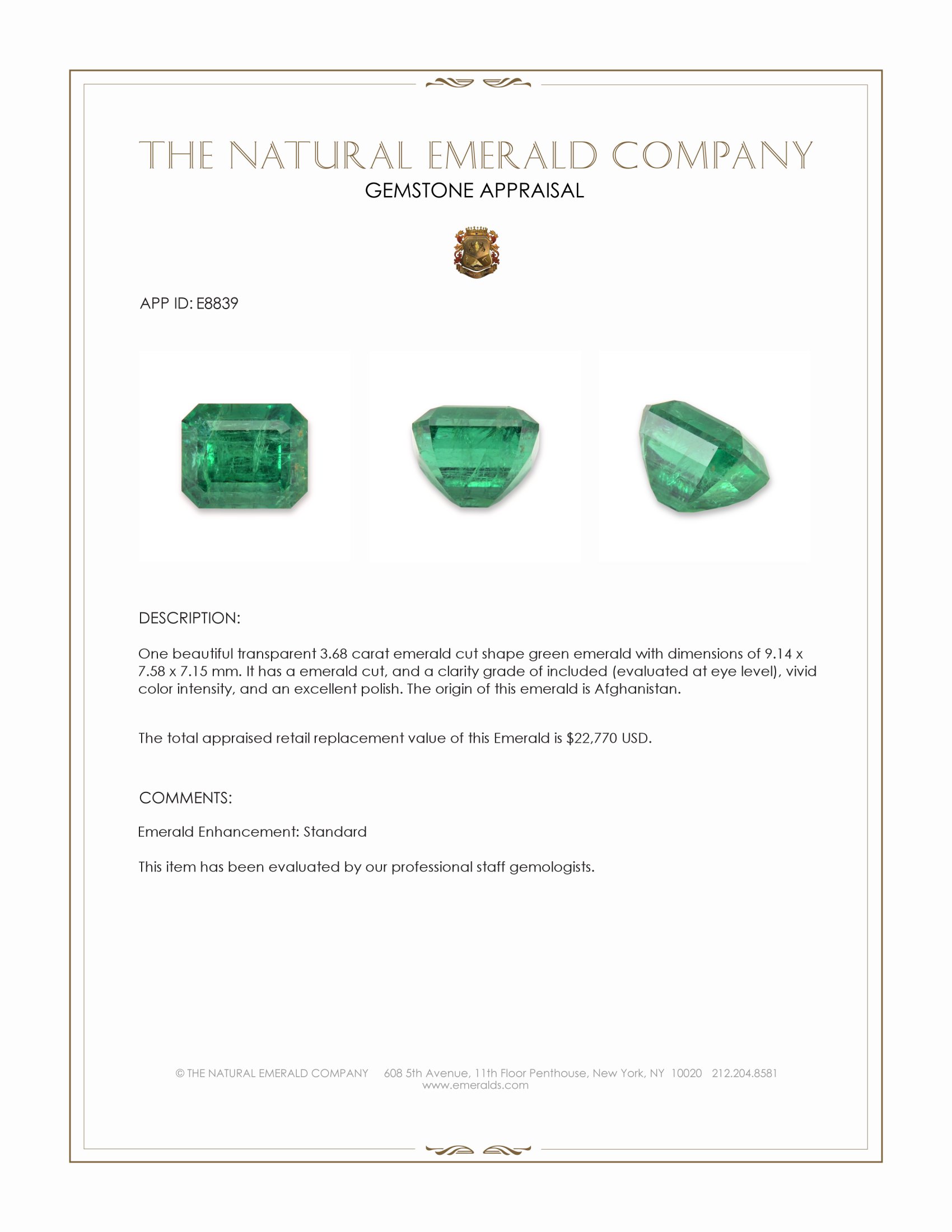
3.68 Ct. Emerald from Afghanistan
This loose stone is available to ship now
Item ID: | E8839 |
|---|---|
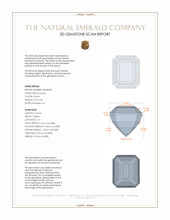
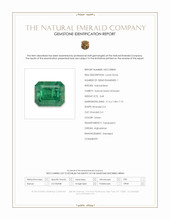
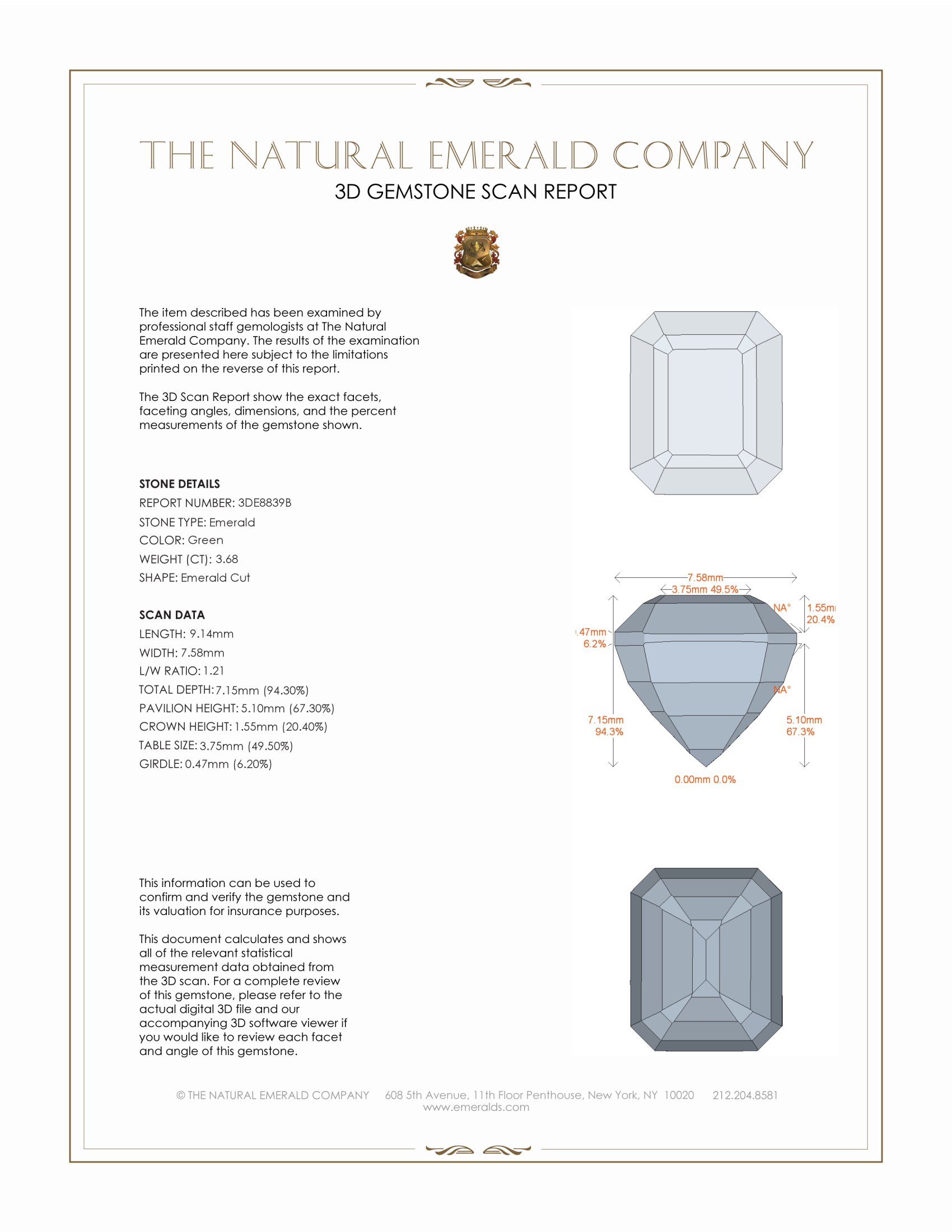
Dimensions (MM): help | Length: 9.14 Width: 7.58 Height: 7.15 |
Weight: | 3.68 Ct. |
Color: help | Green |
Color intensity: help | Vivid |
Clarity: help | Included |
Shape: help | Emerald Cut |
Cut: | Emerald Cut |
Cutting style: | Faceted |
Enhancements: help | Standard |
Origin: help | Afghanistan |
Per carat price: help | $6,188 |
This transparent green emerald weighs 3.68 carats, and measures 9.14 by 7.58 by 7.15 millimeters, presented in a traditional emerald cut that emphasizes clarity and color. The stone is graded as included when evaluated at eye level, with a vivid color intensity and an excellent polish that allows light to traverse its table and step facets with crisp definition. Enhancement is standard, a common practice that improves apparent clarity while preserving the natural character of the gem. The material is of Afghan origin, and its provenance has been documented by The Natural Emerald Company, ensuring that the specimen meets our standards for responsible sourcing and consistent description. The combination of transparency, vivid green coloration, and a precise emerald cut creates a gem that reads as both technically sound and visually compelling, with proportions that balance face up color saturation and overall presence in a jewelry setting.
The geological narrative of this emerald begins millions of years ago in a dynamic mountain building environment, where tectonic forces associated with the collision of continental plates created the conditions necessary for emerald formation. Deep within the crust, beryllium rich fluids interacted with chromium and vanadium bearing host rocks, typically schists and altered ultramafic lithologies, under moderate to high pressure and relatively low temperature conditions. These hydrothermal or metasomatic fluids migrated along fractures and shear zones, precipitating emeralds in open spaces and veins where chemical gradients and physical conditions favored crystallization. Over geological time, repeated pulses of fluid, coupled with fluctuating temperature and pressure regimes, allowed the crystal to grow slowly, layer by layer, incorporating trace elements that produce the characteristic green hue. The vivid color of this particular specimen reflects a balance of chromium and possibly vanadium substitution within the beryl structure, imparting intense absorption in the visible spectrum while maintaining transparency. Inclusions, which are described in the clarity grading, are not flaws in the strict sense, but records of the growth environment, including tiny mineral crystals, healed fractures, and fluid inclusions that provide a microscopic archive of pressure, temperature, and compositional changes during formation.
The cutting and finishing of the stone translate its geological history into a wearable object, while preserving evidence of its natural origin. The choice of an emerald cut, with its rectangular table and step facets, is purposeful for stones with vivid color and internal characteristics, as the geometry tends to emphasize color saturation and create a controlled play of light across broad facet planes. The cutter removed minimal material to achieve face up brilliance and to present the vivid green evenly across the table, while the excellent polish ensures that facet junctions are clean and reflective. The grade of included at eye level reflects visible inclusions that remain detectable without magnification, a typical and acceptable attribute for emeralds, particularly those from Afghanistan, where specimens often show internal growth structures. Standard enhancement refers to commonly accepted treatments such as oiling or resin filling that improve apparent clarity by reducing the visual impact of surface reaching fissures, while not materially altering the gem chemistry or its origin. For connoisseurs and professionals, these treatments are part of the stone's story, and are disclosed in keeping with industry best practices and The Natural Emerald Company standards.
In practical terms, the combination of weight, dimensions, cut, and color make this emerald suitable for a range of high quality jewelry applications where its vivid green can be showcased, and where the presence of inclusions can be appreciated as an authentic sign of natural growth. The measured dimensions allow for symmetric settings and secure mounting, while the stepped pavilion and table proportions support stable optical performance in standard lighting conditions. Care recommendations are consistent with those for natural emeralds, advising avoidance of harsh chemicals and high heat, and periodic inspection of settings and any filled fissures to ensure long term stability. The documented origin from Afghanistan, the transparent to vivid color presentation, and the disclosure of clarity grade and standard enhancement together form a complete technical profile, presented by The Natural Emerald Company, to support informed selection and stewardship of this notable emerald.


