
- Stone6
- Reports2

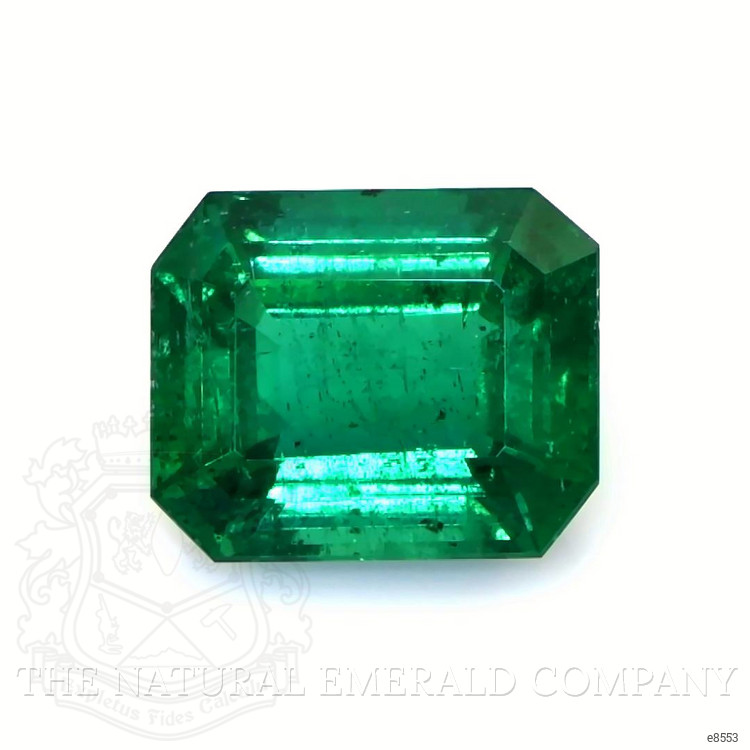
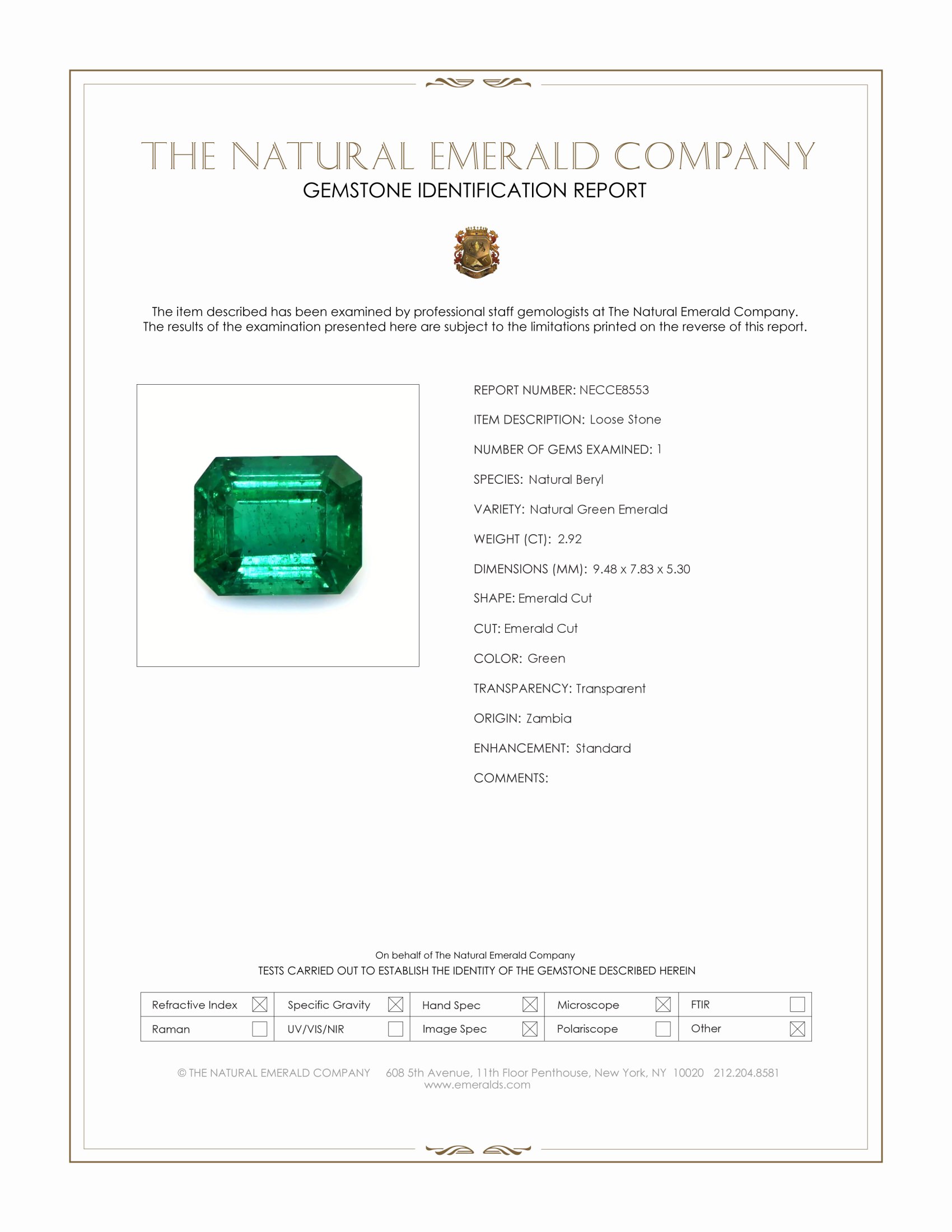
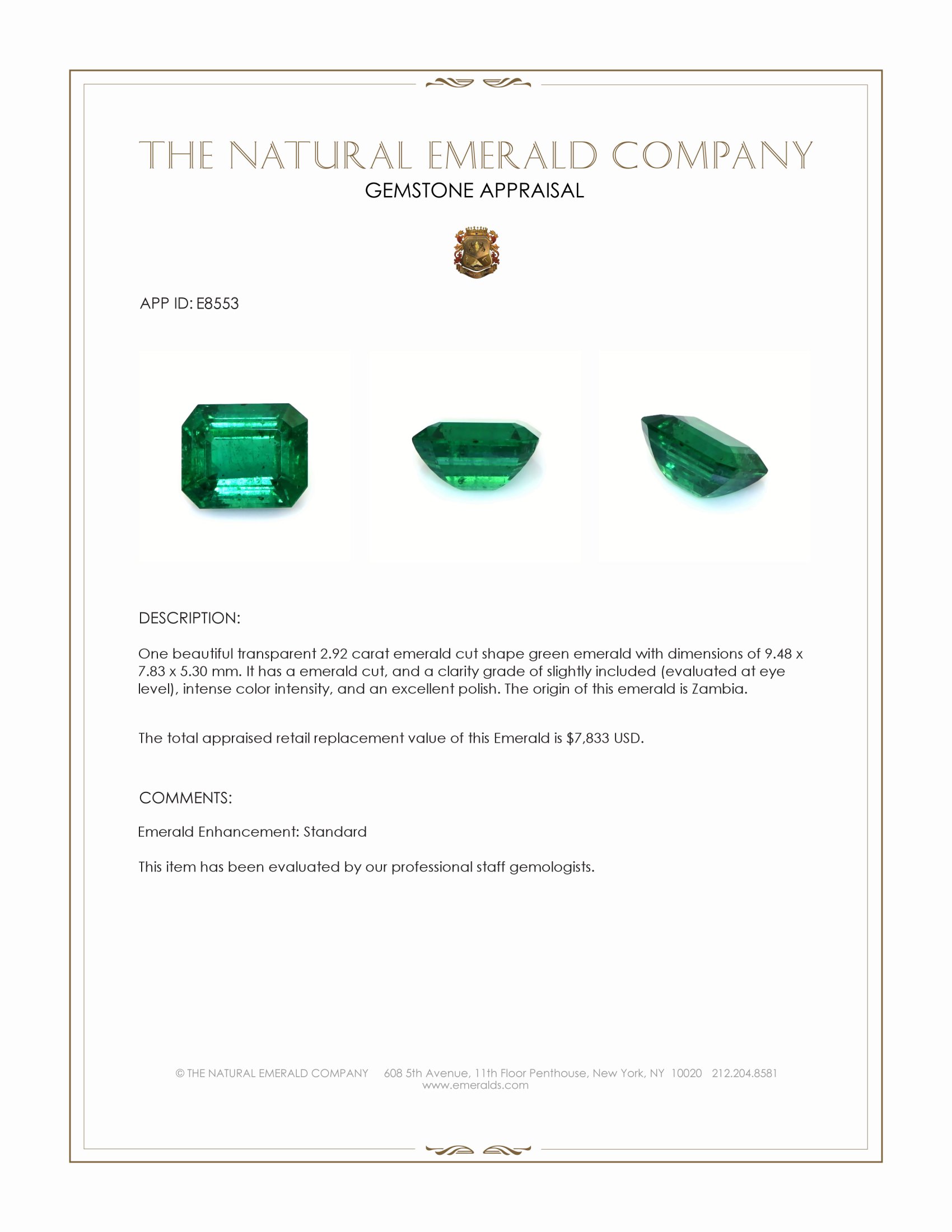
2.92 Ct. Emerald from Zambia
This loose stone is available to ship now
Item ID: | E8553 |
|---|---|
Dimensions (MM): help | Length: 9.48 Width: 7.83 Height: 5.3 |
Weight: | 2.92 Ct. |
Color: help | Green |
Color intensity: help | Intense |
Clarity: help | Slightly Included |
Shape: help | Emerald Cut |
Cut: | Emerald Cut |
Cutting style: | Faceted |
Enhancements: help | Standard |
Origin: help | Zambia |
Per carat price: help | $2,683 |
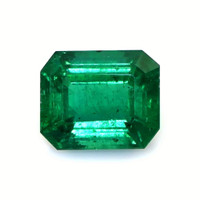
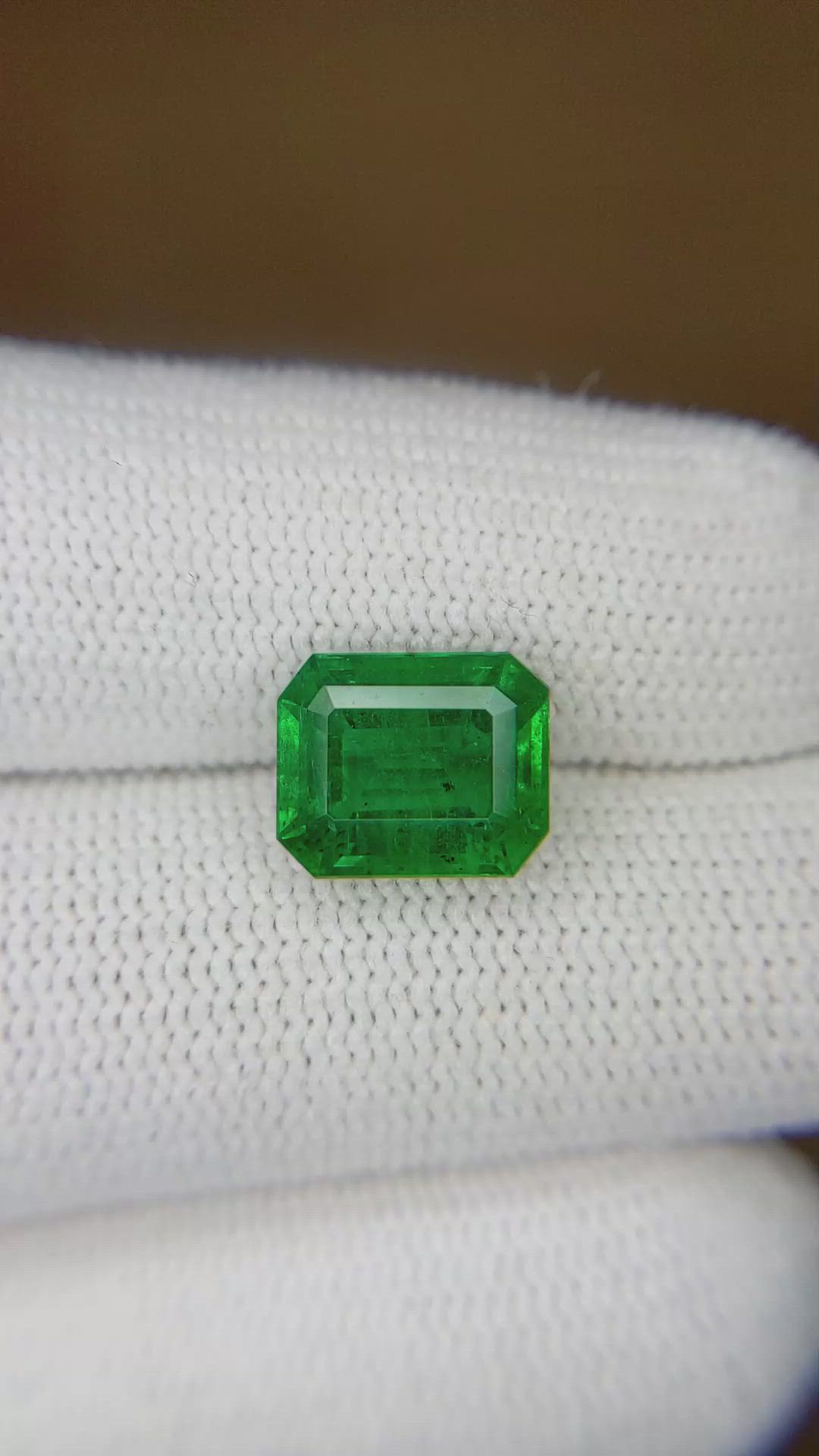
This specimen is a transparent, 2.92 carat, emerald cut green emerald from Zambia, offered by The Natural Emerald Company. The table of the gem presents as a classical step cut rectangle, with measured dimensions of 9.48 by 7.83 by 5.30 millimeters, yielding a length to width ratio of approximately 1.21, and a depth of approximately 61.3 percent when calculated against the average of length and width. The cut is designed to concentrate color through broad stepped facets rather than scintillating brilliance, and the face up presentation shows intense color intensity, even saturation, and an excellent polish. The clarity is graded slightly included at an unaided eye level, in keeping with what trade gemmologists designate as slightly included, with internal jardin features that confirm natural formation, and the enhancement is standard, consistent with accepted oiling practices for emeralds to stabilize surface reaching fissures and optimize transparency.
From a cutting and finishing perspective this emerald demonstrates precise faceting control and symmetrical proportions, attributes that are often decisive for the technical buyer. The emerald cut uses parallel step facets on the crown and pavilion, creating a layered optical effect that emphasizes hue and saturation over dispersion. This stone’s length to width ratio of 1.21 sits in the preferred range for a compact yet elegant rectangular profile, which maximizes face up color without creating a squat appearance. The depth at approximately 61.3 percent is within the optimal window for emerald cuts, ensuring that light retention is balanced between surface reflection and internal color return. The excellent polish reported by our lapidaries translates to crisp facet junctions and minimal surface frosts, which is essential for an emerald cut, because the broad facet planes are unforgiving of polish lapses. The slightly included clarity grade, observable at eye level, indicates inclusions that are natural, often aligned with growth patterns, and that they do not materially reduce transparency or brilliance in this particular stone.
The color attributes and origin of this gem are central to its value proposition. Zambian emeralds characteristically display a deep, slightly bluish green with strong saturation, and this stone’s intense color intensity is consistent with that typology. In comparison to famous historic emeralds, the technical buyer will note differences that illuminate its unique value. The Chalk Emerald, for example, is celebrated for its large Colombian tone and classic pure green hue at a much larger scale, while the Mughal era inscribed emeralds are prized for their historical provenance and often show variable clarity due to age and cutting styles. This Zambian emerald, while more modest in carat weight than museum pieces, offers a modern cutter’s advantage, namely optimized step facets that deliver a concentrated, intense face up color and excellent surface polish. Its slightly included clarity provides evidence of natural formation, similar to the jardin characteristic that collectors admire in older famed stones, but in a gem that has been cut to modern proportions to enhance wearability and contemporary jewelry integration. The result is a gem that marries historical desirability for natural inclusions with present day lapidary precision.
For practical use and long term appreciation the technical buyer should consider setting and care recommendations, and the provenance assurances offered by The Natural Emerald Company. Emeralds, while durable enough for most jewelry applications, do carry internal fissures that make protective settings advisable, so bezel, halo, or low bezel prong designs will preserve the integrity of the girdle and minimize exposure to impacts. The standard enhancement noted indicates traditional oiling or similar treatments to improve transparency and stability, a practice accepted across the trade, and one that The Natural Emerald Company documents for every parcel. Routine maintenance should include gentle cleaning with warm water and a mild detergent, avoiding steam and ultrasonic cleaners if the oiling is present, and periodic inspection of the setting and any surface reaching fissures. From an investment viewpoint, the combination of intense Zambian green, a precisely executed emerald cut with an ideal depth percentage, and an excellent polish produces a gem that reads visually larger than its carat weight might suggest, and that offers collectors and designers a distinct, historically resonant alternative to larger Colombian or famous museum stones, with the added advantage of contemporary cutting standards and reliable documentation from The Natural Emerald Company.


