
- Stone9
- Reports4

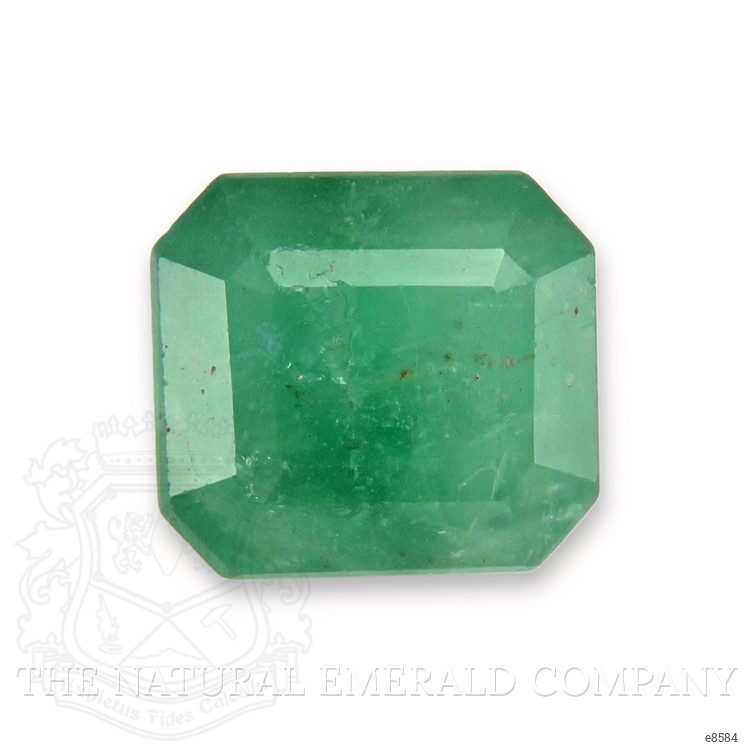

2.24 Ct. Emerald from Zambia
This loose stone ships by Mar 1
Item ID: | E8584 |
|---|---|
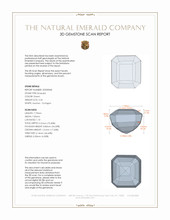
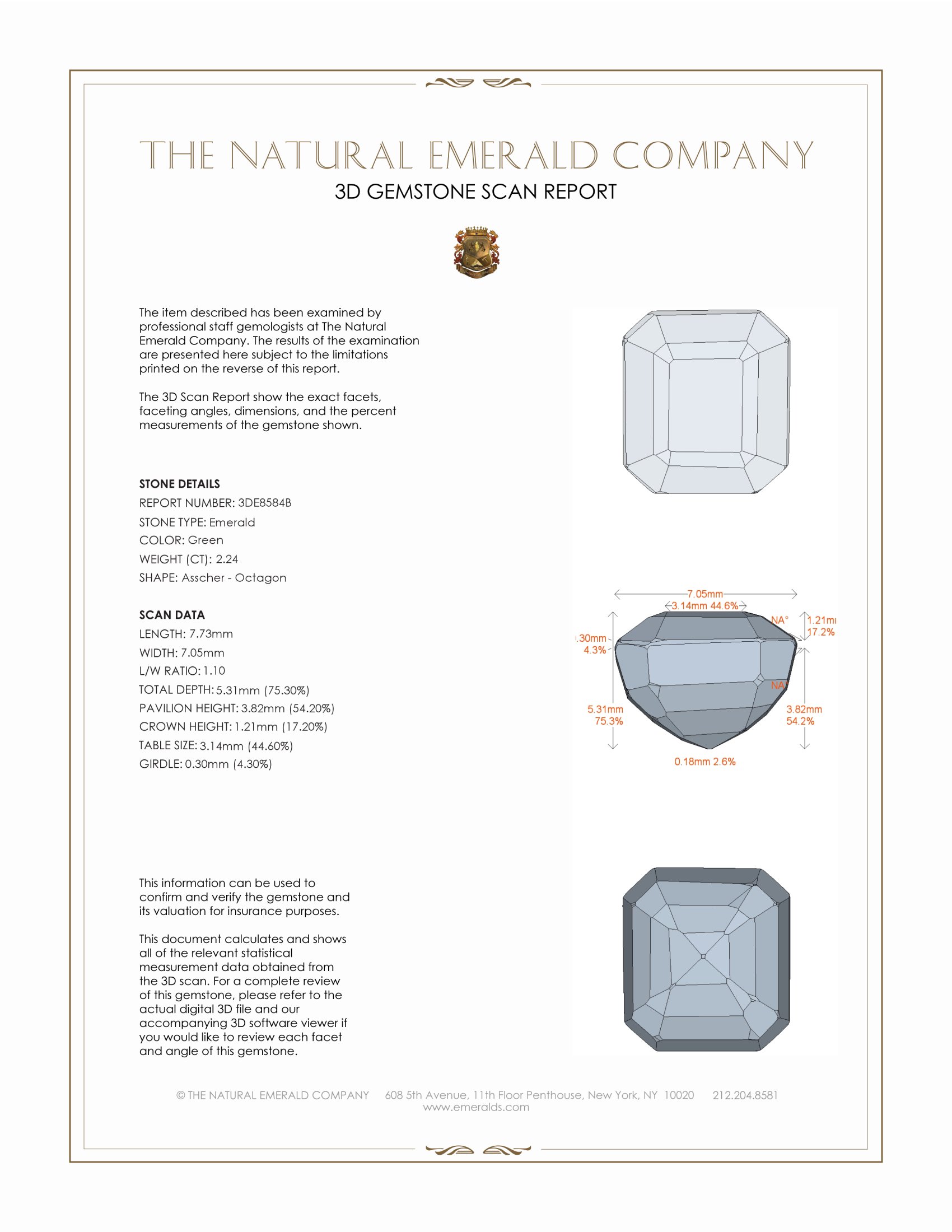
Dimensions (MM): help | Length: 7.73 Width: 7.05 Height: 5.31 |
Weight: | 2.24 Ct. |
Color: help | Green |
Color intensity: help | Medium Intense |
Clarity: help | Included |
Shape: help | Asscher - Octagon |
Cut: | Asscher |
Cutting style: | Faceted |
Enhancements: help | Standard |
Origin: help | Zambia |
Per carat price: help | $643 |
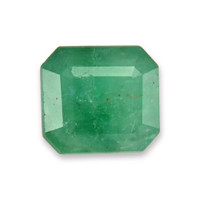
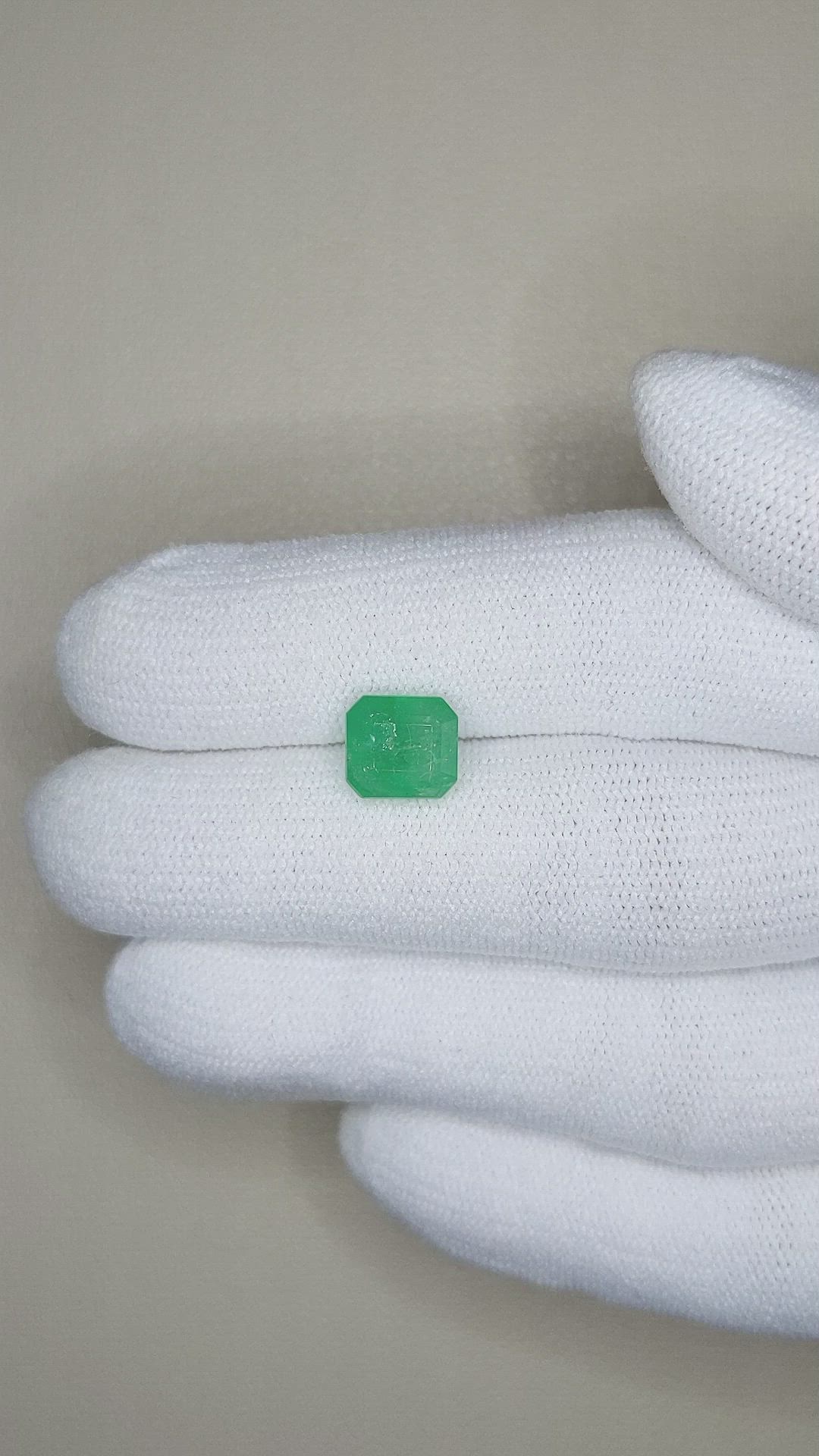
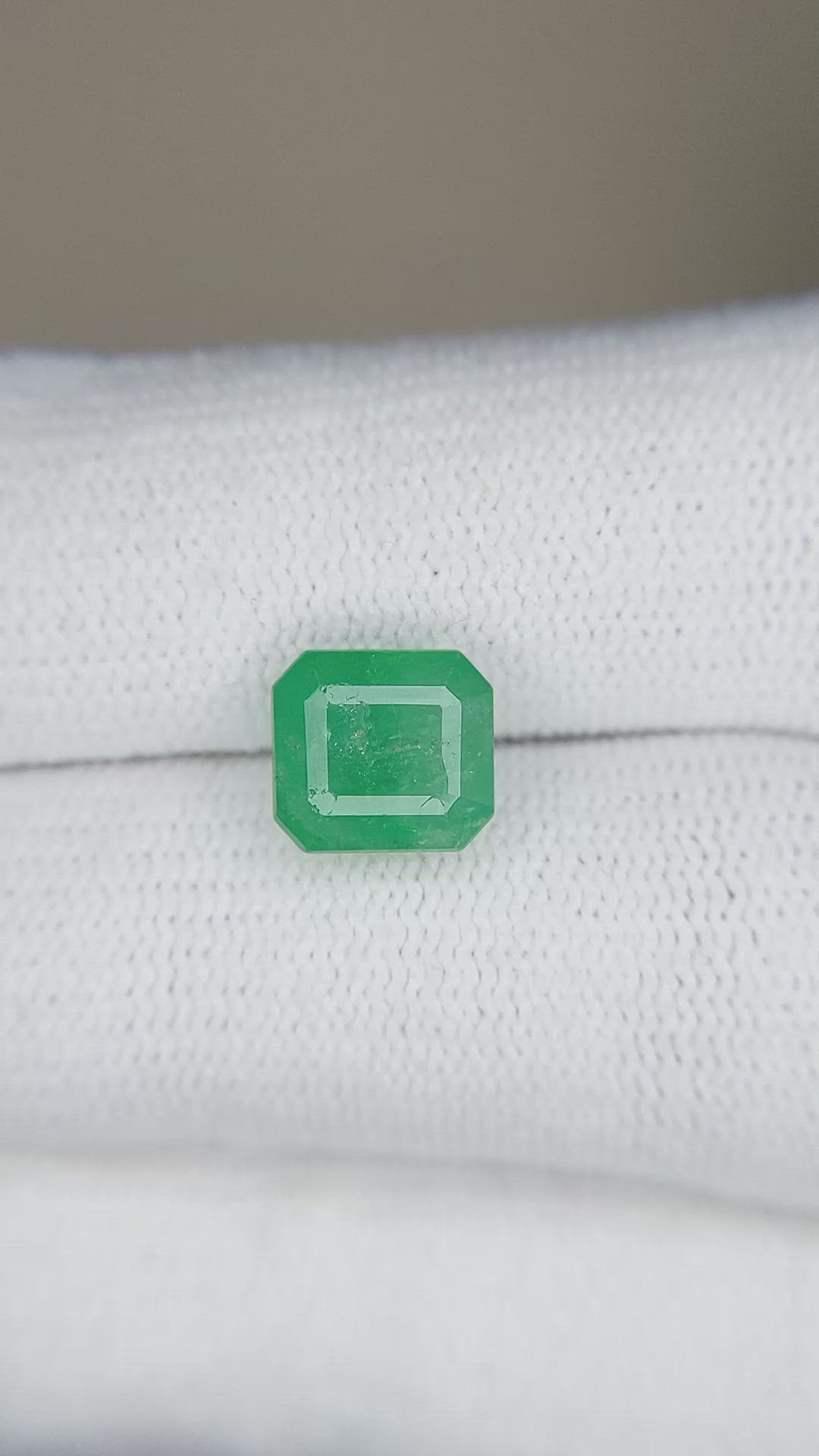
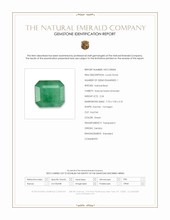
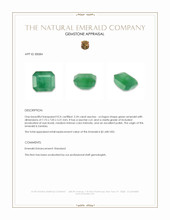
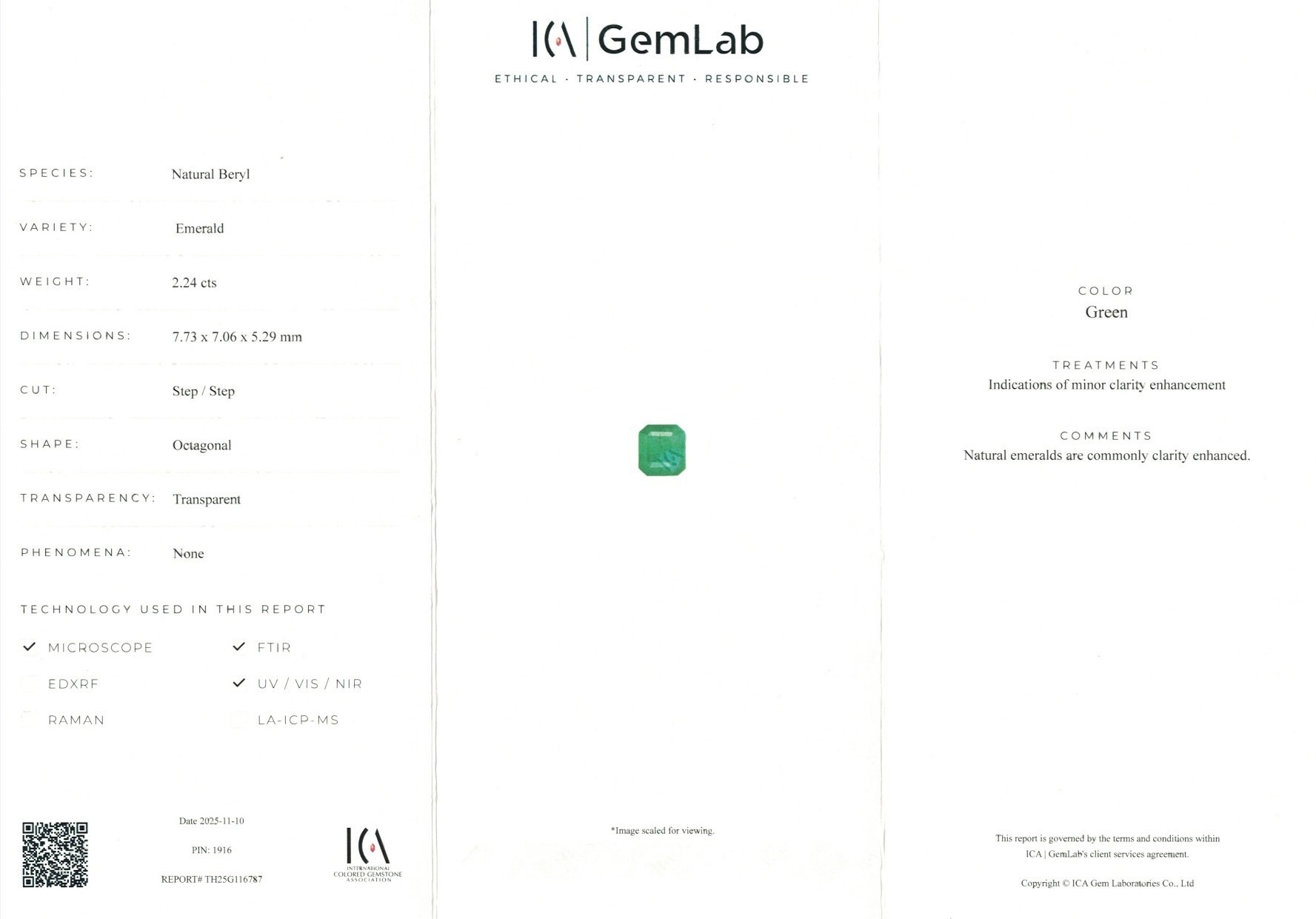
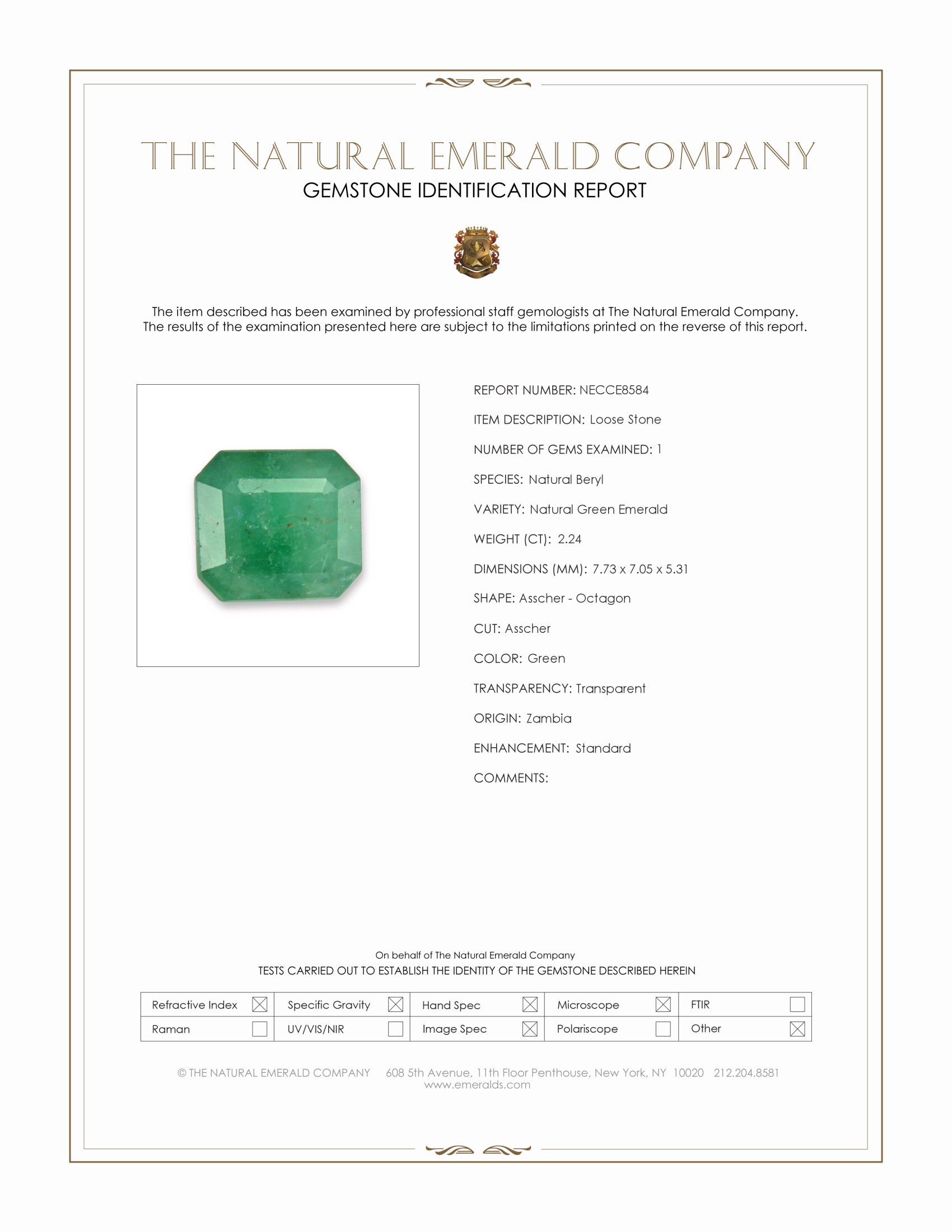
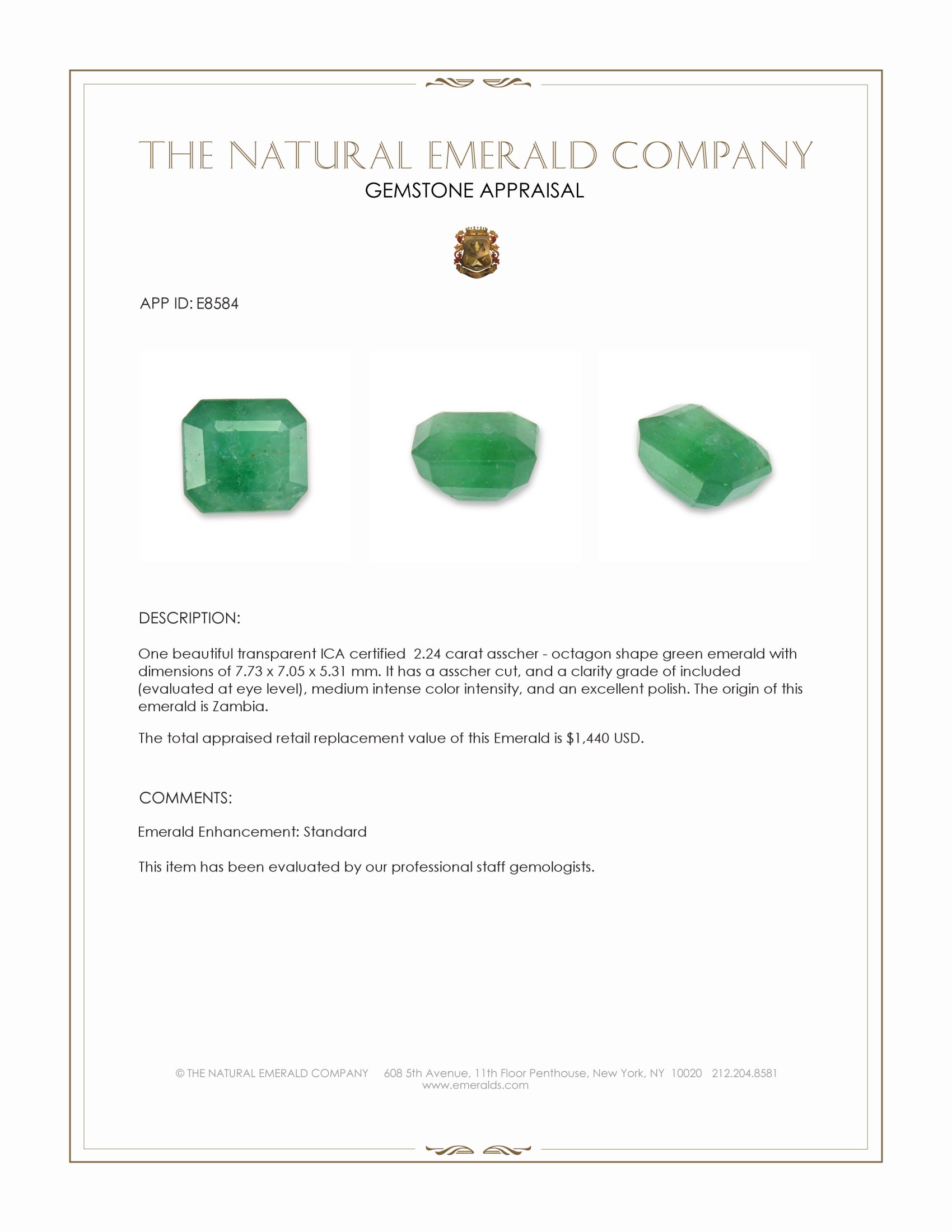
This is an ICA certified natural Zambian emerald, weight two point two four carats, presented in an asscher octagon outline with dimensions seven point seven three by seven point zero five by five point three one millimeters. The piece exhibits transparent bodycolor with a medium intense green saturation and an overall clarity grade of included when examined at eye level, consistent with natural emerald formation. The cutting format is a classical asscher, which translates to a square stepped pavilion adapted to an octagonal perimeter by the truncation of each corner, and the finishing indicates an excellent polish across all facet planes. The enhancement is standard, as noted on the certificate, and the documented Zambian origin is significant because of the typical chromophore balance and growth characteristics it imparts, characteristics that the report from the ICA corroborates. The result is a gem that combines the visual depth and character of natural jardin inclusions with the disciplined geometry of a step cut, yielding a stone that will register as both a collector specimen and a striking jewelry center.
From a faceting and optical performance perspective the asscher cut employed here prioritizes broad, planar flashes and controlled light contrast rather than scintillation from many small facets. The crown and pavilion are organized into concentric step facets whose planes are cut to emphasize parallelism and symmetry, producing the hall of mirrors effect that is the hallmark of the asscher family. The octagonal outline created by truncated corners protects the girdle in wear, while allowing a larger apparent table, which in this example increases perceived table area and color spread without sacrificing proportion. Based on the reported dimensions the depth-to-average-diameter ratio is approximately seventy two percent, a proportion that contributes to saturated face-up color by retaining optical path length in the stone, while also moderating light leakage for the medium intense tone that characterizes Zambian material. The excellent polish indicates crisp facet junctions and minimal surface abrasion, both important to maximizing directional light return and to ensuring consistent color across changing viewing angles.
When considered alongside famous emeralds of history the gem presents a different but complementary set of attributes. Great historical stones like the Chalk Emerald and Mughal period carvings are celebrated for exceptional color and in some cases for monumental size or historic carving. The Chalk Emerald is often cited for its vivid tone and highly transparent body, whereas Mughal examples display intense saturation and historical carving or inscription. By contrast this two point two four carat asscher offers the disciplined geometry and modern finishing that cater to contemporary collectors and jewelers, while retaining the natural inclusion patterns and color balance prized in museum pieces. The asscher faceting aligns this gem stylistically with high clarity step cut jewels seen in important collections, but its Zambian provenance imparts a cooler, slightly bluish bias within the green spectrum that differentiates it from warmer Colombian tones. This balance of medium intense color, transparent bodycolor, and visible jardin inclusions creates a natural character that is both a fingerprint of its origin and a selling point for connoisseurs who value authenticity over artificially created perfection.
From a practical standpoint the combination of a two point two four carat weight and a robust asscher octagon geometry makes this emerald particularly well suited to secure, architectural settings, where protective prongs or a bezel can shield the truncated corners and preserve the polish. The standard enhancement noted on the ICA certificate should be disclosed to the end user, as it is an industry standard practice intended to improve apparent clarity and stability, and it informs recommended care procedures such as avoiding prolonged exposure to ultrasonic cleaners and high heat. The excellent polish and thoughtful cutting proportions permit flexible design choices, ranging from a solitary engagement center that emphasizes linear elegance, to a trio or cluster composition where the step cut delivers disciplined contrast to brilliant cut side stones. The Natural Emerald Company stands behind the provenance and documentation of this stone, offering the ICA report as a record of origin, enhancement, and measured dimensions, and positioning this emerald as a technical and aesthetic choice for buyers who appreciate the interplay of historical gemstone standards and contemporary cutting precision.


