
- Stone12
- Reports3


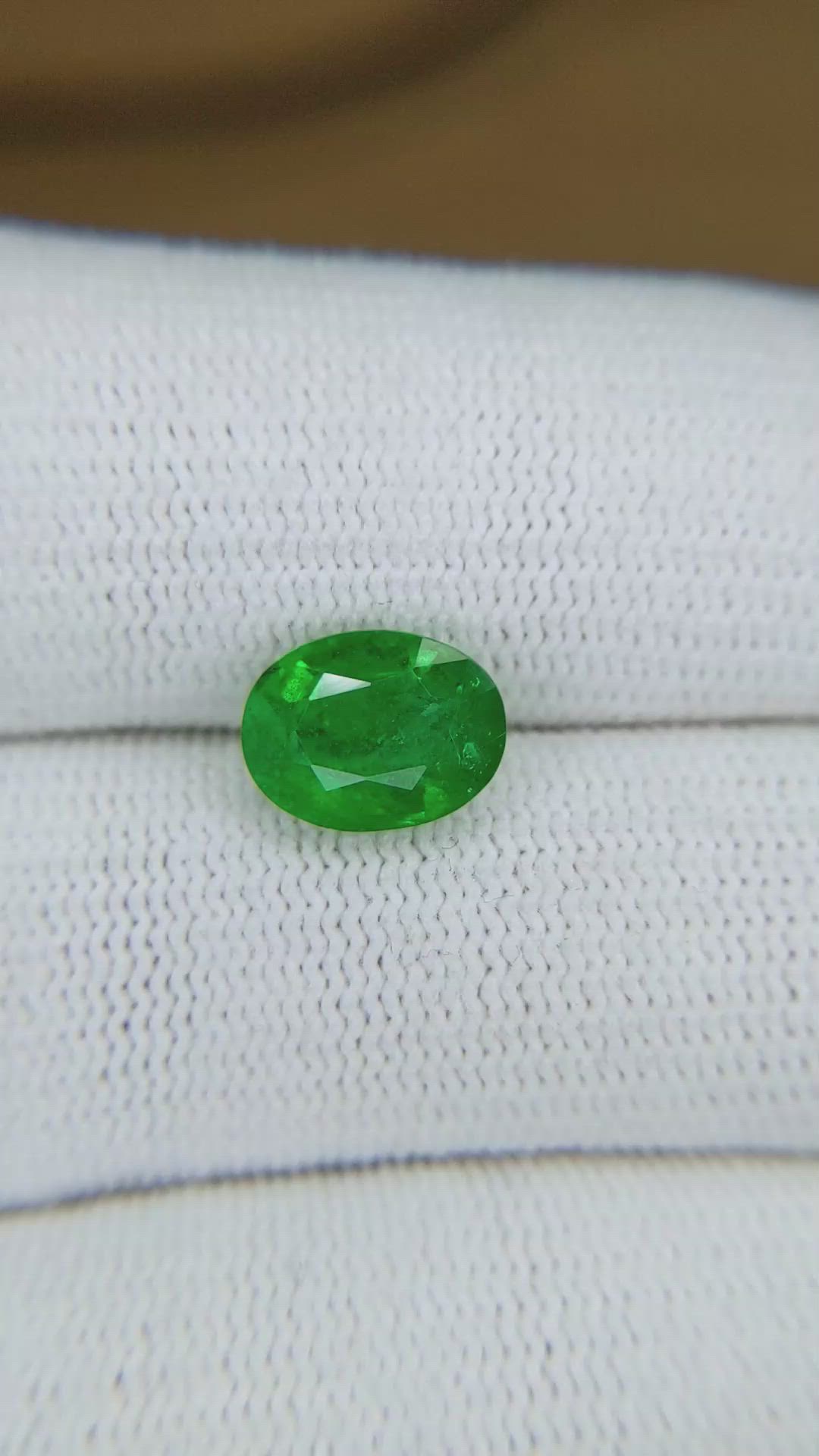
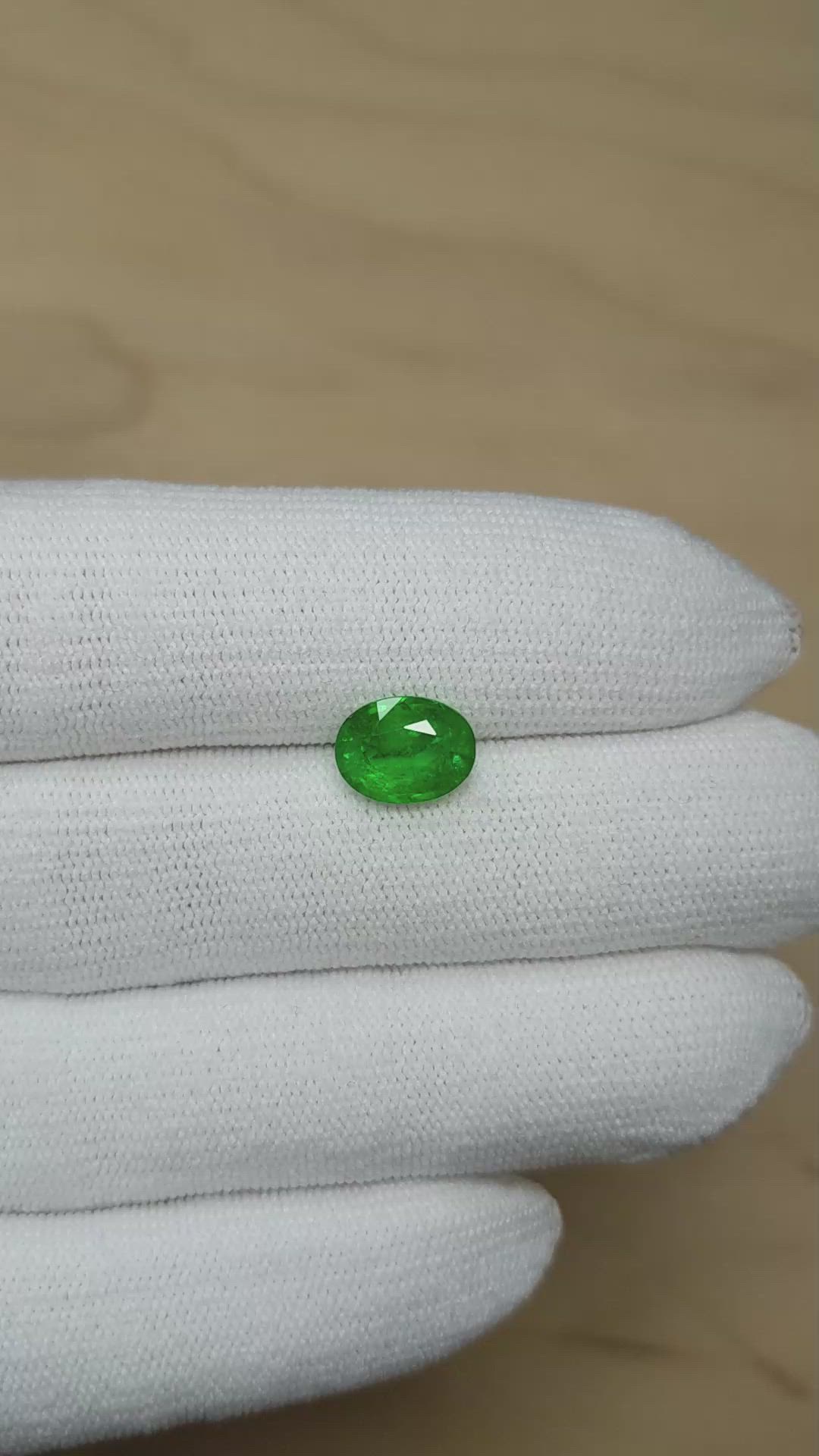
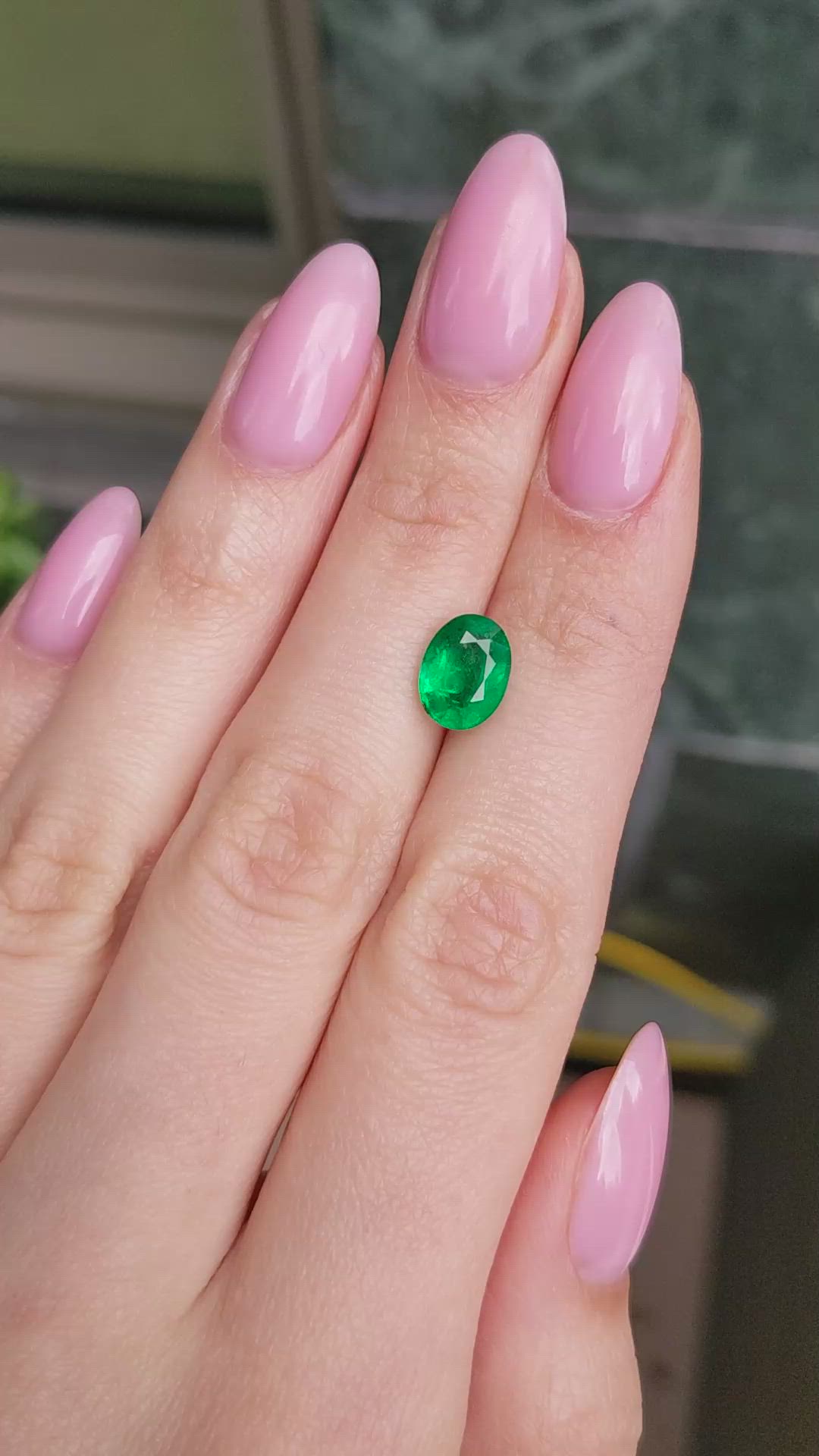
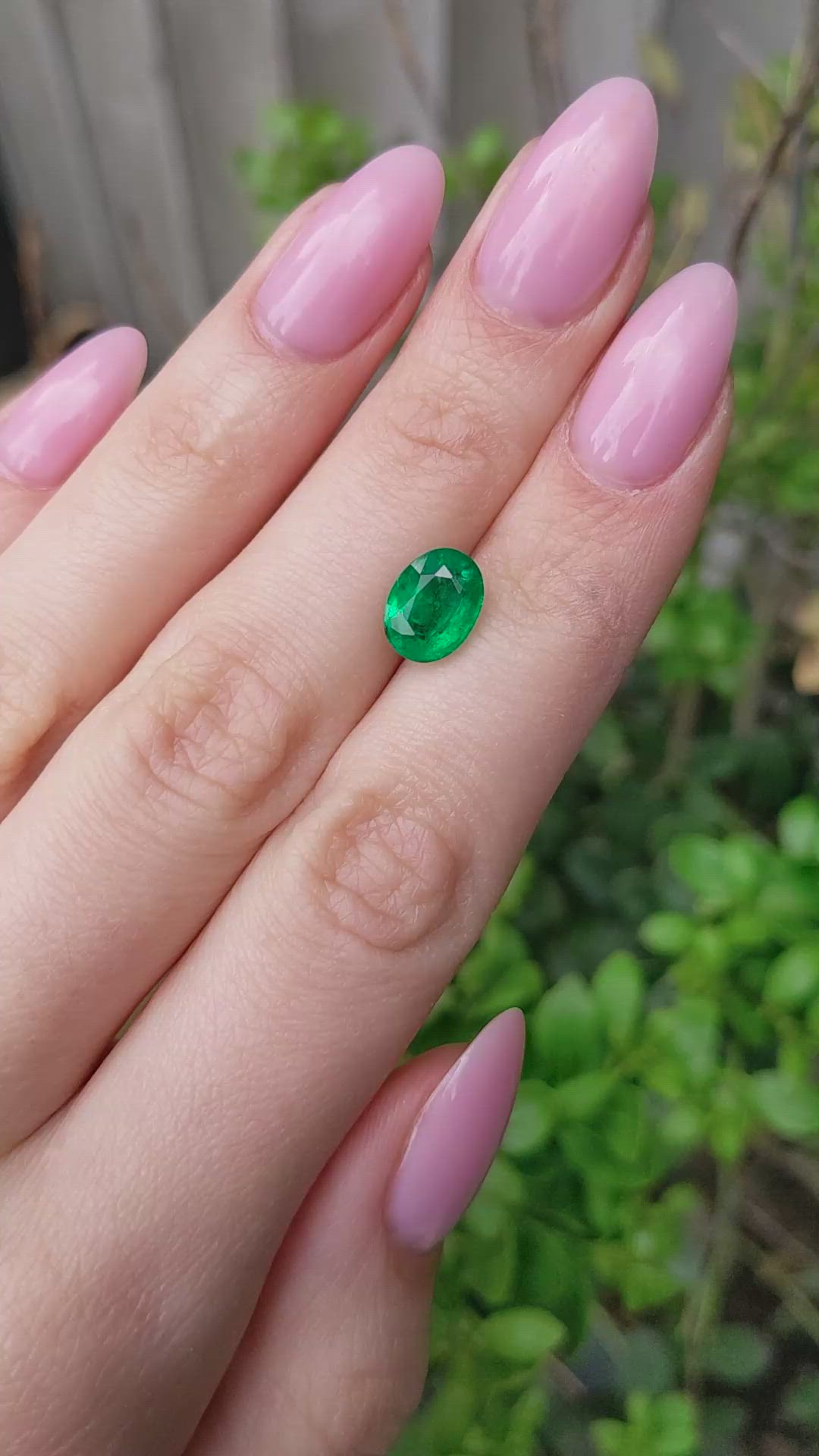



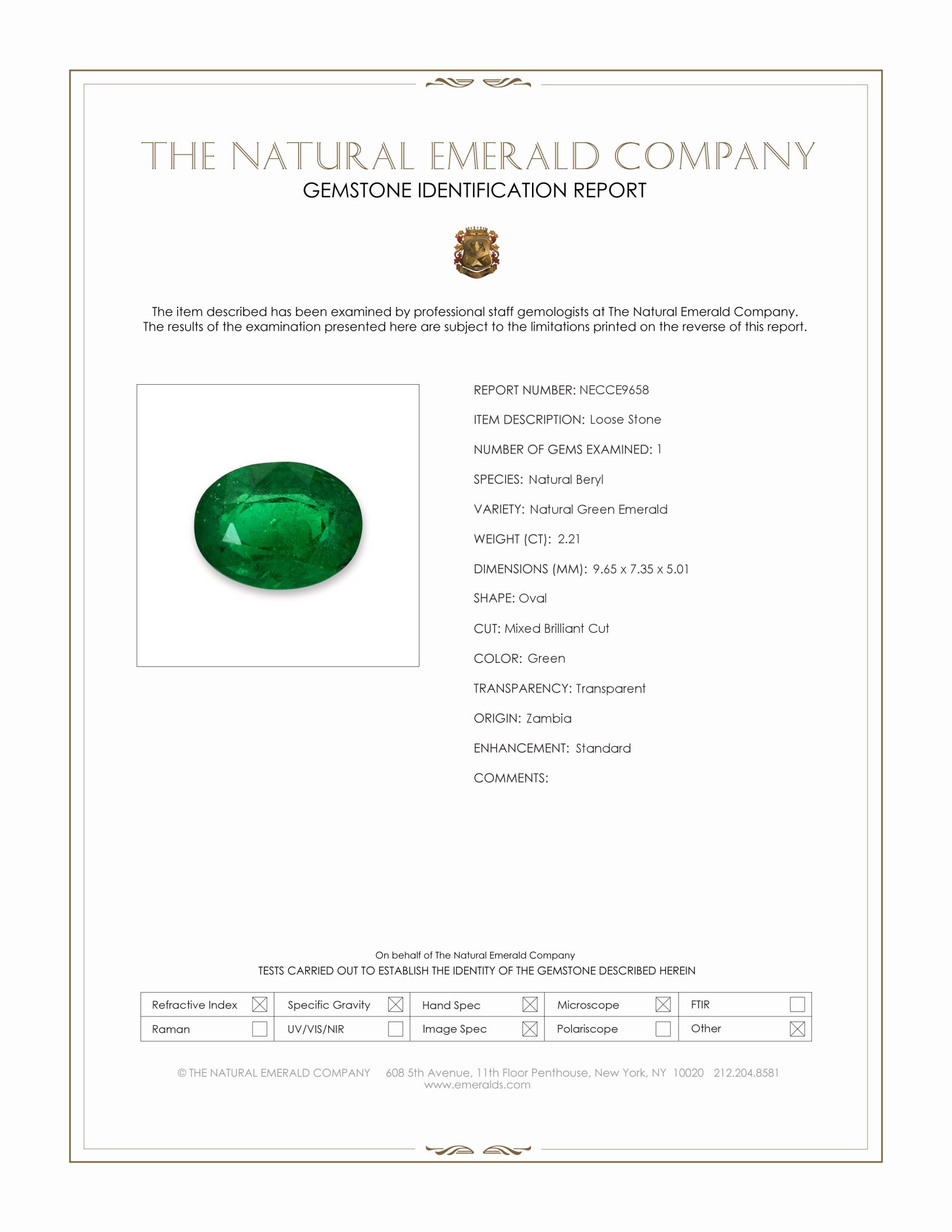
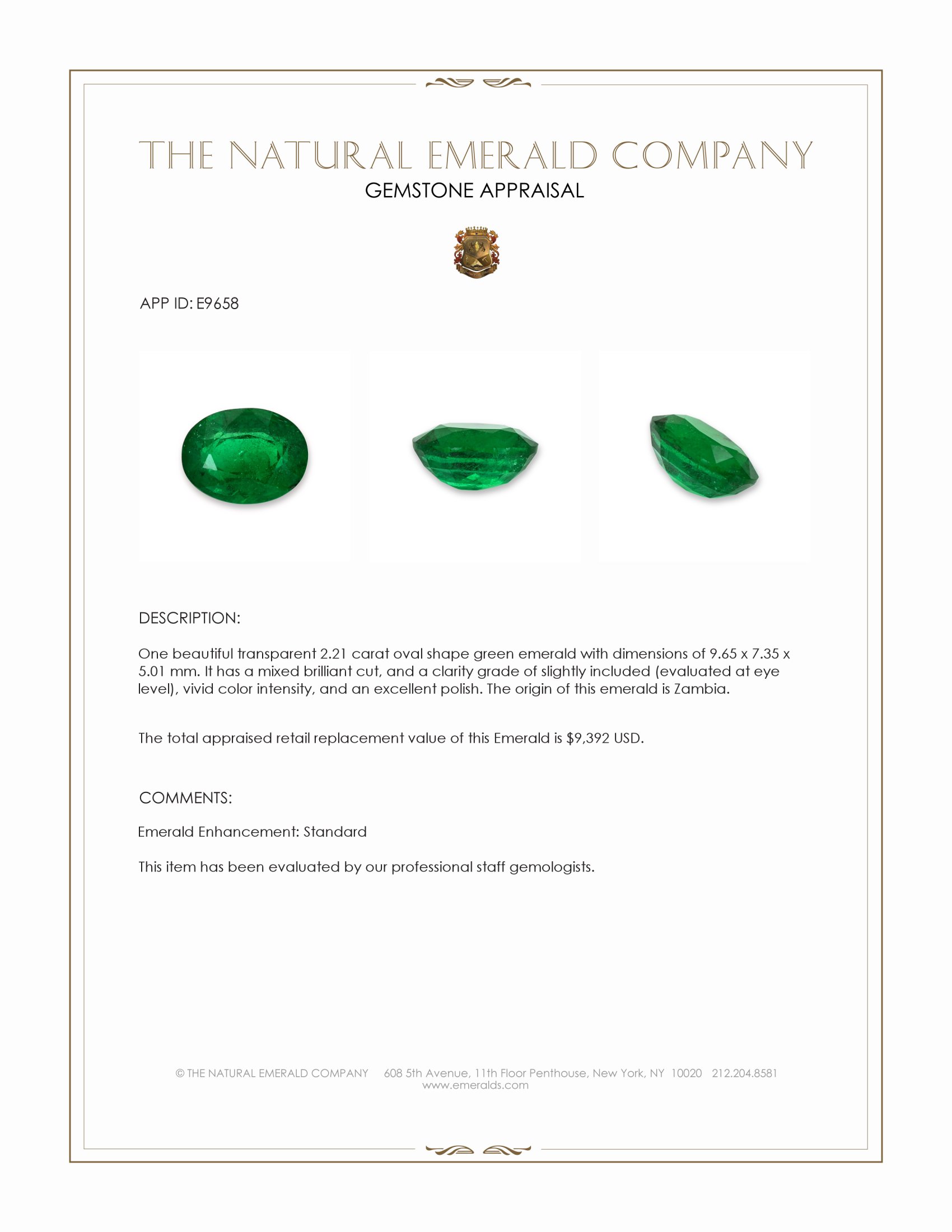
2.21 Ct. Emerald from Zambia
This loose stone ships by Jun 19
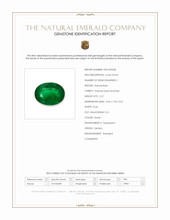
Item ID: | E9658 |
|---|---|
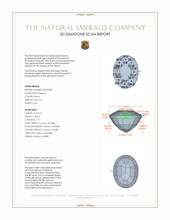
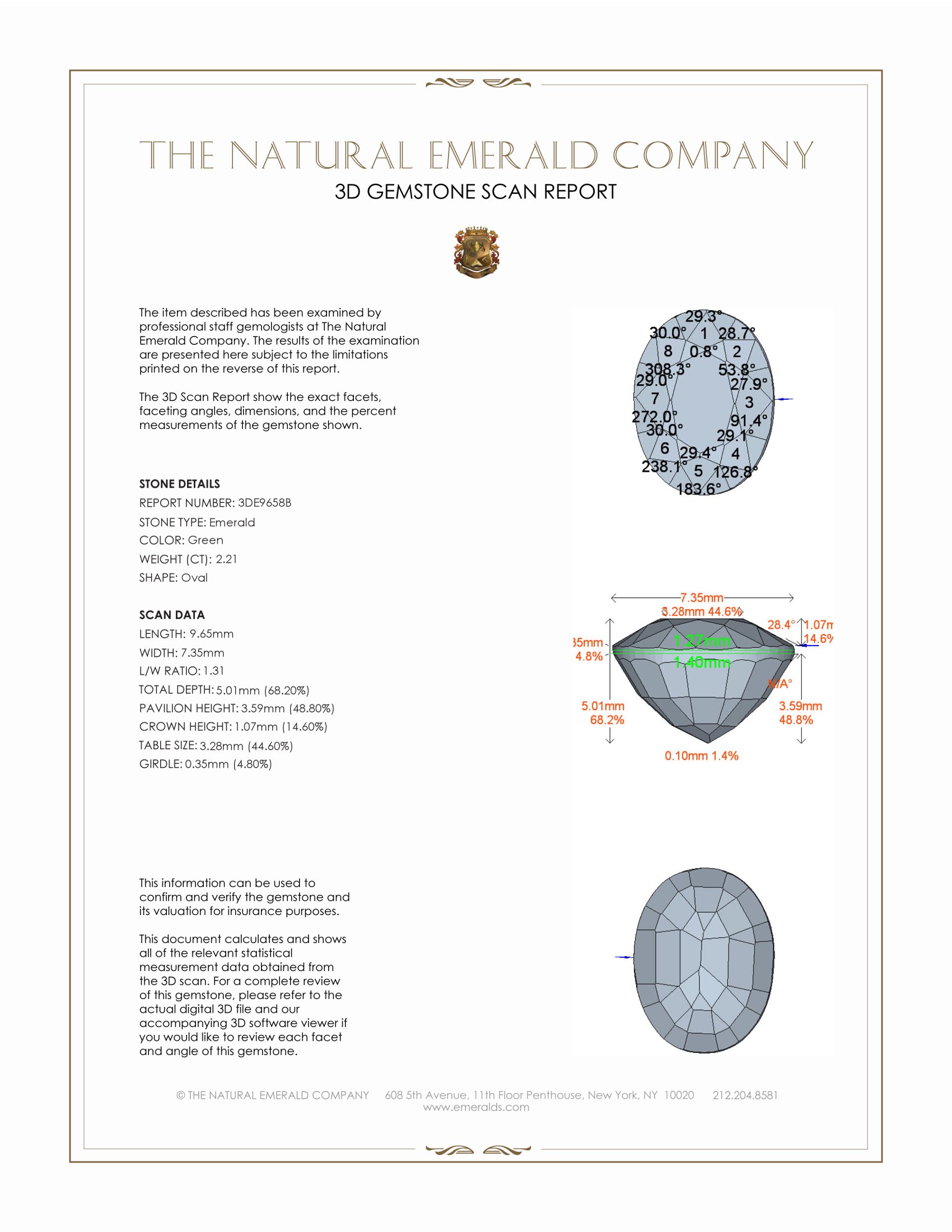
Dimensions (MM): help | Length: 9.65 Width: 7.35 Height: 5.01 |
Weight: | 2.21 Ct. |
Color: help | Green |
Color intensity: help | Vivid |
Clarity: help | Slightly Included |
Shape: help | Oval |
Cut: | Mixed Brilliant Cut |
Cutting style: | Faceted |
Enhancements: help | Standard |
Origin: help | Zambia |
Per carat price: help | $4,250 |
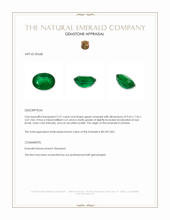
This transparent 2.21 carat oval emerald from Zambia measures 9.65 x 7.35 x 5.01 millimeters, and it is presented with a vivid color intensity, a clarity grade of slightly included when evaluated at eye level, and an excellent polish. The cutting style is a mixed brilliant, combining a carefully proportioned brilliant style crown with a modified pavilion that incorporates both step and brilliant elements, to optimize light performance while preserving weight and color saturation. The cut proportions yield an overall depth of approximately 59 percent based on the mean diameter, a range that balances internal light return with face up color depth for this size and shape. The stone has received standard enhancement, applied in a controlled manner to improve apparent transparency without compromising the natural color or stability of the crystal lattice. At The Natural Emerald Company we present this piece as a technical example of how precise cutting and practiced finishing can elevate a natural Zambian emerald into a highly wearable gem.
The mixed brilliant faceting plan on this oval is executed to manage the competing optical demands of beryl, namely the tendency toward strong color saturation and the need for controlled light transmission to deliver brilliance. The brilliant crown facets act as a light directing surface, breaking incident light into multiple return paths and creating measurable scintillation under movement. The modified pavilion, with longer step oriented facets blending into smaller brilliant facets near the culet region, creates internal mirror planes that increase the probability of internal reflection, thereby reducing light leakage and enhancing perceived brightness. This faceting arrangement also mitigates windowing by positioning pavilion facets to refract light back through zones of optimal color, avoiding areas where the depth would otherwise appear pale. The oval outline serves to broaden the visible color plane, allowing the vivid green to distribute evenly across the table, and the symmetry and facet alignment are calibrated so that pavilion angles complement crown angles to produce constructive light interference across the central field, producing a lively, saturated face up appearance that retains depth without darkening.
From a craftsmanship perspective the excellent polish and tight facet junctions are key to the optical success of this stone. High quality polish minimizes microscopic surface diffusion and allows the defined facet planes to act as efficient reflectors, preserving contrast and crisp facet flashes. The slightly included clarity grading, as evaluated at eye level, indicates minor internal features that are inherent to natural emeralds, and these inclusions are positioned in a manner that does not interrupt the primary light paths or focal symmetry. In some cases these internal features can serve as internal scattering centers that add a subtle textured luminosity, contributing to the gem character without detracting from overall brilliance. The standard enhancement applied is consistent with industry protocol for emeralds and improves apparent transparency by reducing the refractive index contrast at inclusion interfaces, thereby smoothing internal light transmission. For setting considerations, a low profile bezel or an open gallery with controlled light access will maintain the intended light return, and orienting the stone with its length axis parallel to the dominant light source will maximize scintillation and color saturation in wearable pieces. The Natural Emerald Company stands behind the technical description and provenance of this Zambian emerald, and we invite knowledgeable buyers to request facet mapping images or in hand inspection to evaluate facet angles, polish quality, and the nuanced interaction between cut and the stone inherent optical properties.


