
- Stone11
- Reports3
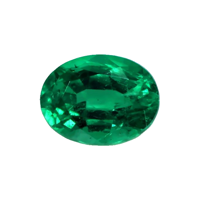
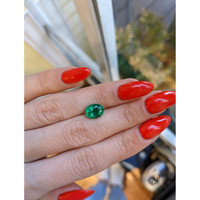
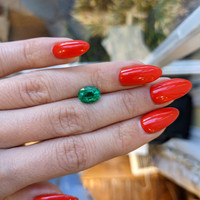
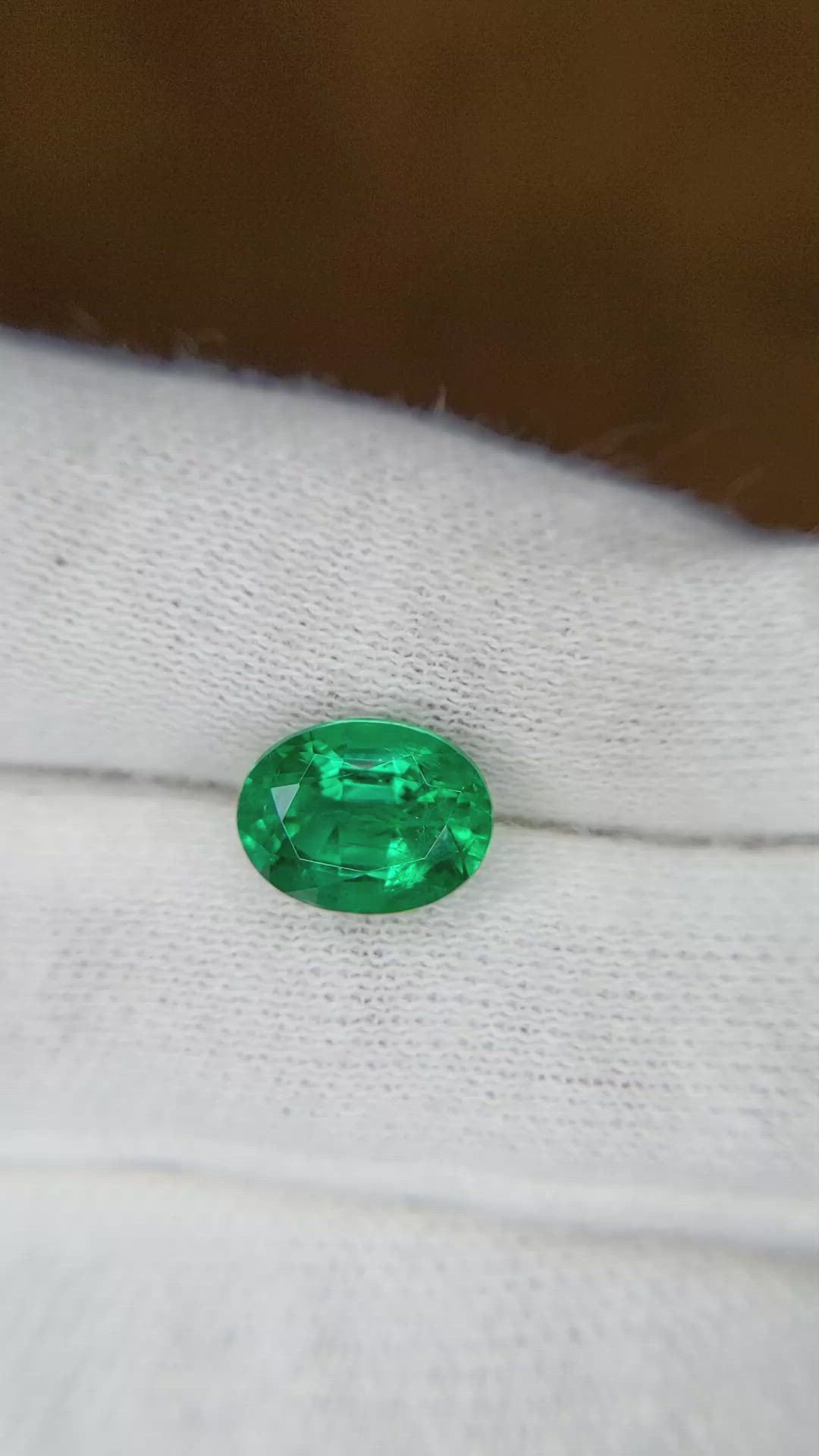
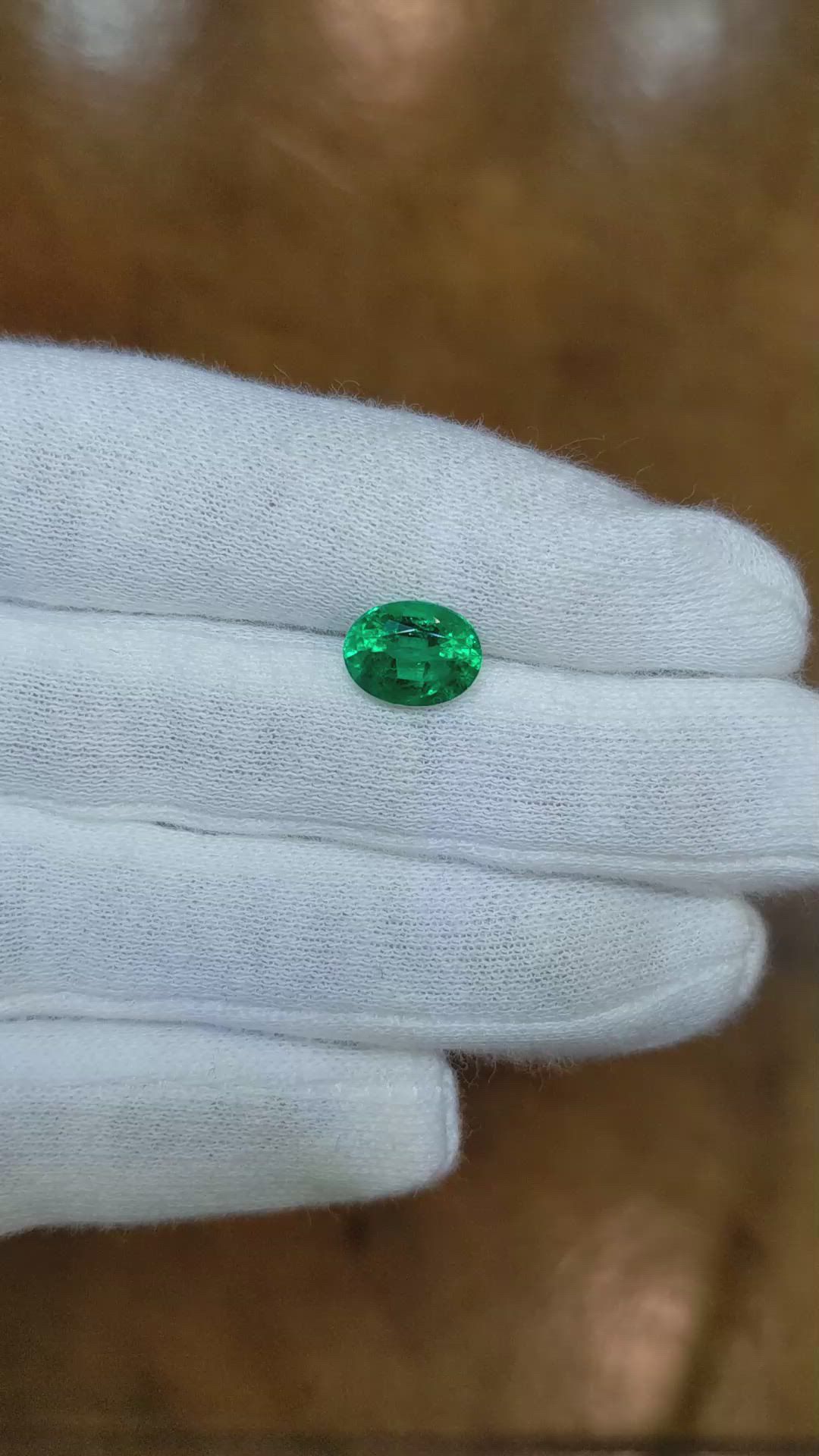




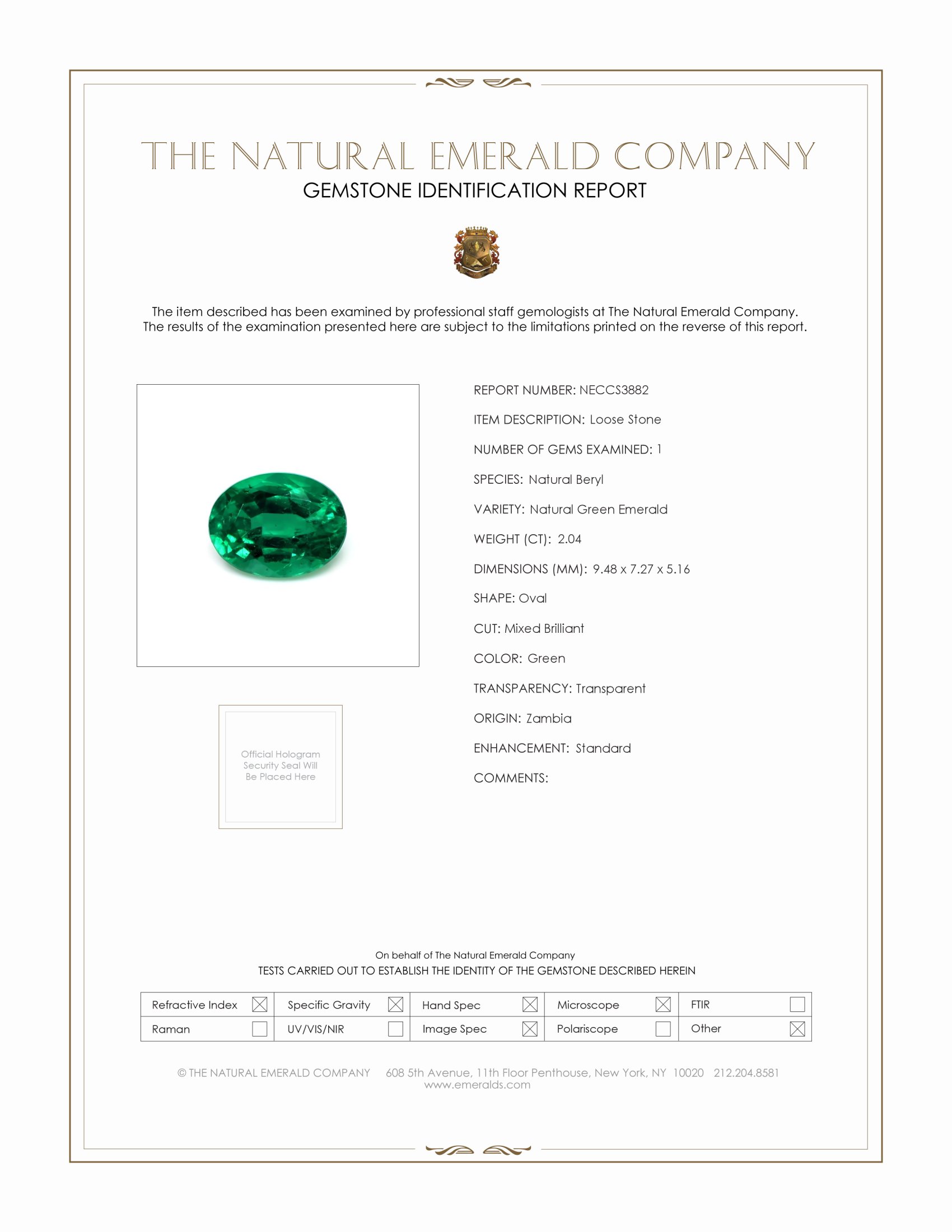

2.04 Ct. Emerald from Zambia
This loose stone is available to ship now
Item ID: | S3882 |
|---|---|
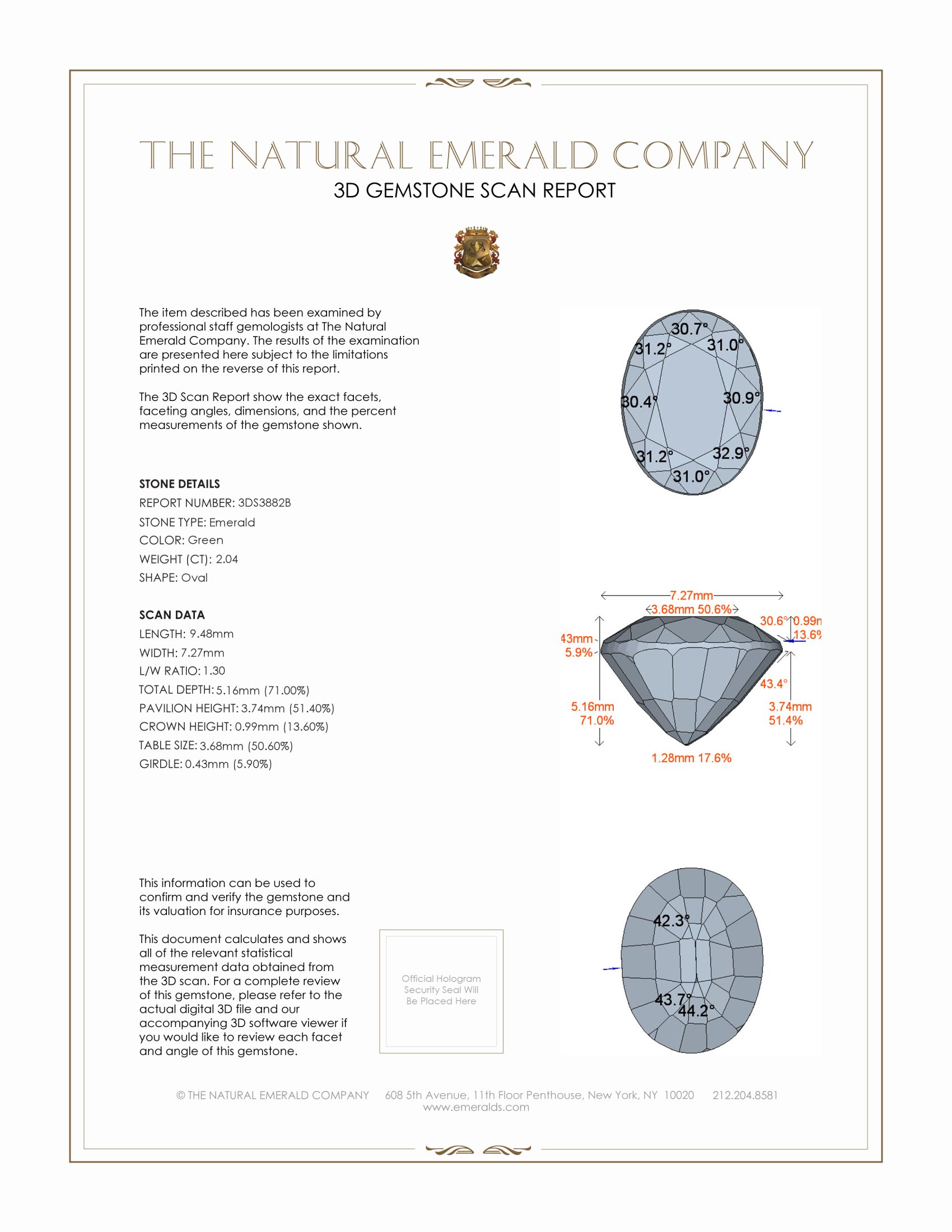
Dimensions (MM): help | Length: 9.48 Width: 7.27 Height: 5.16 |
Weight: | 2.04 Ct. |
Color: help | Green |
Color intensity: help | Intense |
Clarity: help | Very Slightly Included |
Shape: help | Oval |
Cut: | Mixed Brilliant |
Cutting style: | Faceted |
Enhancements: help | Standard |
Origin: help | Zambia |
Per carat price: help | $3,330 |
This 2.04 carat oval green emerald from Zambia is a technically impressive specimen, presenting dimensions of 9.48 x 7.27 x 5.16 mm, with a measured depth of 5.16 mm that yields a depth to average span ratio of approximately 61.6 percent, a proportion that supports both optimum face up saturation and efficient light return. The gem is fashioned in a mixed brilliant cut, a calibrated dialogue between brilliance and color preservation, where the crown employs a compact brilliant facet schema to maximize scintillation and the pavilion uses modified facets to concentrate color in the table plane. Clarity is graded as very slightly included evaluated at eye level, indicating minimal visible inclusions to the unaided eye and an outstanding level of transparency for a natural emerald, and the polish is graded excellent, denoting precise facet junctions, minimal surface abrasions, and superior optical transmission. Enhancement is standard, consistent with trade practice for natural emeralds, and the piece has been stabilized and finished to present its intrinsic color and clarity without obscuring its natural internal characteristics.
Color is the defining attribute of this stone, recorded as intense color intensity, with a saturated vivid green that reads slightly pure to bluish green under neutral lighting, a profile characteristic of high grade Zambian emeralds that derive their chromophore balance from chromium and vanadium substitution in the beryl lattice. The gem is transparent rather than translucent, which in combination with the intense saturation produces a strong face up presence without turning overly dark, an outcome aided by the oval outline which increases the apparent surface area of color. The mixed brilliant faceting strategy was chosen specifically to avoid color leakage through excessively shallow pavilion geometry, and to allow the best compromise between fire and body color, so that the viewer perceives lively internal scintillation while the rich green remains uniform across the table. Origin from Zambia is material to both aesthetics and market context, as Zambian emeralds frequently exhibit stable, saturated green with good tone, and this provenance is supported by the stone morphology and inclusion assemblage visible under magnification.
When compared to lab grown emeralds, the distinctions are technical and significant for discerning buyers. Lab grown emeralds produced by hydrothermal or flux assisted methods can replicate the beryl chemistry and refractive index ranges of natural emeralds, often yielding fewer inclusions and very even color distribution, which makes them attractive for applications where uniformity and lower cost are priorities. By contrast, a natural emerald such as this piece carries a unique internal record of its formation, including characteristic growth zoning and mineral inclusions that serve as a geological fingerprint, features that gemologists use to distinguish natural origin. From a gemological and market perspective natural stones retain rarity value and historical desirability, whereas lab grown material is more abundant and therefore generally commands lower market premiums. Natural emeralds are also traded with acknowledged and documented enhancements, standard oiling or resin stabilization being transparent practices, and these treatments are reversible or repeatable in a controlled manner to preserve the stone. For collectors and connoisseurs who evaluate a gem on a matrix of provenance, crystal habit, and long term market performance, a Zambian natural emerald of this clarity and color intensity represents an asset with intrinsic and aesthetic advantages over laboratory produced equivalents.
In practical terms for mounting and care, the stone dimensions and mixed brilliant geometry make this emerald an excellent candidate for settings that expose the table to view while protecting the girdle and pavilion, such as a bezel with open gallery, or a low claw setting with a protective structure over the girdle. The depth percent at about 61.6 percent supports a pleasing face up diameter while maintaining strong color saturation, so designs that emphasize the oval face will be most effective. The excellent polish reduces the need for frequent surface finishing, though standard care for a naturally enhanced emerald is recommended, including professional re stabilization if oil or resin dispersal is noted after years of wear, and avoidance of harsh ultrasonic cleaning unless the stone is certified for that process. The Natural Emerald Company offers full documentation of origin, treatment, and cut characteristics for this gem, and our gemology team can provide magnified imaging and independent laboratory reports on request. For buyers who prioritize natural formation history, documented origin, and the tactile complexity of natural inclusions, this Zambian oval emerald is a technically refined example that combines meticulous cutting, high polish, and intense color intensity to create a stone that performs beautifully in both aesthetic and investment contexts.


