
- Stone14
- Reports3
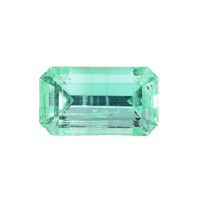
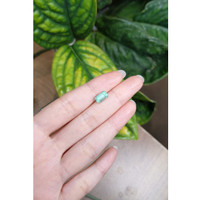
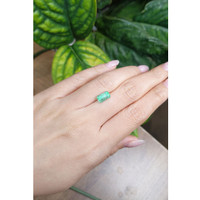
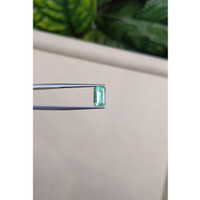
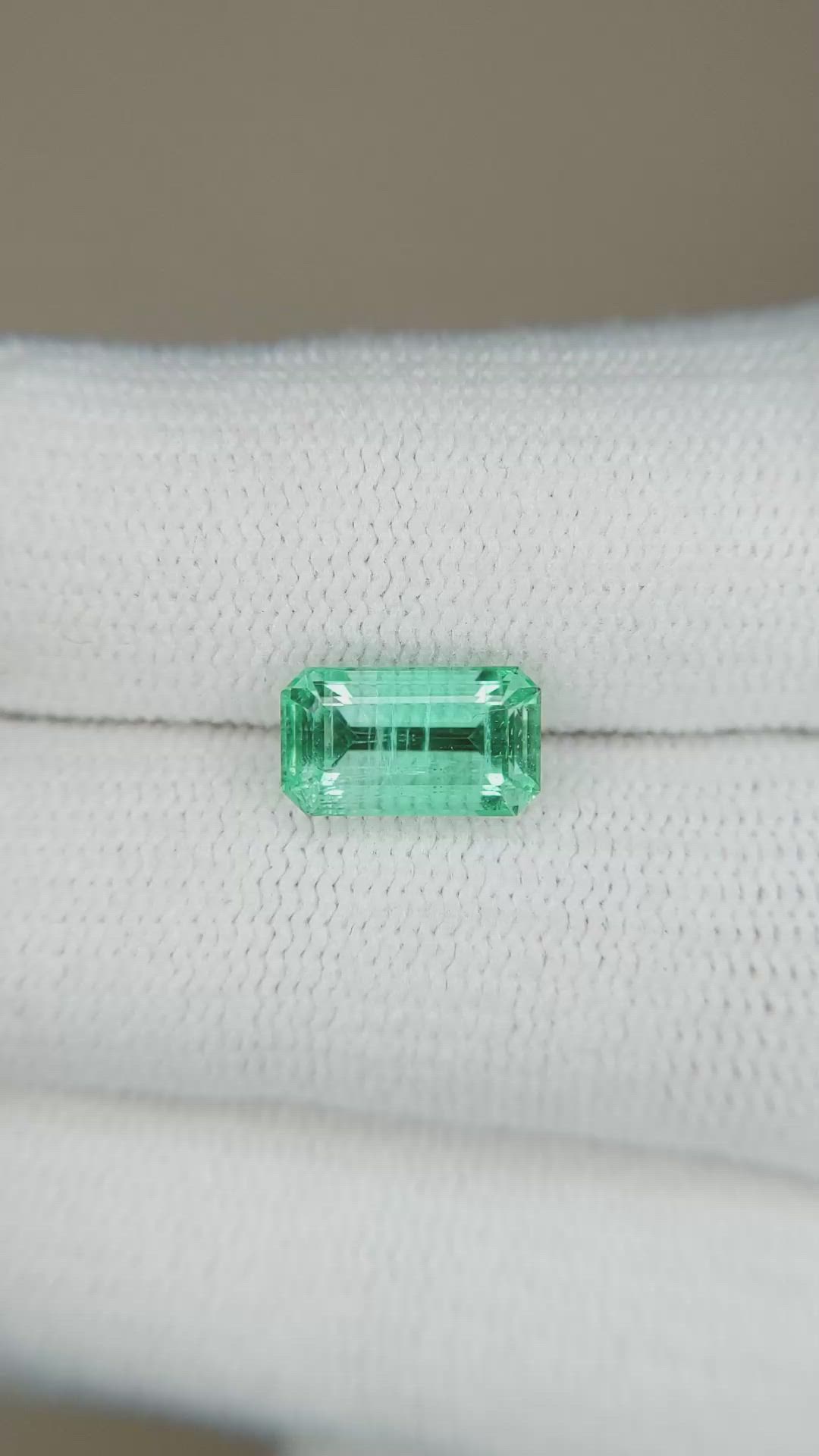
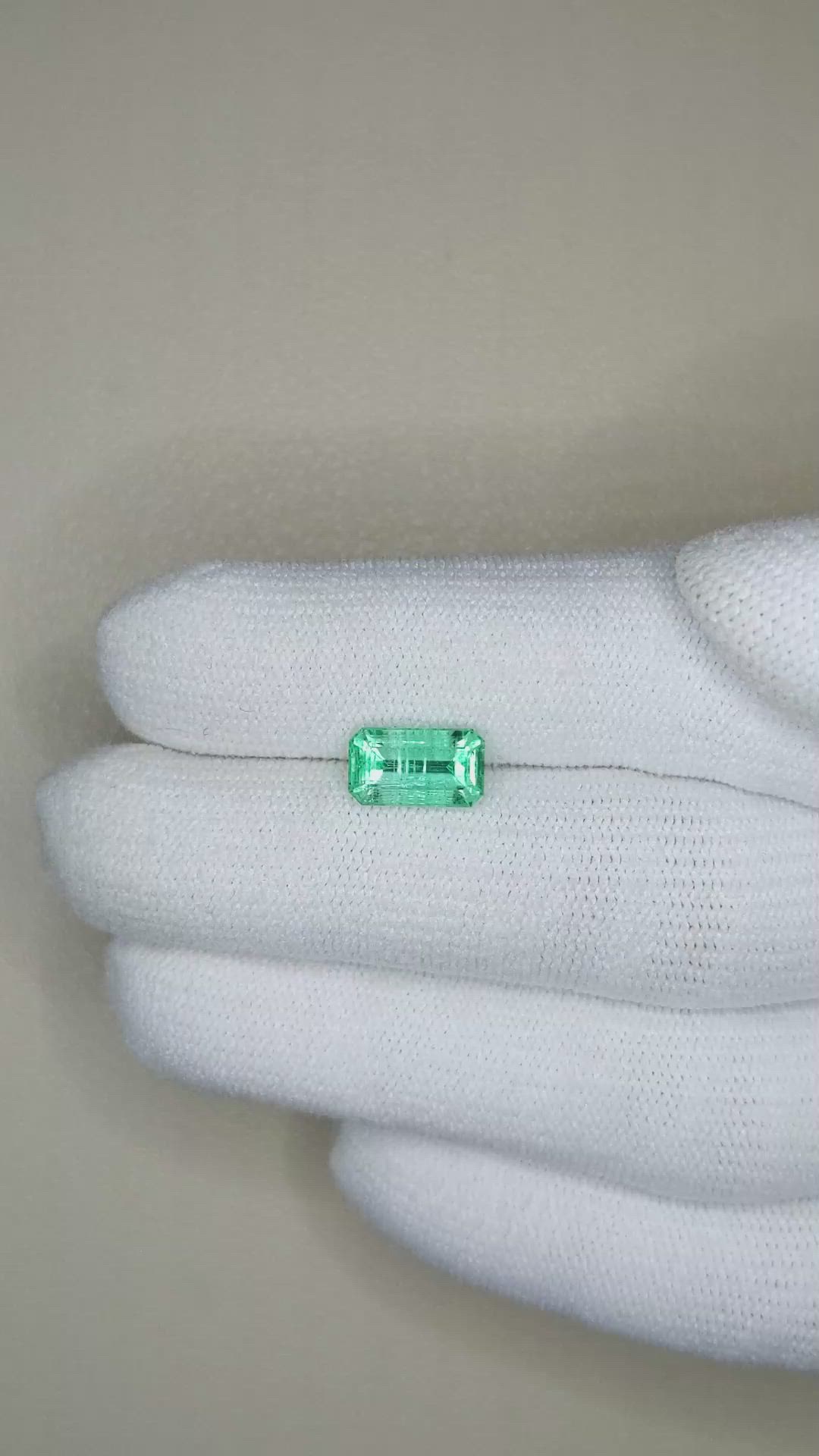
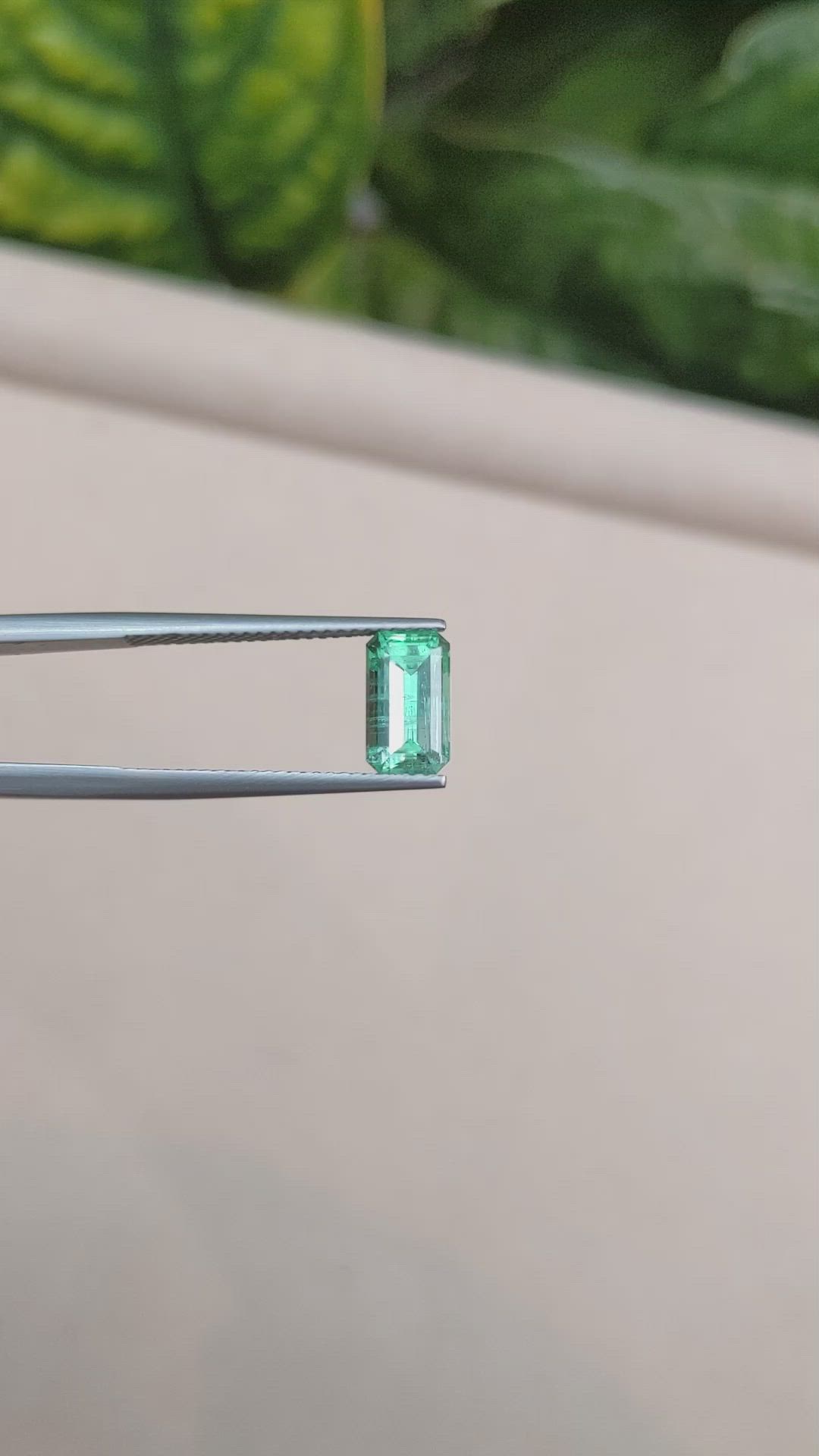
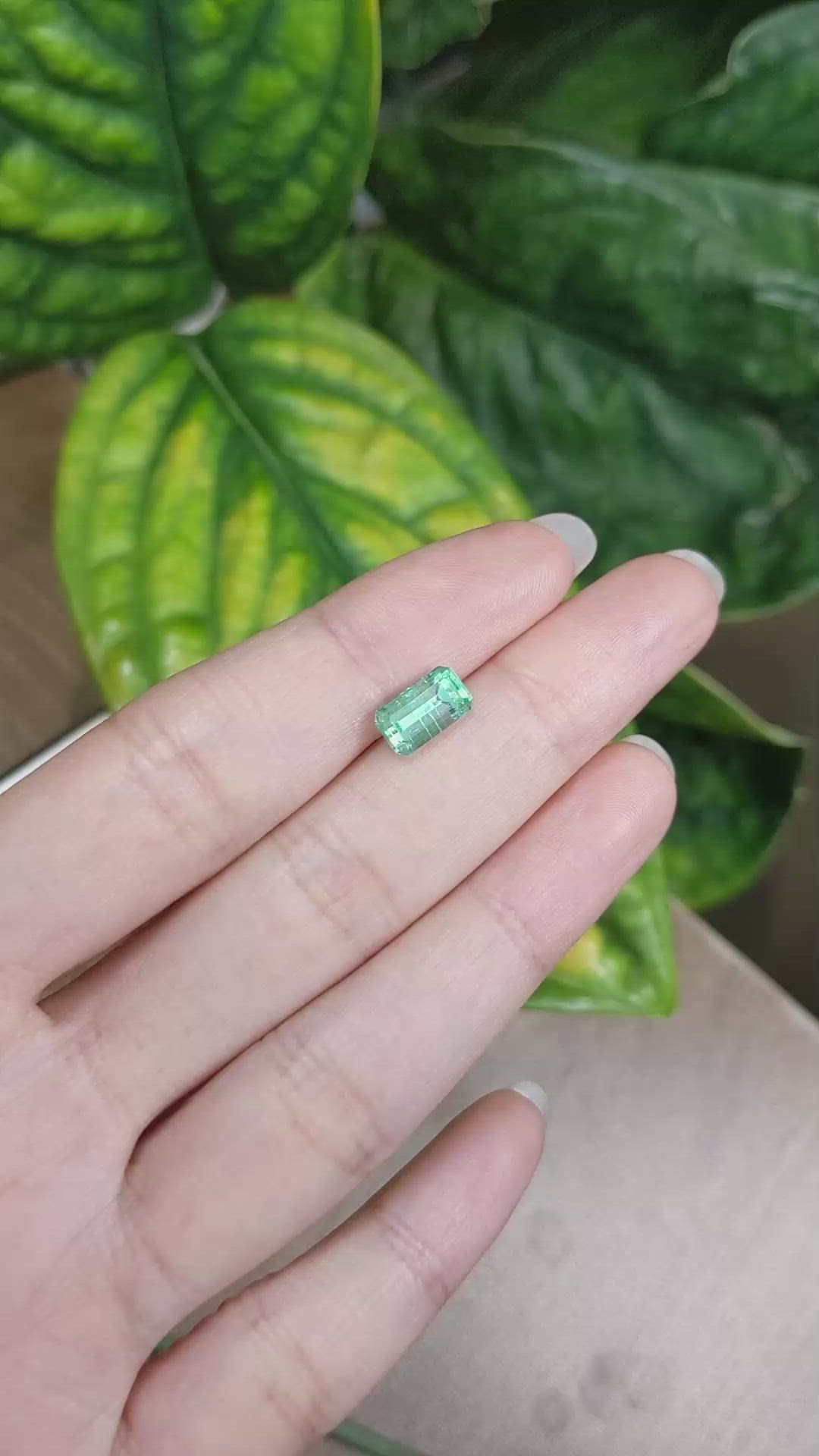
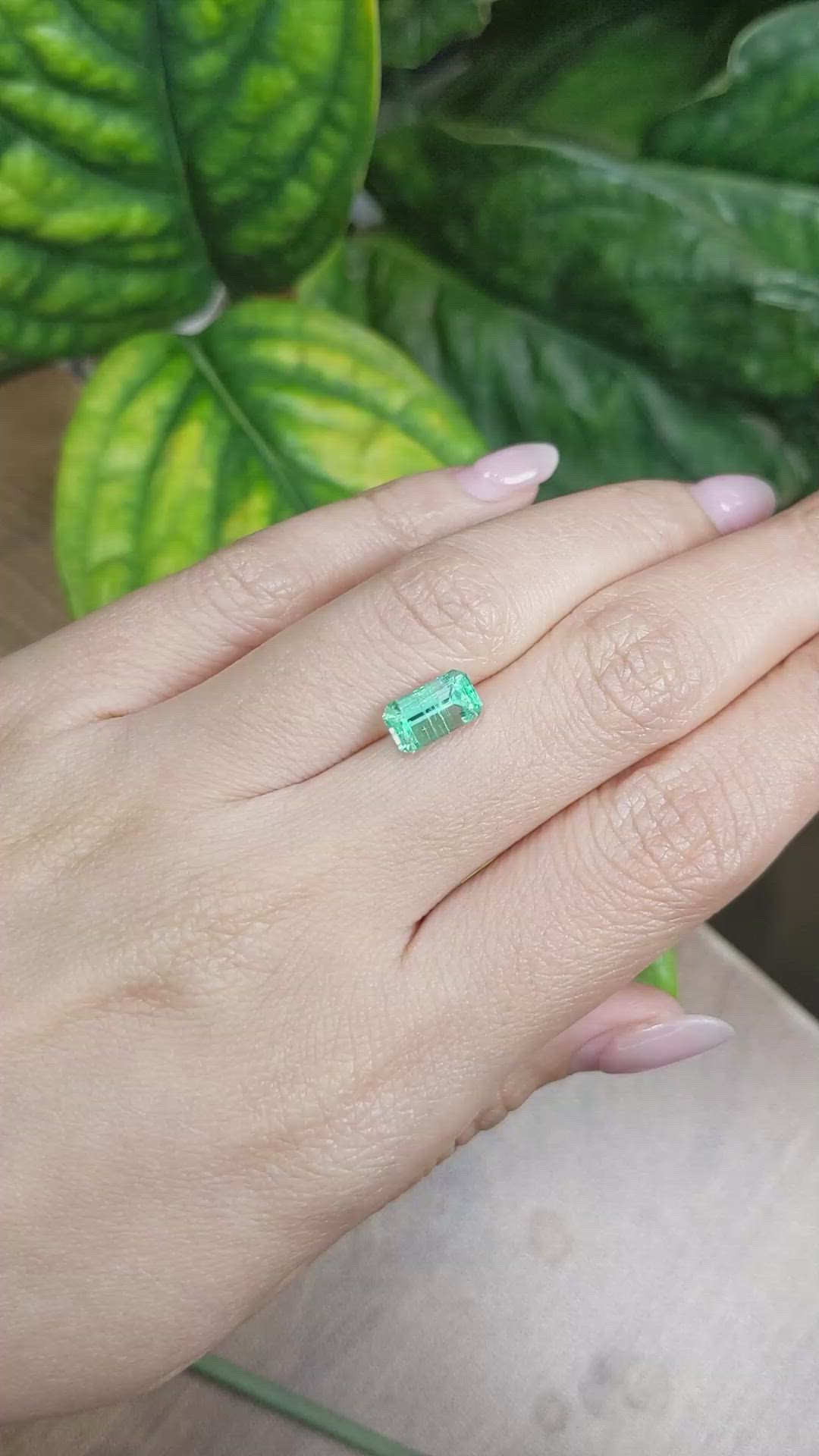


1.74 Ct. Emerald from Russia
Item ID: | E6803 |
|---|---|
Dimensions (MM): help | Length: 9.18 Width: 5.3 Height: 4.9 |
Weight: | 1.74 Ct. |
Color: help | Green |
Color intensity: help | Light |
Clarity: help | Slightly Included |
Shape: help | Emerald Cut |
Cut: | Emerald Cut |
Cutting style: | Faceted |
Enhancements: help | No Enhancement |
Origin: help | Russia |
Per carat price: help | $1,680 |
This 1.74 carat, transparent emerald cut green emerald, supplied by The Natural Emerald Company, presents a refined study in proportion and natural character, a gem intended for connoisseurs who prioritize origin, craftsmanship, and unaltered material. The stone measures 9.18 by 5.30 by 4.90 millimeters, yielding a length to width ratio of approximately 1.73 which creates an elegant elongated profile well suited to solitaire rings or pendant settings that emphasize linearity. The depth of 4.90 millimeters translates to a depth percentage near 67.7 percent when compared to the average of the length and width, a value that falls squarely within the classic range for step-cut emeralds and indicates the cutter prioritized balanced light return and face-up color saturation over extreme pavilion depth. The color intensity is described as light green, exhibiting a fresh, lively tone rather than a deep forest saturation, which allows the stone to read with brightness and a clear, open table field.
Cut and finish are central to how an emerald reveals itself, and this piece is finished as a classic emerald cut with carefully executed step facets, truncated corners, and long rectangular facet planes that emphasize breadth of color and geometric symmetry. The faceting style produces broad, parallel flash patterns rather than small scintillation, a characteristic that rewards viewers with calm, hall-of-mirrors flashes and a lucid, architectural appearance. The polish is graded excellent, indicating that facet junctions are sharp, facet planes are smooth under loupe and gemological light, and the table and crown surfaces display minimal surface irregularities. The clarity is evaluated as slightly included at eye level, meaning inclusions are present but do not appreciably interrupt transparency or the stone’s ability to transmit light. In practical terms, the step cut tends to render inclusions more noticeable than brilliant cuts, but in this example the inclusions are stable, natural internal features that attest to the stone’s gemological authenticity and natural growth history, rather than the result of treatments. Critically, this emerald is documented as having no enhancement, a distinguishing factor in the market where many emeralds are traditionally oiled or filled to improve apparent clarity. An unenhanced emerald of this transparency and polish from a reputable source is a rare and valuable specimen.
Provenance and historical context enrich the technical profile, and this emerald’s origin in Russia places it in a lineage of gems that have adorned imperial and ecclesiastical metalwork for centuries. Russian emeralds, particularly those historically mined in the Ural region, were favored in tsarist jewelry cabinets for their cool, often bluish-leaning greens and clear crystalline habit, used in everything from coronation regalia to devotional crosses and secular court ornaments. The tradition of setting emeralds into signet rings and posture-defining brooches persists because emeralds have long been seen as both decorative and symbolic, associated with renewal, protection, and refined taste. Collectors and jewelers who appreciate historical continuity will value this stone not only for its physical properties, but for its cultural resonance — an emerald that can seamlessly translate period aesthetics into contemporary design while carrying the story of its geological and artisanal lineage.
From a practical standpoint, this emerald is a versatile center stone that responds well to precision settings which protect its corners and preserve its step-cut face. For daily-wear rings, a four- or six-prong setting with protective corner prongs, or a bezel that follows the rectangular outline, will minimize the risk of edge chipping and maintain the stone’s visual plane. The light color intensity makes it particularly suitable for paired center and side-stone designs where the balanced hue complements both colorless diamonds and warm toned accent stones. Care considerations are standard for beryl species: avoid harsh chemicals and ultrasonic cleaners when inclusions are open or if the setting has been treated, though in this case the absence of enhancement reduces concern about fluid ingress. For collectors seeking verification, The Natural Emerald Company can provide provenance documentation and can facilitate independent gemological analysis to confirm origin and treatment status. This 1.74 carat Russian emerald combines precise cutting discipline, excellent polish, natural clarity, and unenhanced integrity, making it an exceptional candidate for collectors and jewelers who insist on technical excellence and historical pedigree.


