
- Stone14
- Reports4
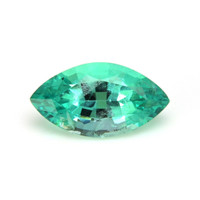


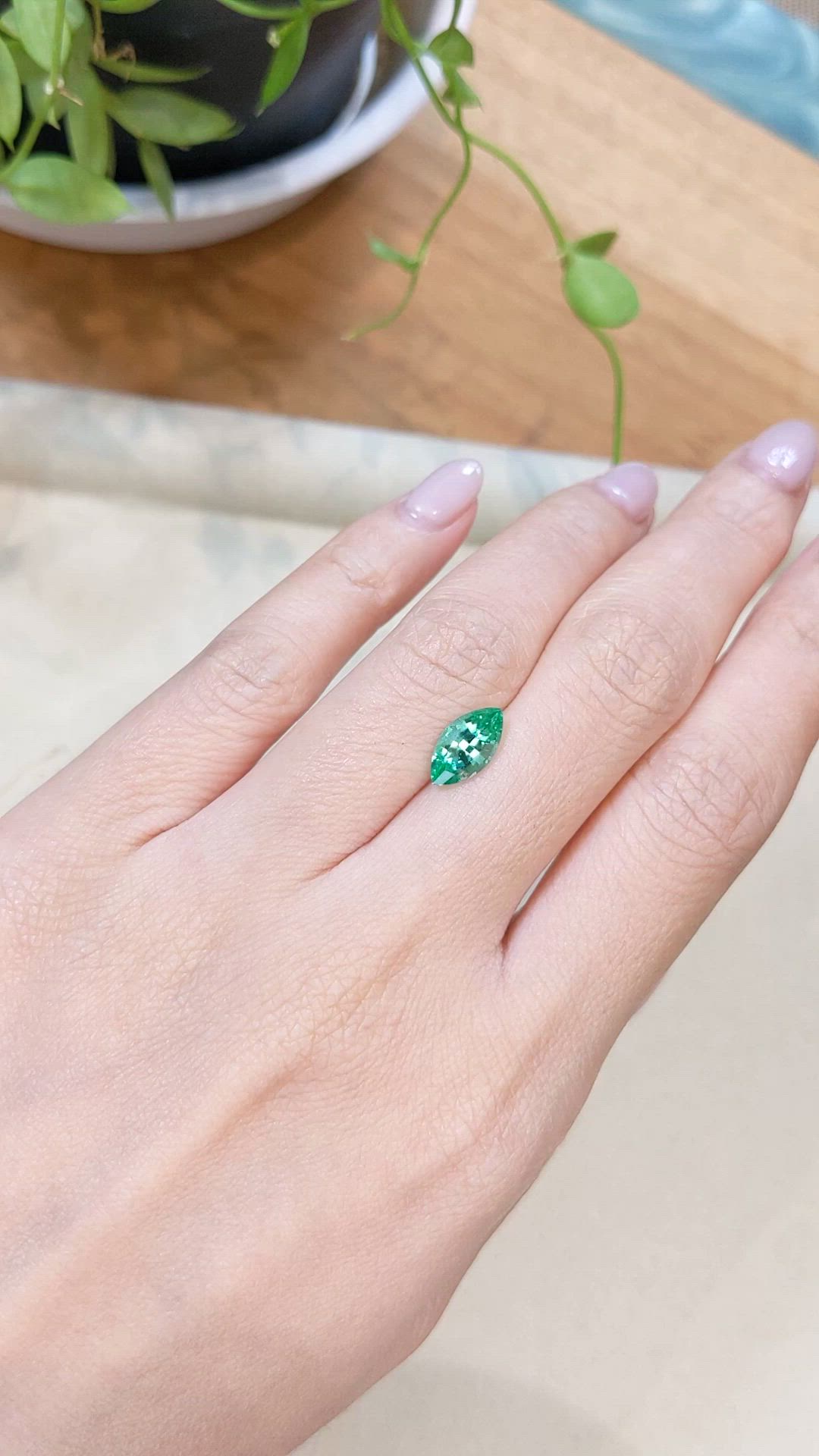
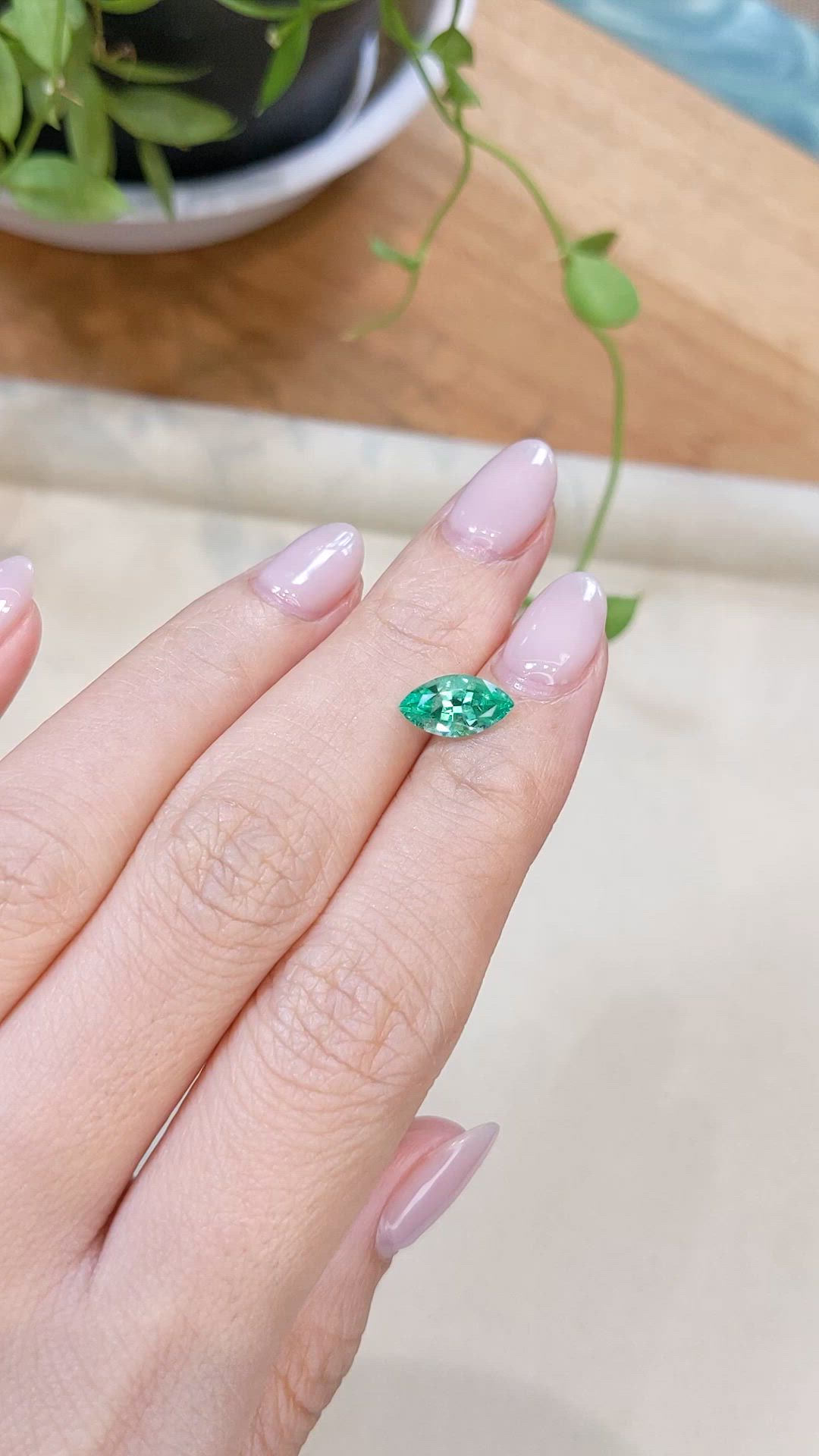
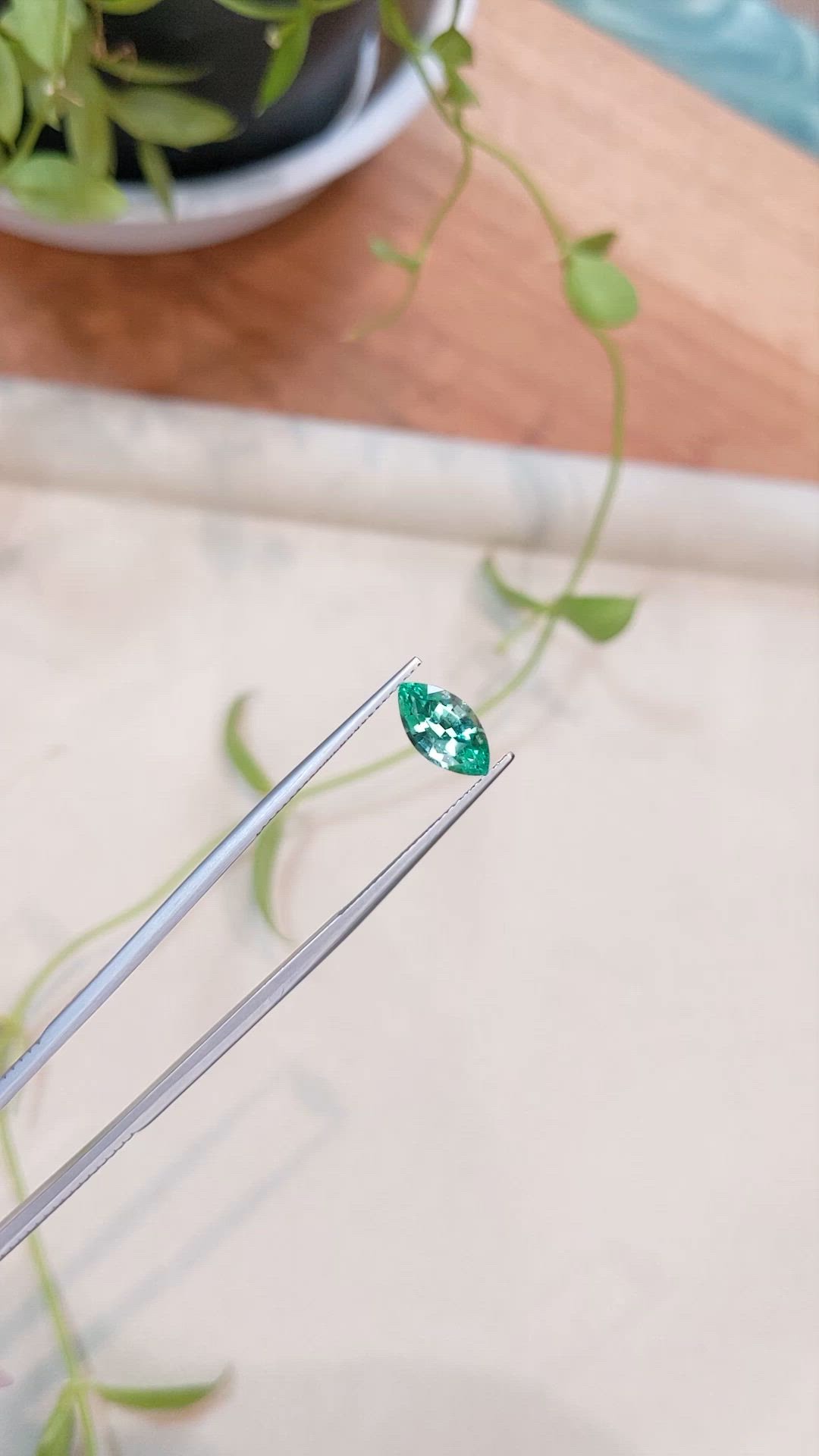


1.33 Ct. Emerald from Russia
This loose stone ships by Jun 12
Item ID: | E9019 |
|---|---|
Dimensions (MM): help | Length: 10.87 Width: 5.84 Height: 4.36 |
Weight: | 1.33 Ct. |
Color: help | Green |
Color intensity: help | Medium |
Clarity: help | Very Slightly Included |
Shape: help | Marquise |
Cut: | Mixed Brilliant Cut |
Cutting style: | Faceted |
Enhancements: help | No Enhancement |
Origin: help | Russia |
Per carat price: help | $2,556 |
This gemstone offered by The Natural Emerald Company is a transparent green emerald weighing 1.33 carat, fashioned into a marquise shape with precise dimensions of 10.87 x 5.84 x 4.36 millimeters. The cutter employed a mixed brilliant cut, combining a brilliant facet arrangement on the crown with a step influenced pavilion geometry to balance light return and color saturation. The stone presents a length to width ratio of approximately 1.86, a balanced proportion that produces elegant spread on the finger while maintaining depth for color. Clarity has been assessed as very slightly included at eye level, indicating minor internal features that do not materially detract from face up brightness. Color is medium intensity green, the polish is judged excellent, and importantly this emerald is natural with no enhancement. The documented origin is Russia, a source known for emeralds with distinct chromophore signatures and stable crystal fabrics.
The mixed brilliant faceting strategy was chosen to optimize two competing demands of high quality colored gemstones. The brilliant crown facets are cut to precise angles to maximize scintillation and lively facet contrast, while the pavilion facets are oriented in a more stepped geometry to preserve and deepen the green saturation rather than dissipate it. Facet junctions are executed with care to maintain sharp edges and crisp intersections, and the cutter controlled pavilion angles to reduce windowing and minimize the central dark area commonly known as a bow tie in elongated cuts. The marquise silhouette required exact bilateral symmetry, feathered tips and a controlled girdle profile to avoid vulnerability at the points. During cutting the natural prismatic habit of the beryl crystal was respected, with orientation chosen to retain maximum weight and to place the most color intense zones near the table, delivering optimum face up color without sacrificing brilliance.
The observed clarity and color characteristics speak to both the gemological provenance and the quality of the cutting work. The very slightly included grade at eye level implies that inclusions are present but limited in size and distribution, typical of emeralds that crystallized under hydrothermal conditions with episodic fluid entrapment. These internal features can occur as fine liquid and gas pockets and as thin mineral films that produce a subtle jardin texture, but in this specimen they are sufficiently sparse to permit excellent transparency and lively facet reflection. The medium color intensity provides an ideal balance of tone and saturation, yielding a green that is vivid without feeling overly dark in the marquise profile. Because this emerald is unenhanced, with no oiling or resin filling, its optical performance derives entirely from its natural crystal chemistry and the cutter s technique, making it rarer and of particular interest to connoisseurs who prefer untreated material. Russian origin often contributes a slightly cool to neutral green hue from chromium and vanadium substitution in the beryl lattice, and that chromophore balance is observable in this stone.
The narrative of formation for this emerald stretches deep into geological time. Millions of years ago regional tectonics in the area that is now the Russian crystalline belt created zones of intense deformation and metamorphism. Beryllium bearing fluids mobilized during the prograde metamorphism and subsequent cooling migrated along fractures and shear zones, encountering chromium and vanadium rich host rocks. Under conditions of moderate temperature and pressure these chemically loaded hydrothermal solutions became saturated in beryllium and crystallized beryl in elongated hexagonal prisms. Trace substitution of chromium and vanadium into the aluminum sites of the beryl crystal lattice produced the characteristic green chroma, while episodic fluctuations in fluid chemistry and temperature trapped tiny inclusions and created growth zoning. Over geological time uplift and erosion liberated these crystals from their host rocks, and modern cutters at The Natural Emerald Company selected one of the more transparent and well formed crystals for precision cutting. The marquise shape and mixed brilliant faceting represent a deliberate decision to align the cutting axis with the original crystal habit, to preserve color zones, and to maximize brilliance while keeping the integrity of the stone intact. The result is a natural Russian emerald that carries within its structure a record of its formation and that responds with lively optical performance when set into fine jewelry.


