
- Stone15
- Reports3


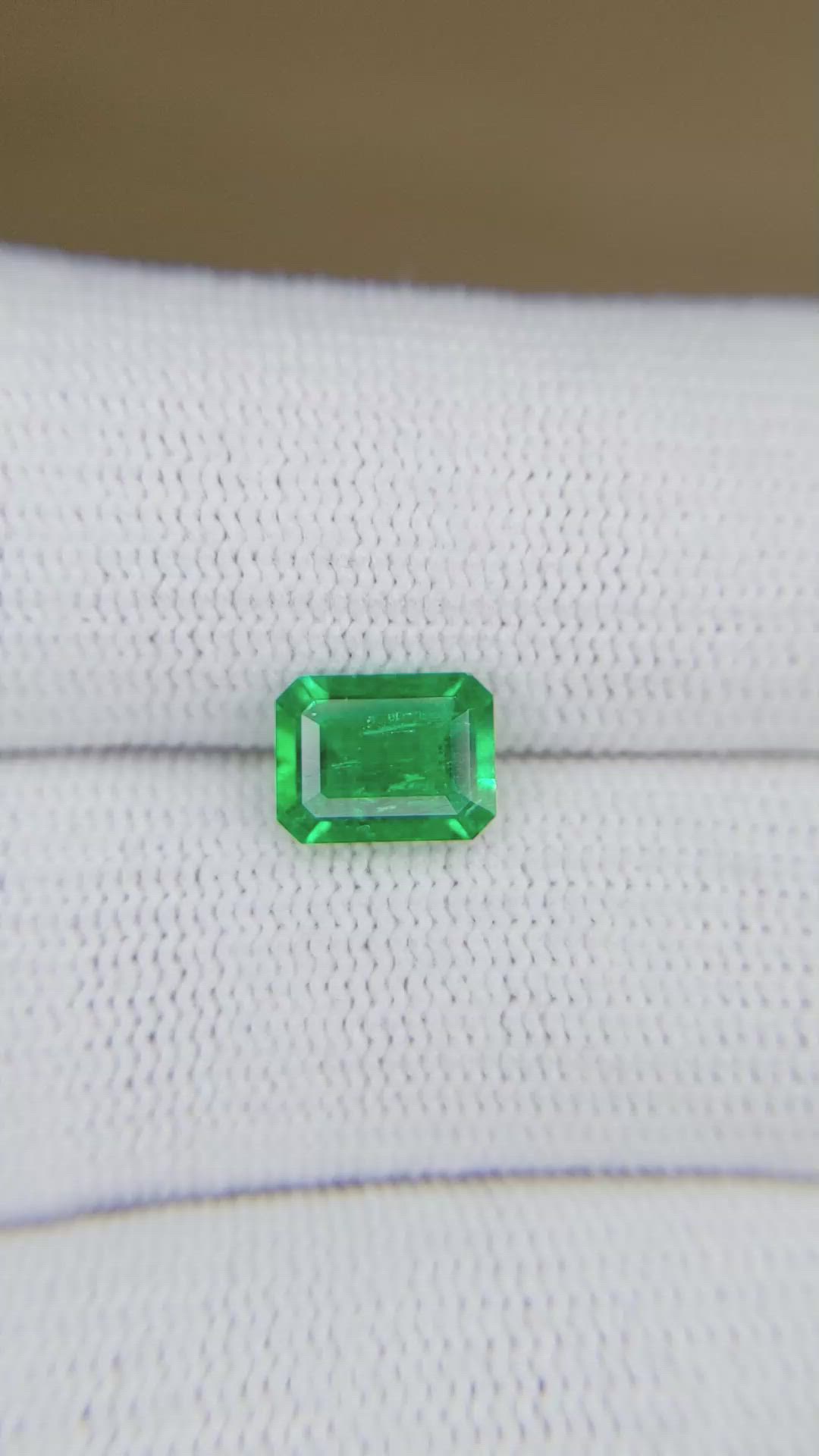
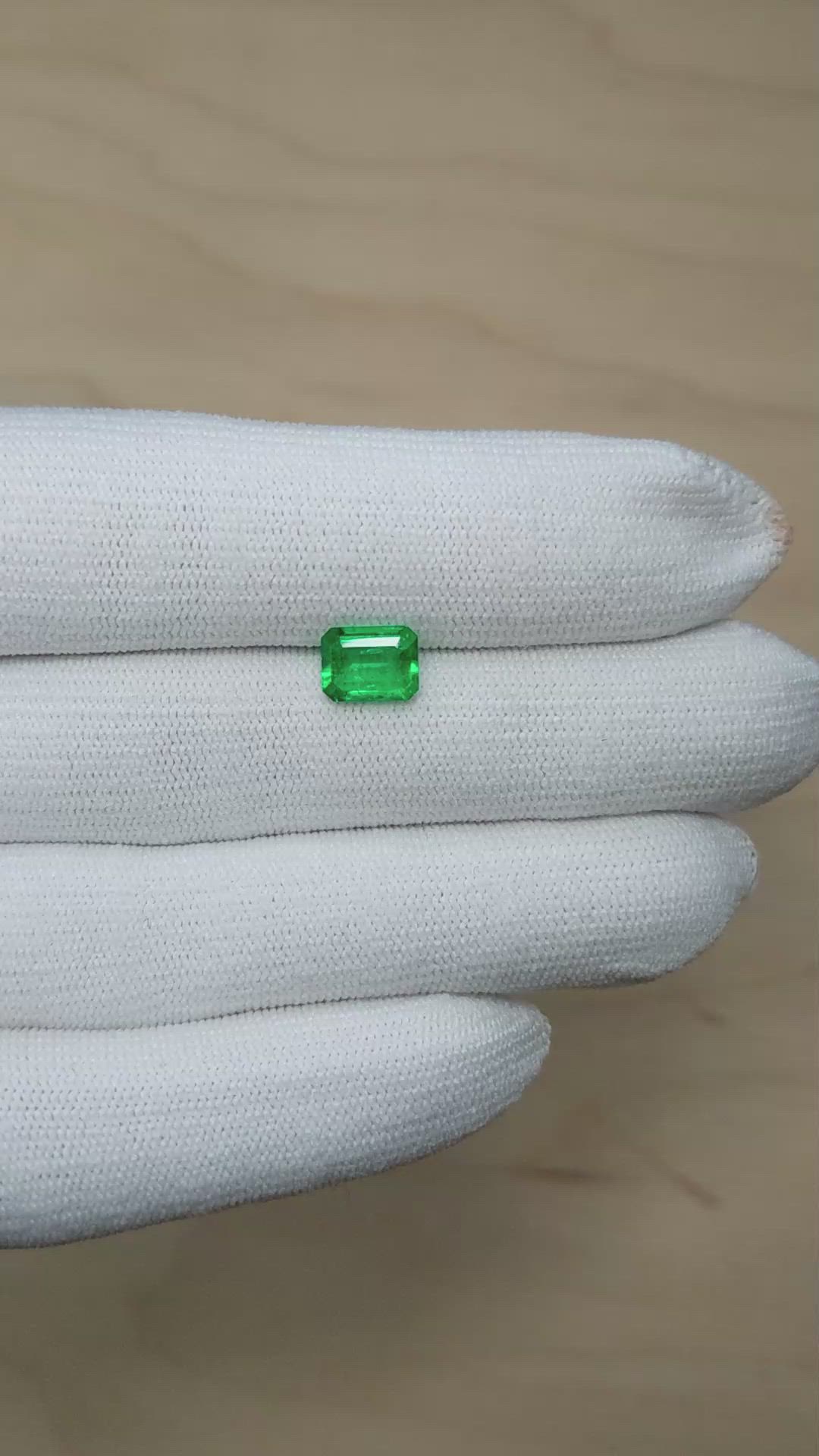
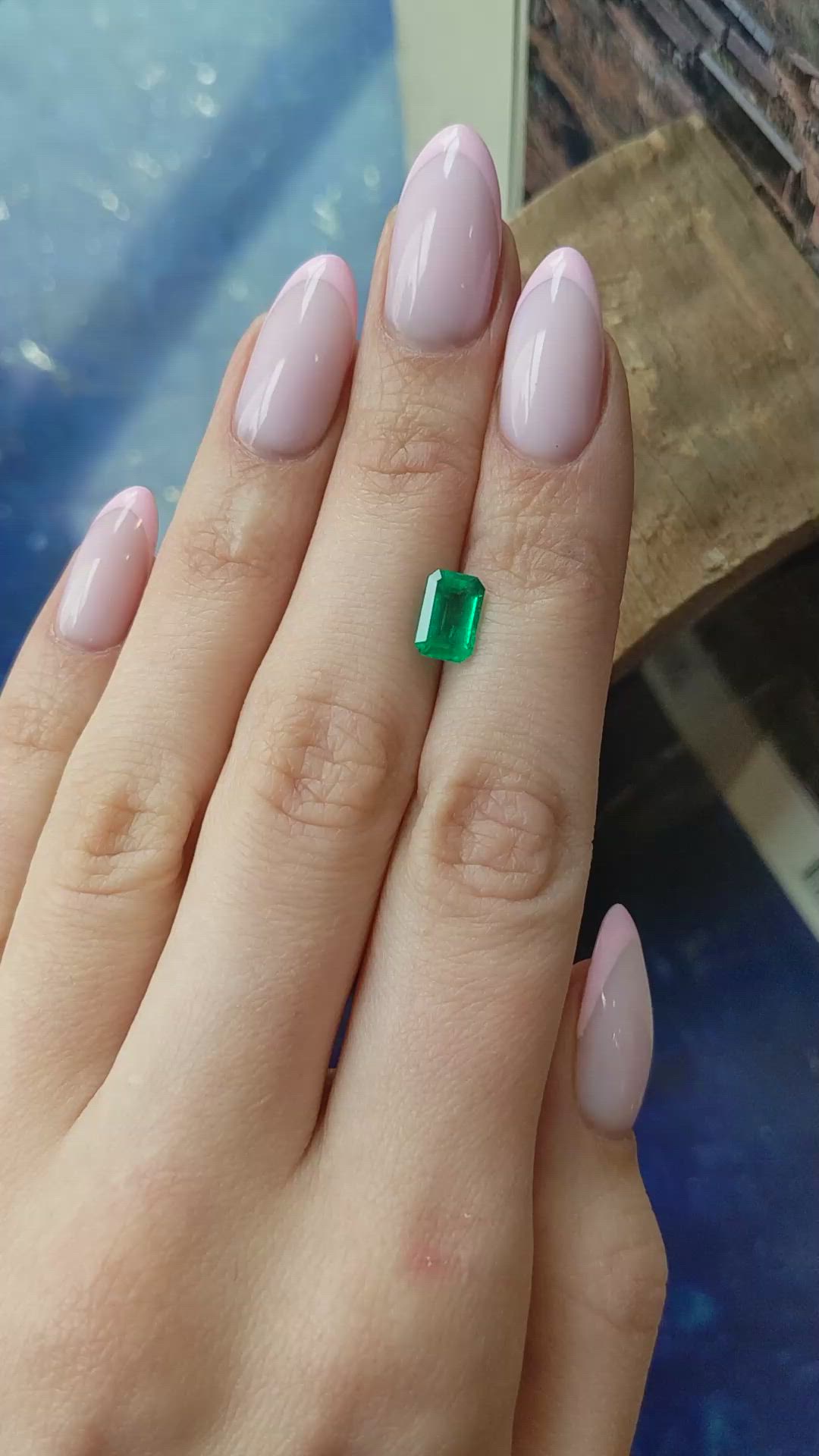
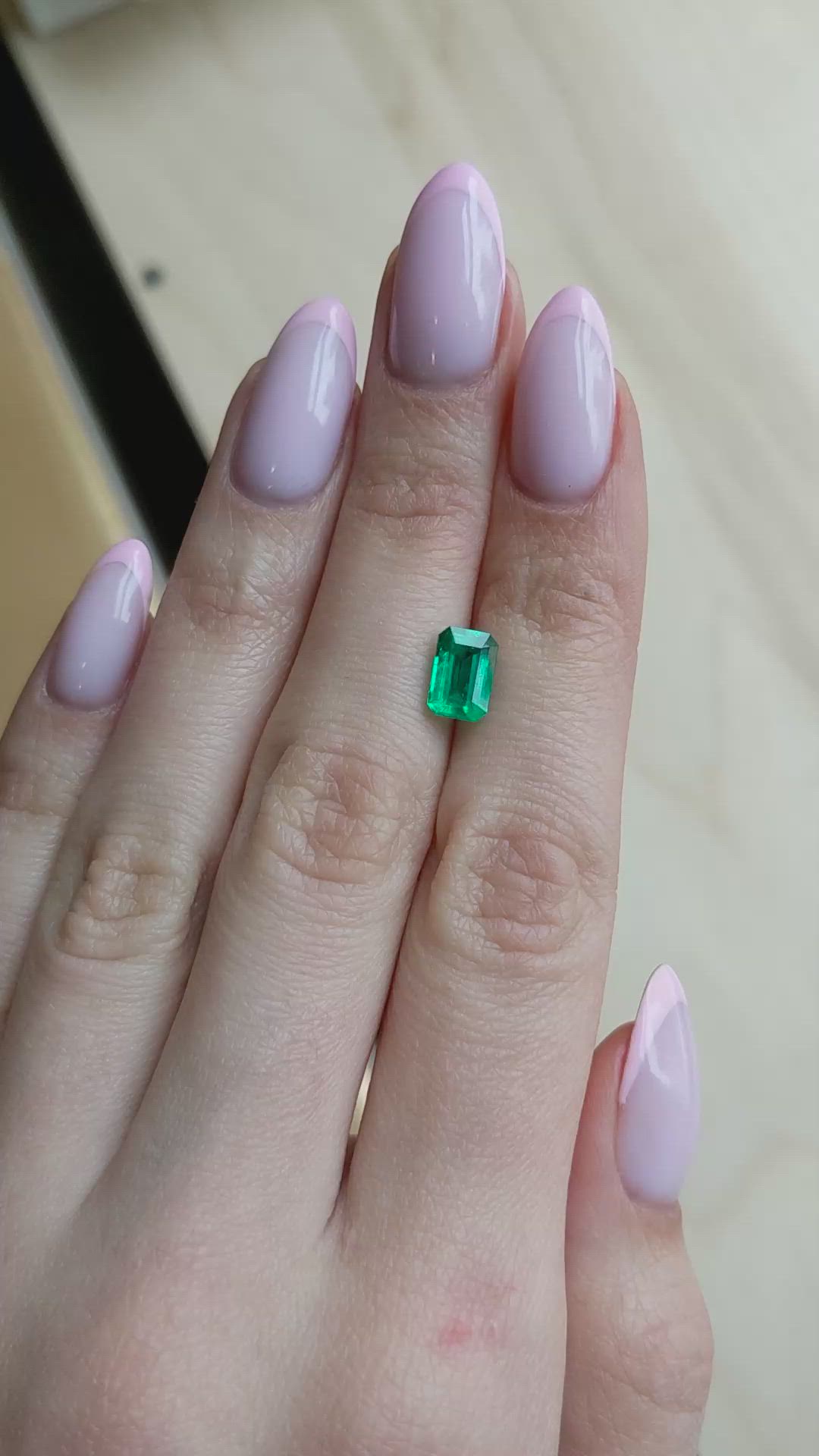
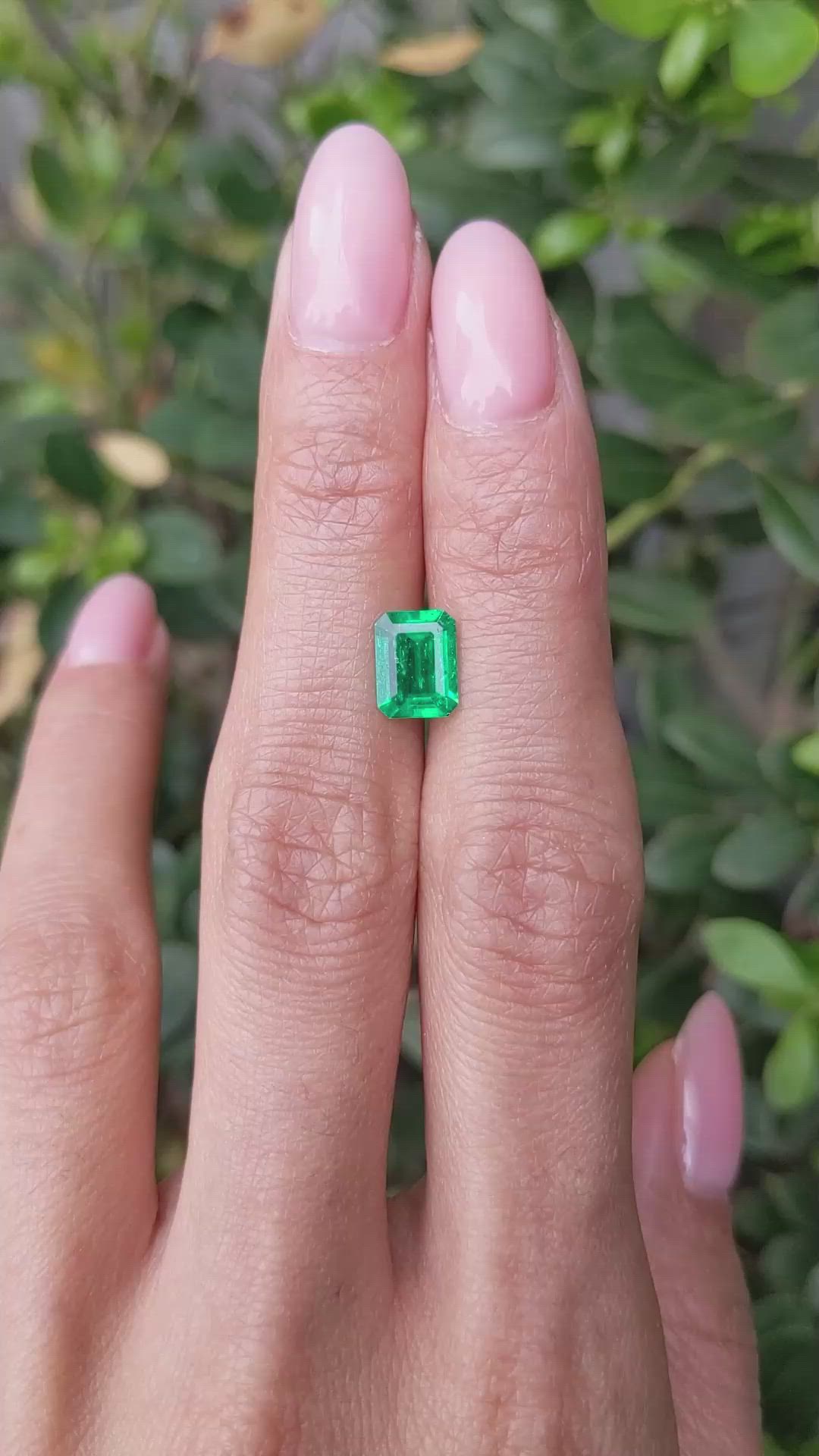


1.24 Ct. Emerald from Colombia
This loose stone is available to ship now
Item ID: | E9423 |
|---|---|
Dimensions (MM): help | Length: 8.11 Width: 6.22 Height: 3.4 |
Weight: | 1.24 Ct. |
Color: help | Green |
Color intensity: help | Intense |
Clarity: help | Slightly Included |
Shape: help | Emerald Cut |
Cut: | Emerald Cut |
Cutting style: | Faceted |
Enhancements: help | Standard |
Origin: help | Colombia |
Per carat price: help | $4,209 |
This specimen is a transparent green emerald weighing one point two four carats, cut in a classical emerald cut and exactly measured at eight point one one by six point two two by three point four zero millimeters. The length to width ratio is approximately one point three, and the depth measures approximately forty seven point five percent when referenced to the average of the length and width. The cutting style is a step cut, with broad rectangular facets on the crown and pavilion and precisely truncated corners to enhance durability. Clarity has been evaluated as slightly included at eye level, consistent with natural Colombian material and lending evidence of internal growth features that do not materially reduce visual transparency. Color intensity is described as intense, and the polish has been finished to an excellent standard, producing crisp facet junctions and a smooth reflective field that emphasizes the stone color and depth. Enhancement is standard, recorded as conventional clarity enhancement used to stabilize and improve the appearance of fissures, and the documented origin is Colombia, a provenance recognised for some of the finest emeralds in the world. The Natural Emerald Company presents this gem with full disclosure of these attributes, allowing specialist buyers to understand both the technical profile and the natural history of the stone.
The choice of an emerald cut for this one point two four carat crystal reflects a deliberate cutting strategy to maximize retained weight while optimizing color saturation and table windowing. The cutter has created a large, central table supported by broad step facets that run parallel to the girdle on both the crown and pavilion planes, which accentuates broad flashes of saturated green rather than scintillating pinpoint sparkle. This facet architecture is ideal for an intense colored emerald, because step faceting reduces light leakage across the face of the gem and presents an uninterrupted color field to the observer. The truncated corners serve a functional role, reducing stress points that can lead to chipping during setting or wear, while the girdle thickness has been controlled to provide secure mounting without obscuring lateral light transmission. The excellent polish indicates that lapidary finishing included fine grit progression and final diamond compound polishing, resulting in facet planes that are flat and geometrically true, and facet junctions that meet cleanly, enhancing the uniformity of the color field. For buyers who examine gems under loupe and at eye level, this cutting and finishing approach demonstrates a balanced compromise between color delivery, weight retention, and structural stability.
Geologically this emerald traces its origin to processes that unfolded millions of years ago in the Andean terrane now mapped as Colombian emerald belts. In technical terms, emerald formation here is linked to the interaction of beryllium rich hydrothermal fluids with chromium and vanadium bearing black shales and interbedded carbonates. During regional metamorphism and tectonic activity, fluid circulation exploited structural weaknesses and permeable horizons, carrying beryllium in solution at temperatures and pressures that favored the nucleation of beryl. When these beryllium rich fluids encountered chromium and vanadium in the host sediment, chromium and vanadium substituted for aluminium in the beryl crystal lattice during growth, imparting the characteristic green color. Over the course of millions of years the crystals grew in open vugs and fractures, locally trapping minute inclusions of fluid, gas, and early solid phases, which are now observed as internal features that gemologists refer to colloquially as jardin. These inclusions are diagnostic, providing a fingerprint of natural genesis, and they influence the observed clarity grade. Subsequent burial, uplift, and erosion cycles transported overlying material and eventually exposed the emerald bearing veins, where artisanal and later systematic mining recovered the crystals. The standard enhancement reported for this gem typically involves the introduction of low refractive index oils or resins into surface reaching fissures, a historical and accepted practice aimed at improving visual clarity and stability while preserving the natural internal character that records the gemology of its formation.
From a practical and connoisseurship perspective this Colombian emerald, offered by The Natural Emerald Company, is suitable for a range of fine jewellery applications where the step cut can be showcased. Because of the emerald cut geometry and the truncated corners, this gem is well matched to bezel settings and secure four or six prong designs that protect the corners while allowing the large table to present the color without obstruction. Given the standard enhancement, routine care should avoid ultrasonic cleaning and harsh chemical exposure, and recommended maintenance includes gentle soap and water, soft brush cleaning when necessary, and periodic inspection by a trusted jeweller to monitor the integrity of the filled fissures. For collectors who appreciate provenance, the combination of documented Colombian origin, the intense color intensity, the transparent character despite slight inclusions, and the precision of the step cut make this one point two four carat emerald an instructive example of high quality Colombian material. The Natural Emerald Company provides full disclosure and technical description to support selection by knowledgeable buyers, and this stone represents a refined balance of natural formation history, lapidary craftsmanship, and market appropriate enhancement practices.


Other Emeralds You May Like
