
- Stone12
- Reports3
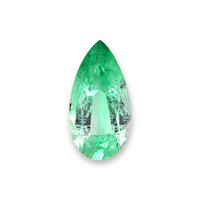
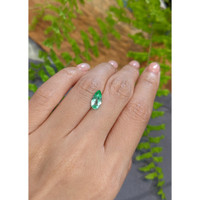
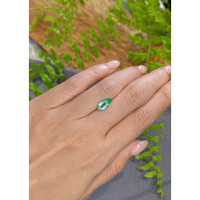
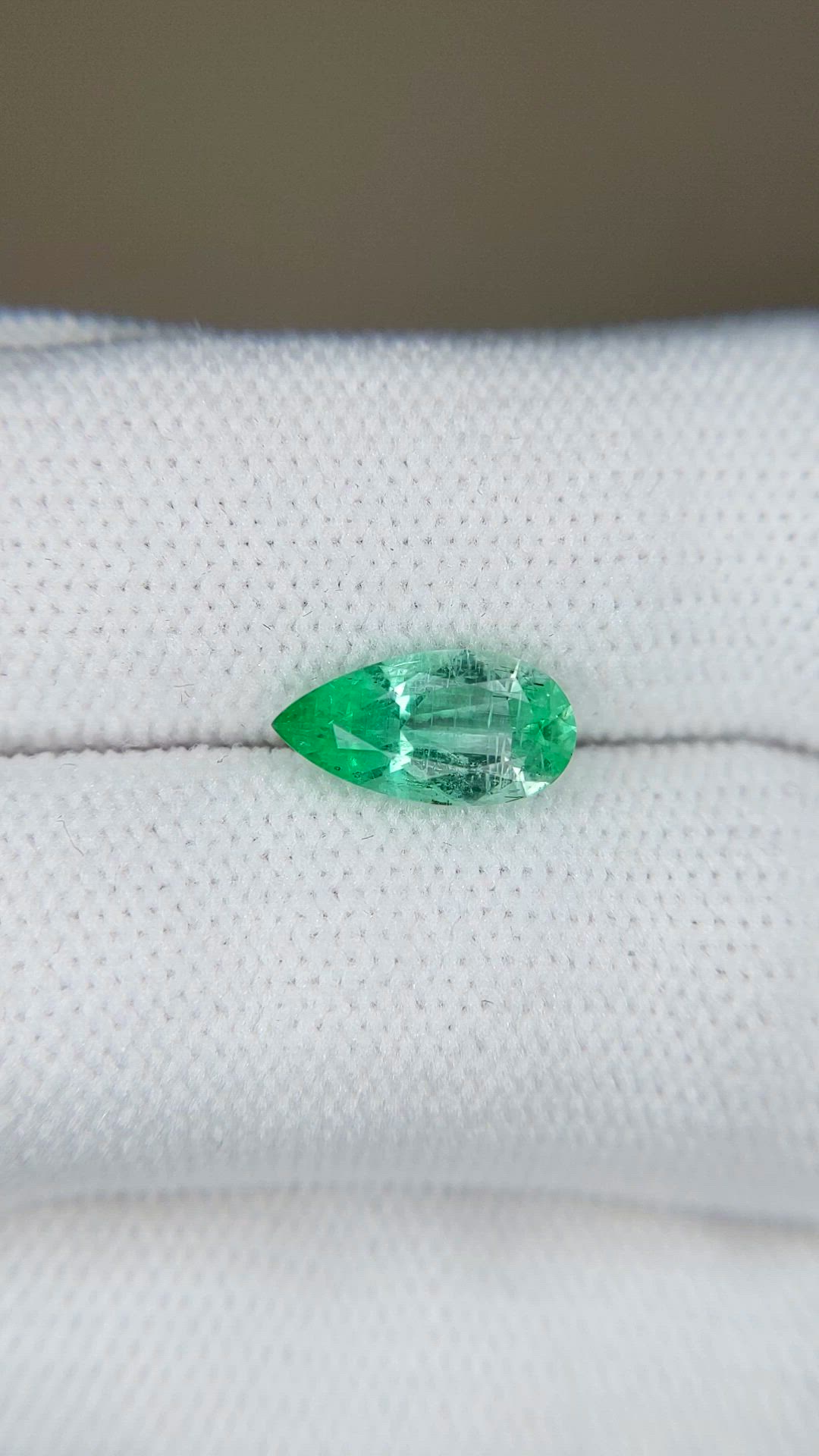
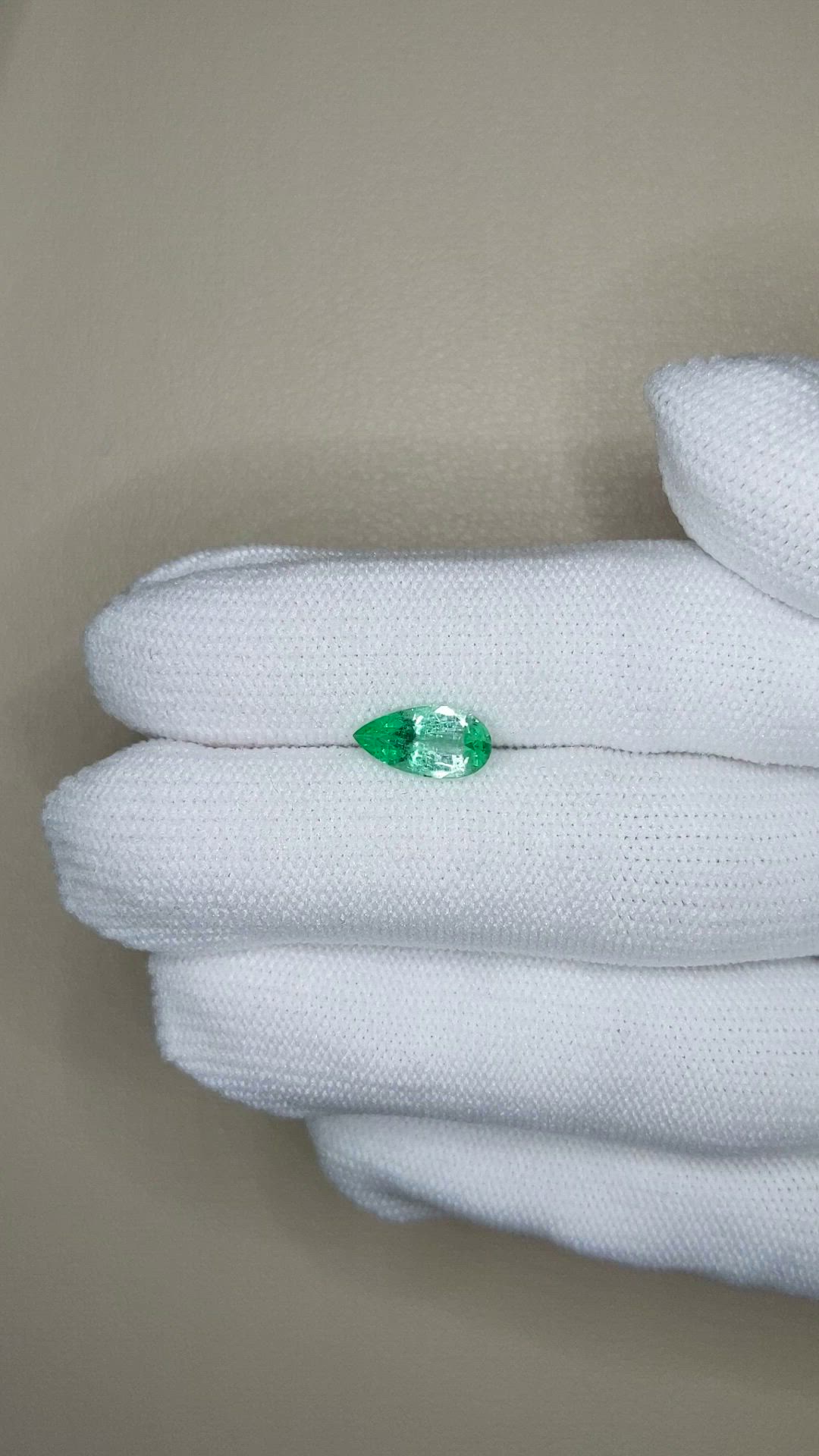
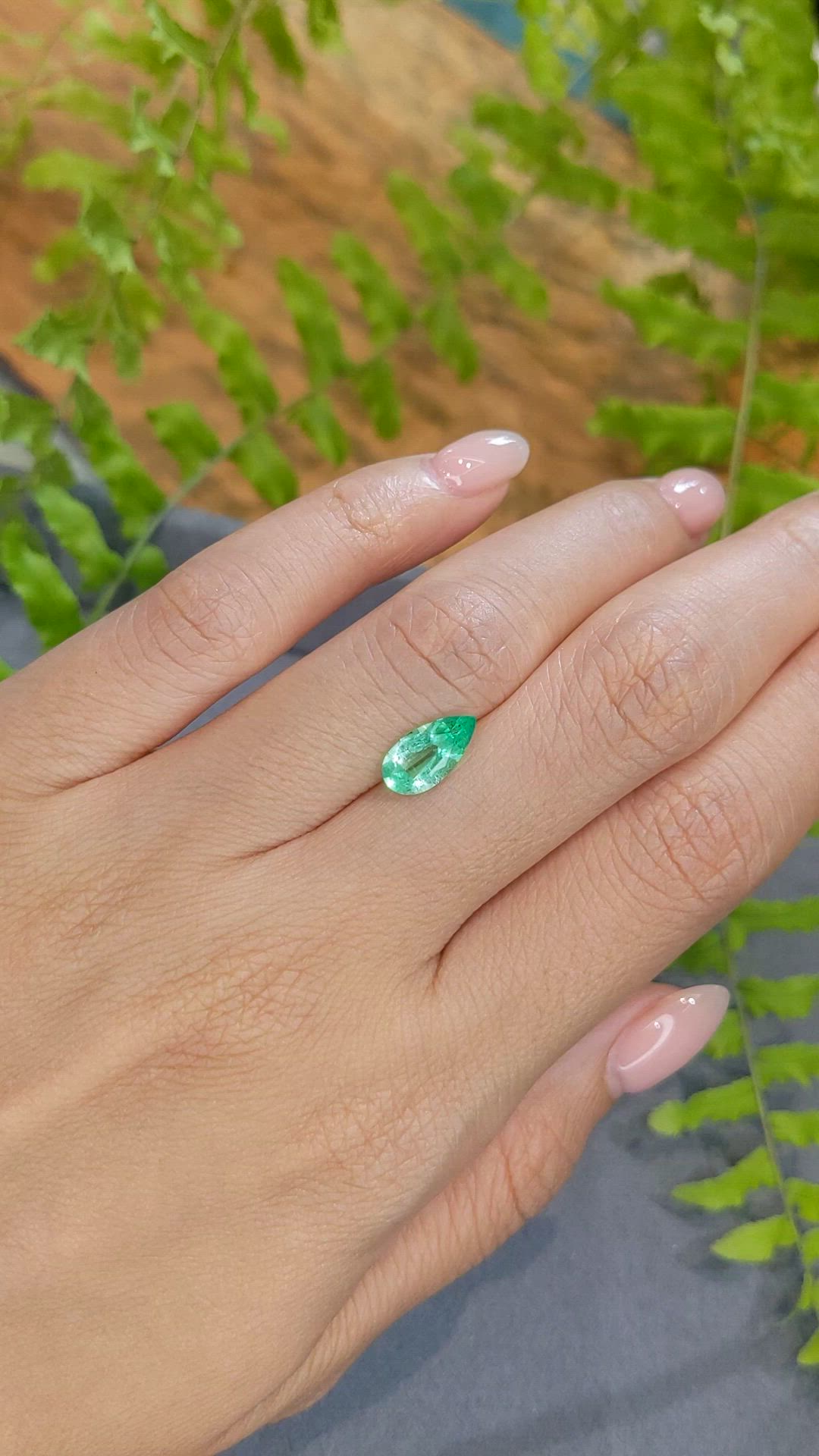
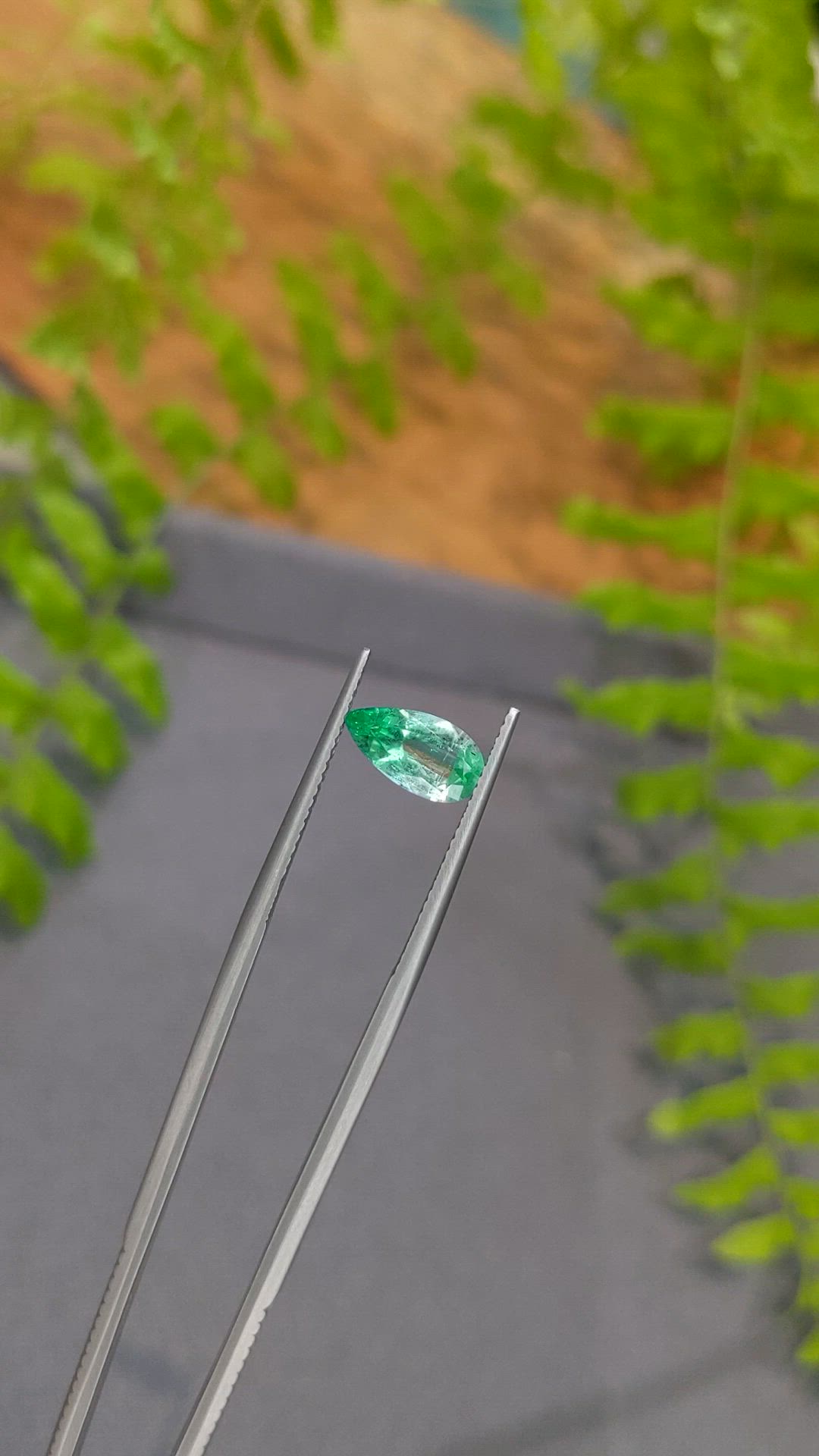

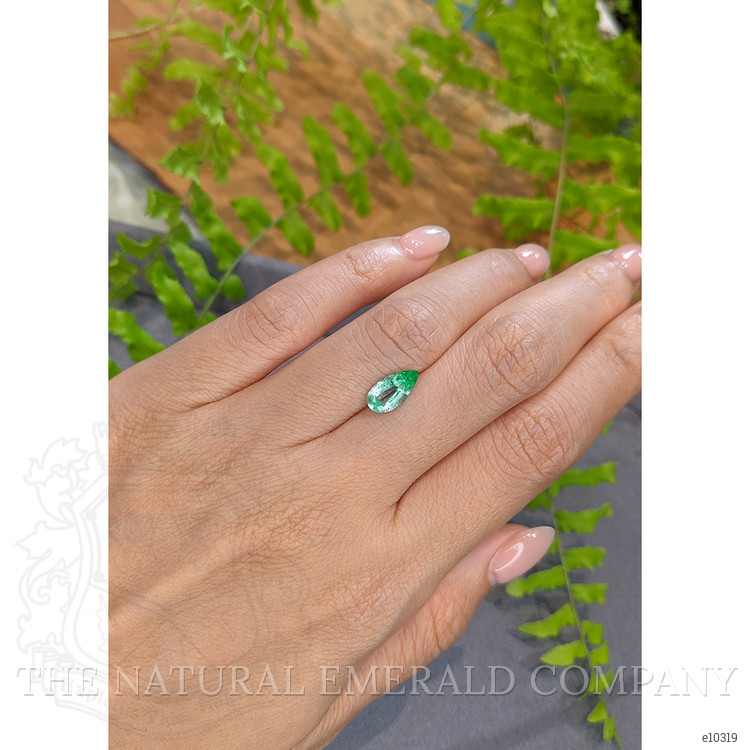

1.16 Ct. Emerald from Russia
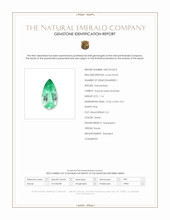
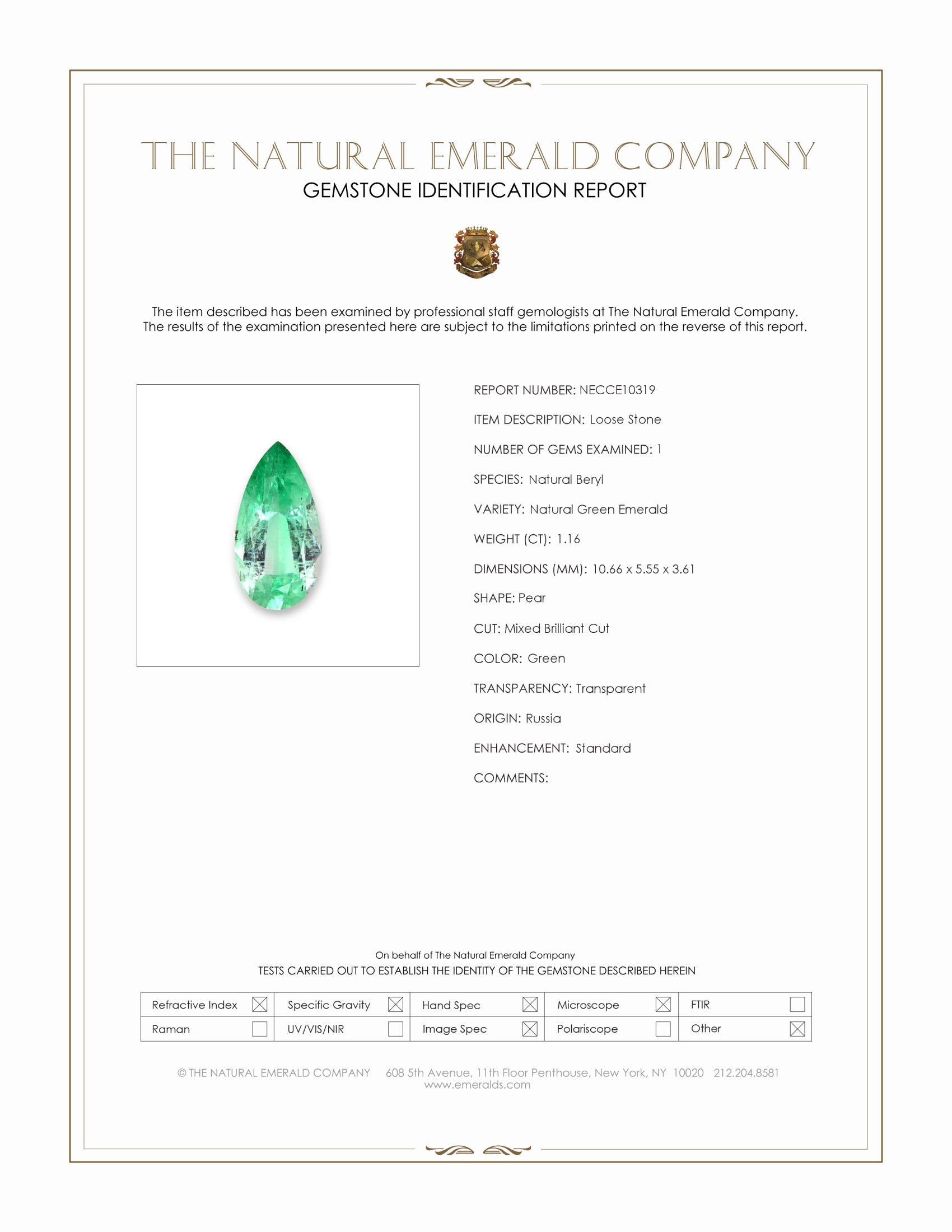
Item ID: | E10319 |
|---|---|
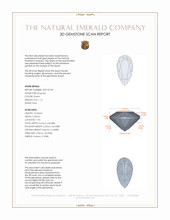
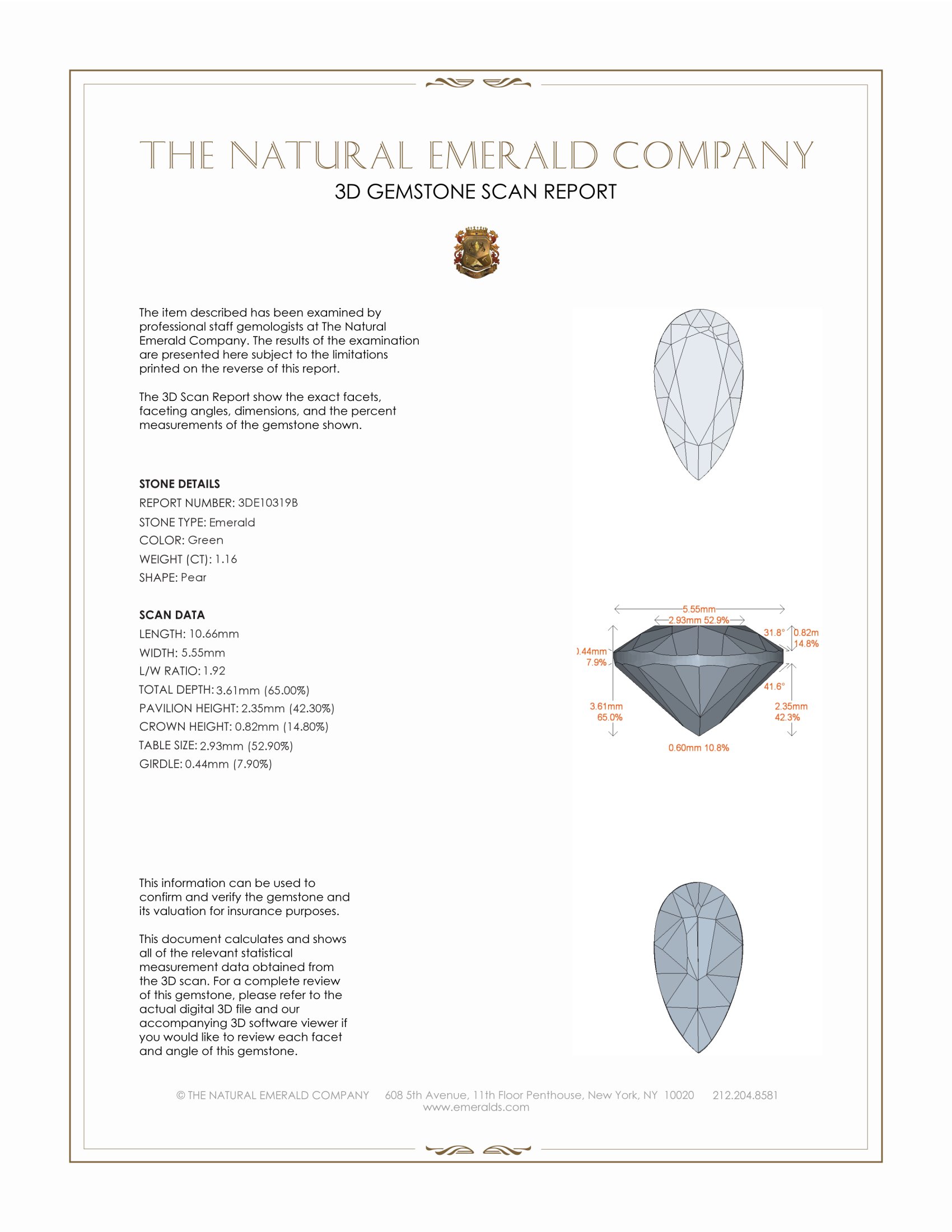
Dimensions (MM): help | Length: 10.66 Width: 5.55 Height: 3.61 |
Weight: | 1.16 Ct. |
Color: help | Green |
Color intensity: help | Medium |
Clarity: help | Slightly Included |
Shape: help | Pear |
Cut: | Mixed Brilliant Cut |
Cutting style: | Faceted |
Enhancements: help | Standard |
Origin: help | Russia |
Per carat price: help | $480 |
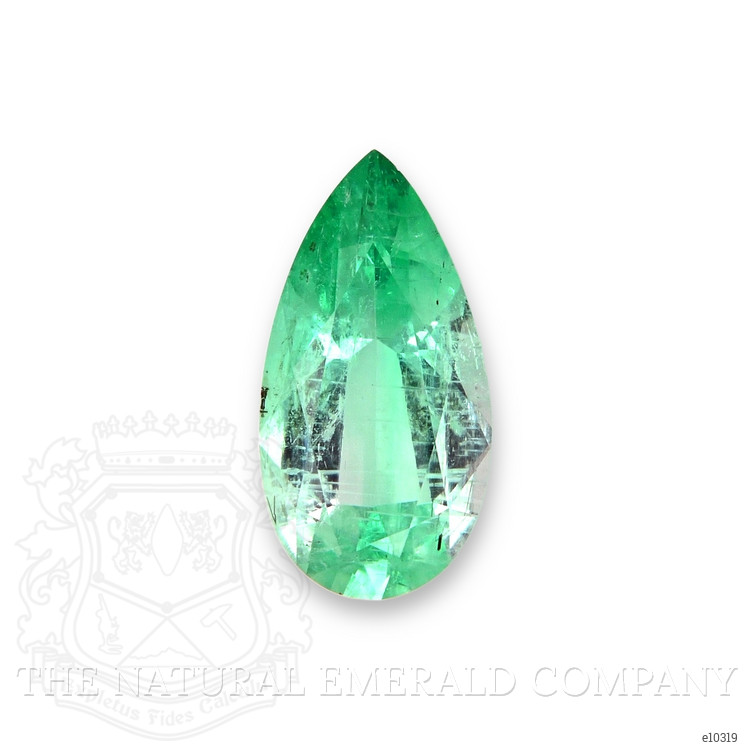
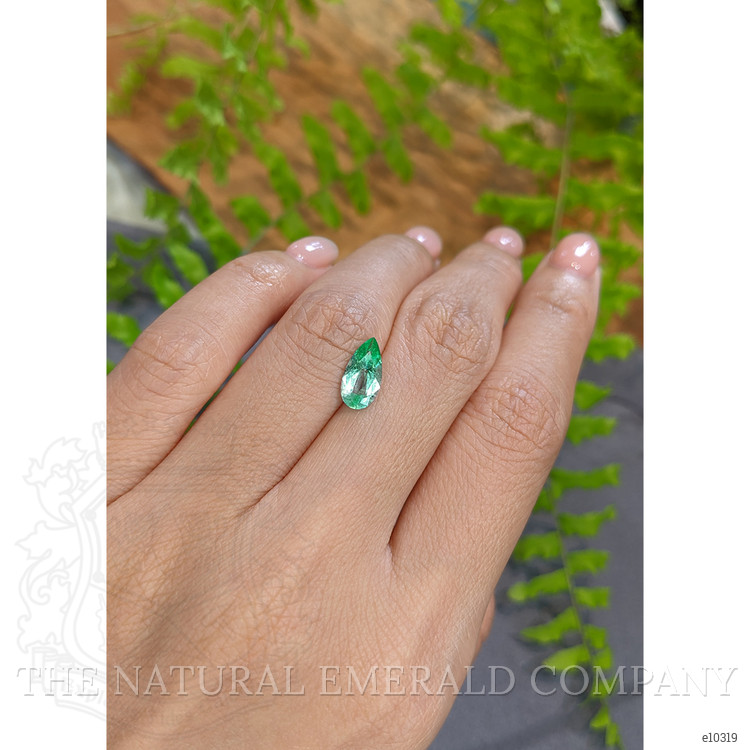
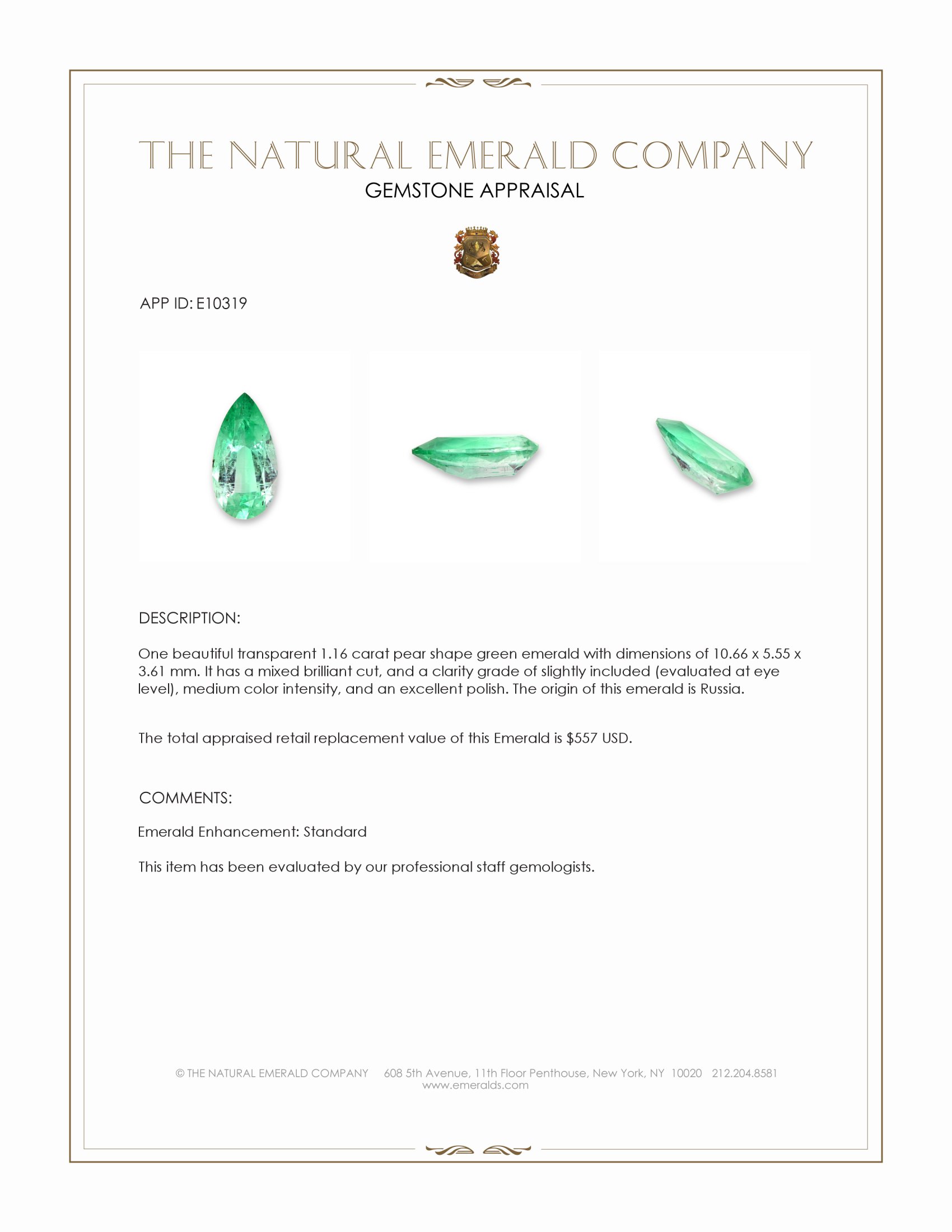
This pear shape green emerald weighs 1.16 carat and measures 10.66 x 5.55 x 3.61 mm, a proportion that yields an elegant length to width ratio of approximately 1.92, suitable for solitaire pendants and tapered ring settings. The cutting style is faceted, executed as a mixed brilliant cut that combines a brilliant facet arrangement on the crown with selective pavilion faceting to optimize both sparkle and color return. The color is graded as medium intensity, presenting an evenly distributed green tone with good saturation without progressing into overly dark or blue biased hues. Clarity is evaluated as slightly included at eye level, consistent with natural emeralds, where a network of internal features is present but does not significantly detract from transparency or light performance. The polish is excellent, each facet junction finished to a high luster to maximize facet contrast and to support strong reflections from the crown into the table. Enhancement is standard, employed to stabilize surface reaching fissures and to improve apparent clarity, and the origin is Russia, which imparts characteristic chemical signatures and inclusion types associated with Ural and adjacent deposits.
The geologic narrative of this emerald spans millions of years, beginning with deep seated processes that mobilized beryllium and chromophore elements into hydrothermal fluids. In a dynamic crustal environment of elevated temperature and pressure, these metal rich fluids migrated along fracture networks within metamorphic host rocks, exploiting planes of weakness created by regional tectonism. Where the chemical environment became favorable, and silica activity and fluid composition allowed beryllium to remain in solution, slow precipitation of beryl occurred, with chromium or vanadium substituting into the beryl lattice to produce the vivid green chroma. Growth proceeded episodically over extended intervals, with changes in temperature and fluid chemistry producing growth zoning and trapping multi phase inclusions, which today appear as the slight inclusions visible at eye level. The controlled kinetics of crystal growth created euhedral terminations and elongated prismatic habits in the rough, features that cutters respected when planning the pear outline to preserve both weight and optimal color orientation. This gem therefore records a deep time history of fluid flow, metasomatic exchange, and rigid crystallographic response to environmental stress, making its current transparency and color a direct consequence of those ancient processes.
The decision to fashion this material into a pear shape mixed brilliant cut reflects a technical approach to maximizing both color saturation and light return while accommodating natural inclusion textures. On the crown, a modified brilliant schema was laid out with a balance of kite and star facets radiating from a modest table, intended to disperse incident light and to promote scintillation without reducing the perceived depth of color. The pavilion was cut to complement the crown, using carefully calculated pavilion angles and facet proportions that minimize windowing along the pavilion axis while optimizing internal reflection pathways. Facet junctions were precisely executed to maintain facet symmetry along the curved girdle, and the girdle thickness was controlled to support secure settings without excessive material loss. The excellent polish was achieved by final laps with progressively finer abrasives and by attention to surface quality on the culet and girdle edges, producing crisp facet edges and bright internal contrast. These choices produce a gemstone that reads visually larger than its carat weight might imply, while preserving the structural integrity that is essential for wearable jewelry.
As a specimen supplied by The Natural Emerald Company this emerald carries both verifiable metrics and a transparent treatment disclosure, noting standard enhancement to fill surface reaching fissures, a common and accepted practice to improve durability and apparent clarity for natural emeralds. The slightly included clarity grade is typical for natural, untreated crystal growth environments, and after standard enhancement the stone exhibits improved eye clean appearance while retaining natural inclusions that serve as identification fingerprints. For mounting, settings that protect the girdle and tip of the pear shape are recommended, and routine care should avoid exposure to harsh chemicals and extreme heat which can alter or remove filler materials. The measured dimensions of 10.66 x 5.55 x 3.61 mm and the 1.16 carat weight make this gem an excellent candidate for a tapered bezel or prong setting that accentuates the drop silhouette and channels light into the table. Our technical assessment is available on request, and we can provide guidance on certification, matching for paired stones, and bespoke mounting options to showcase the emeralds intrinsic color, clarity character, and the story of its formation across geological time.


