
- Stone12
- Reports3
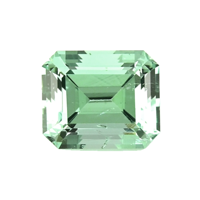
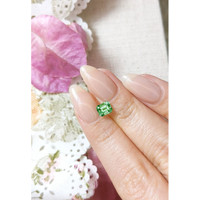
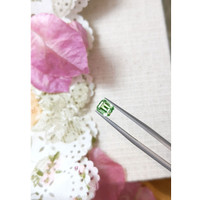
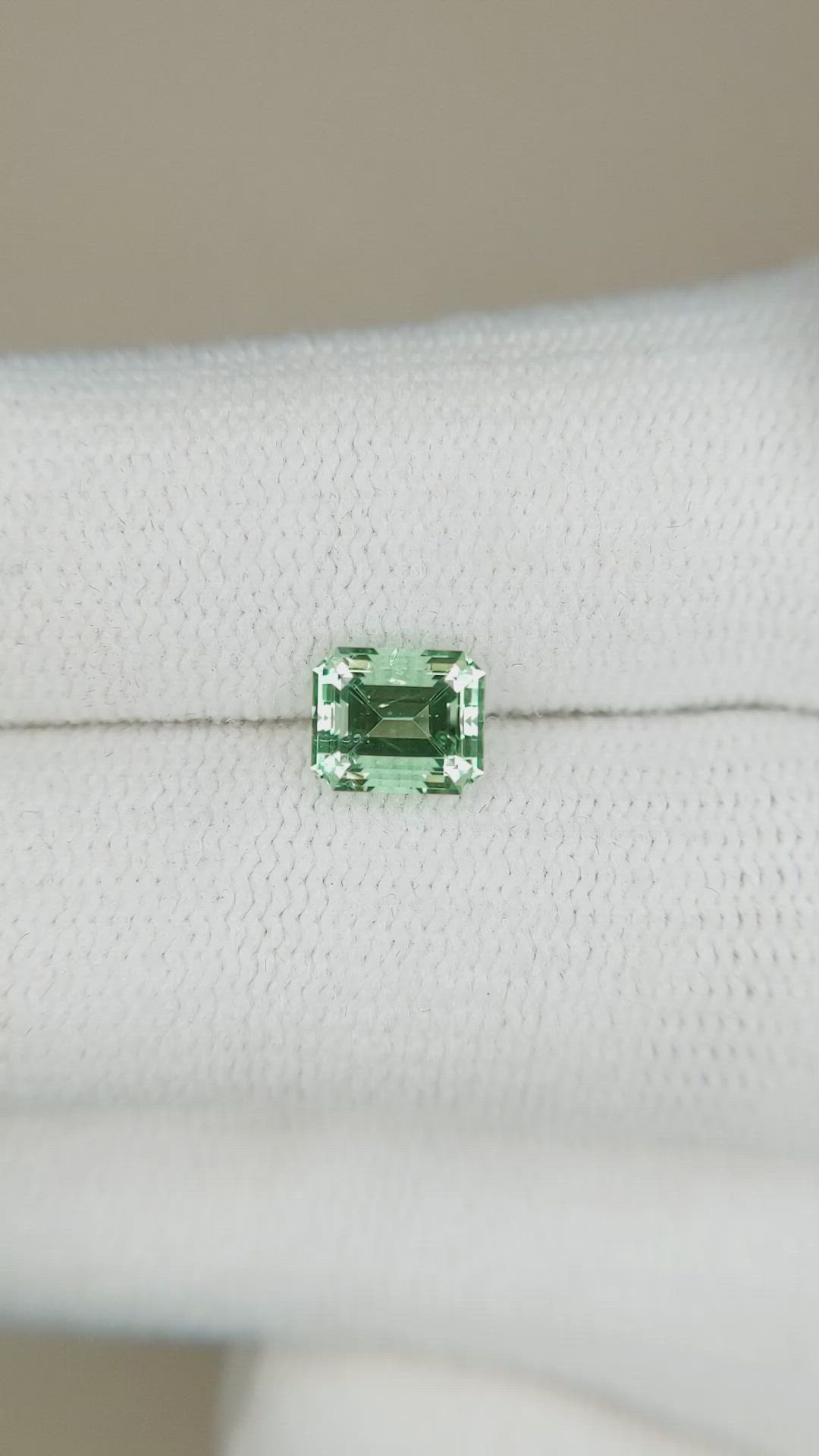
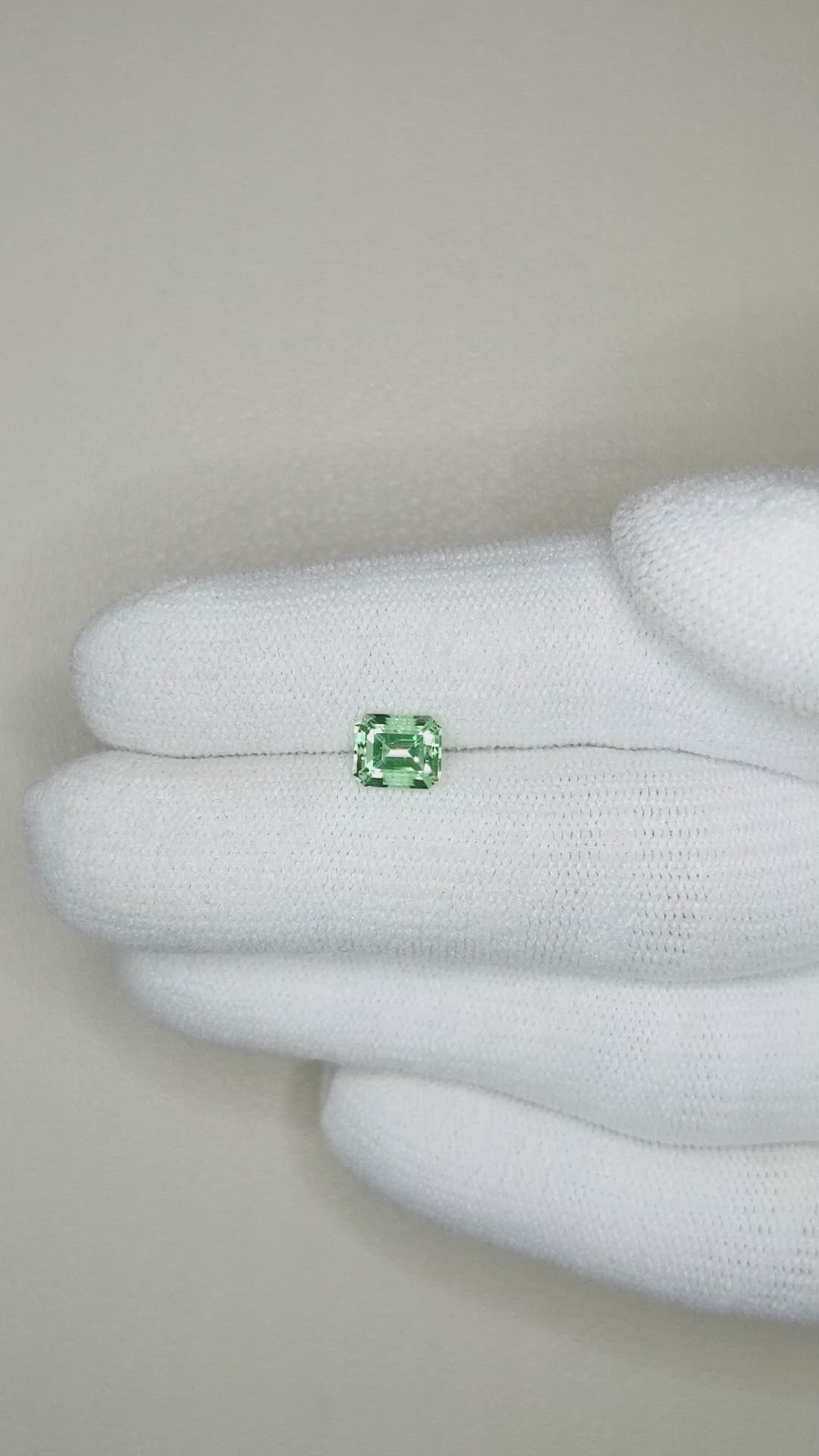
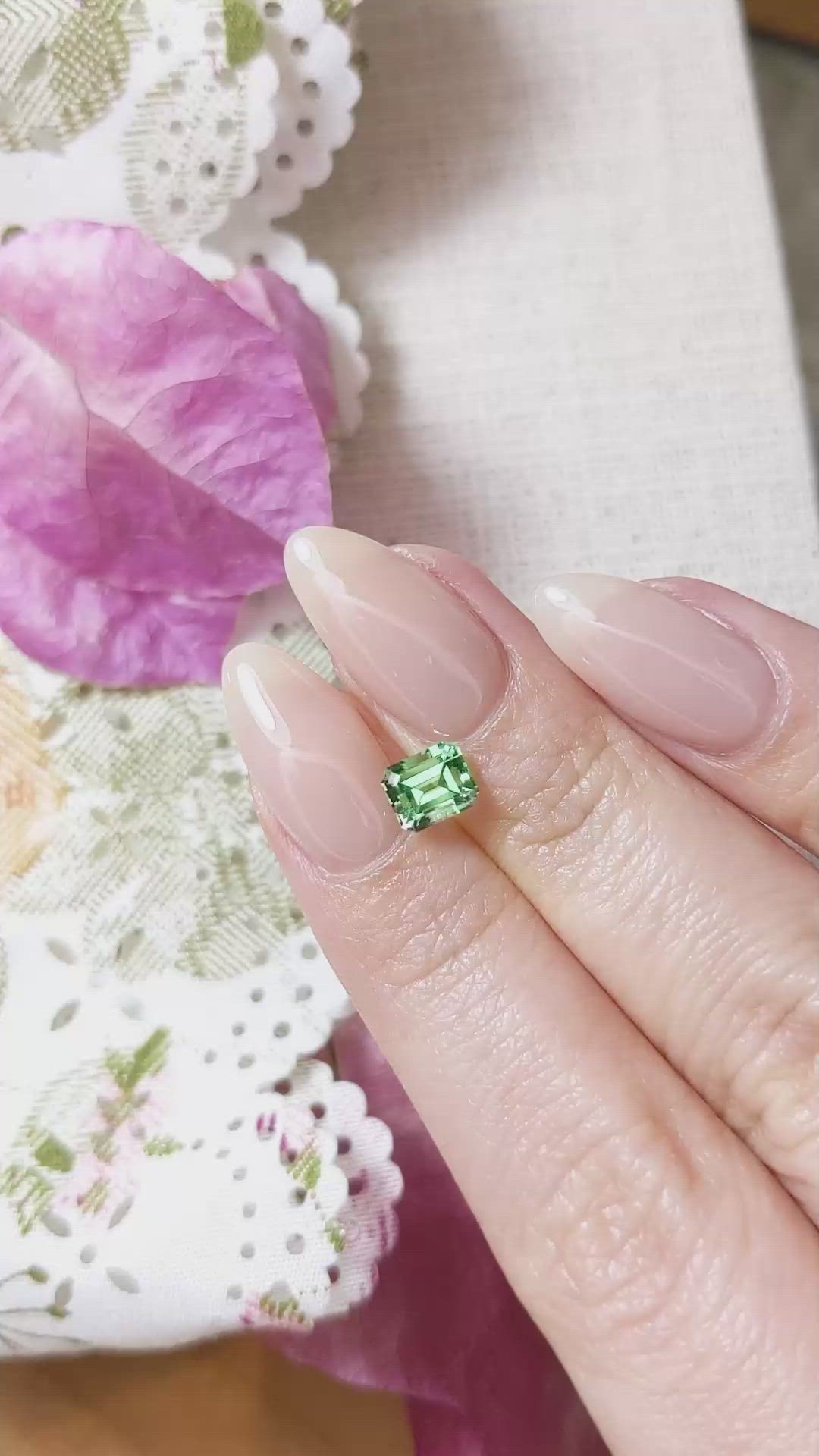
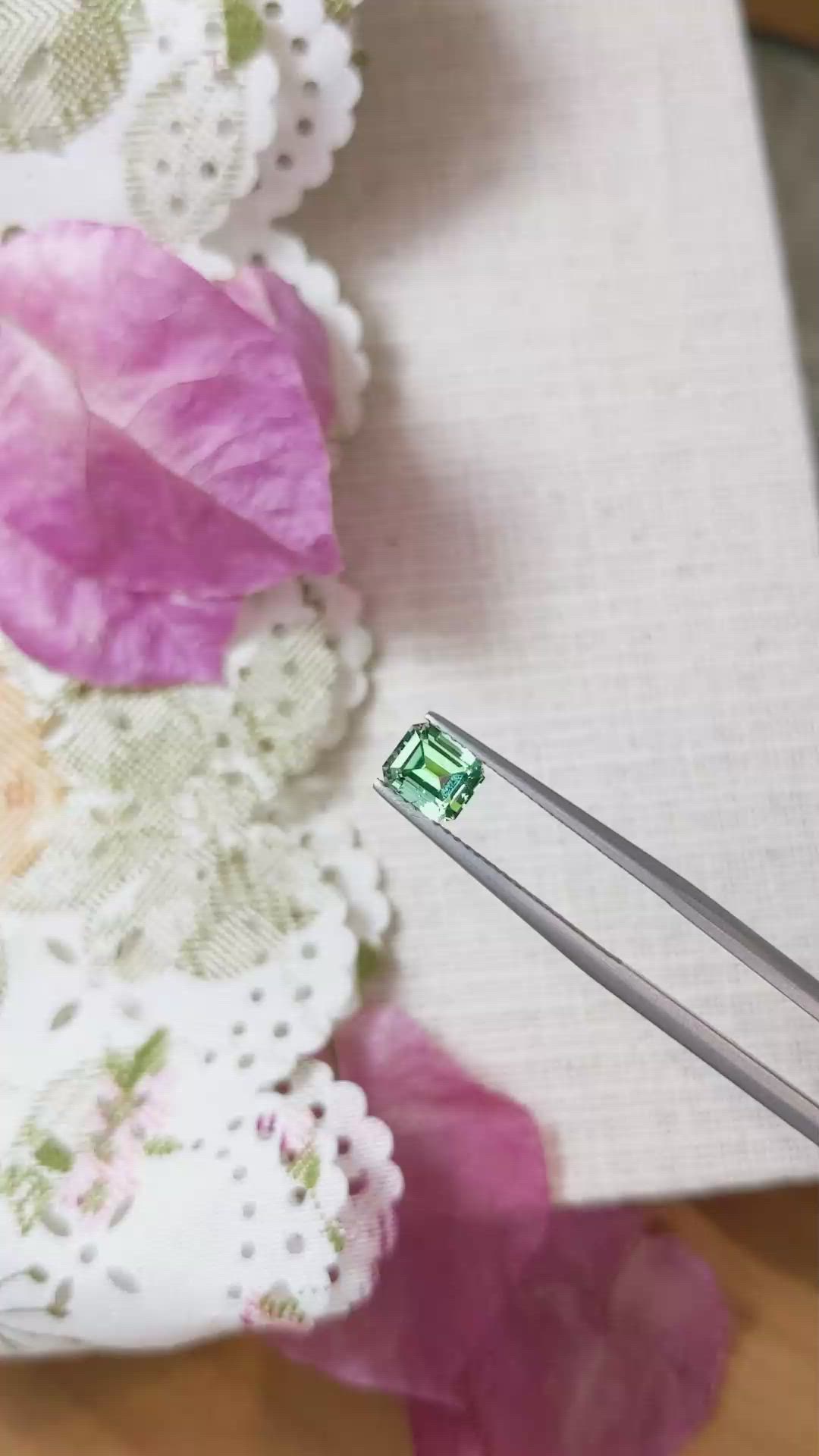





0.84 Ct. Emerald from Russia
This loose stone ships by Nov 7
Item ID: | E7101 |
|---|---|
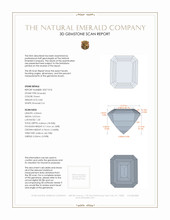
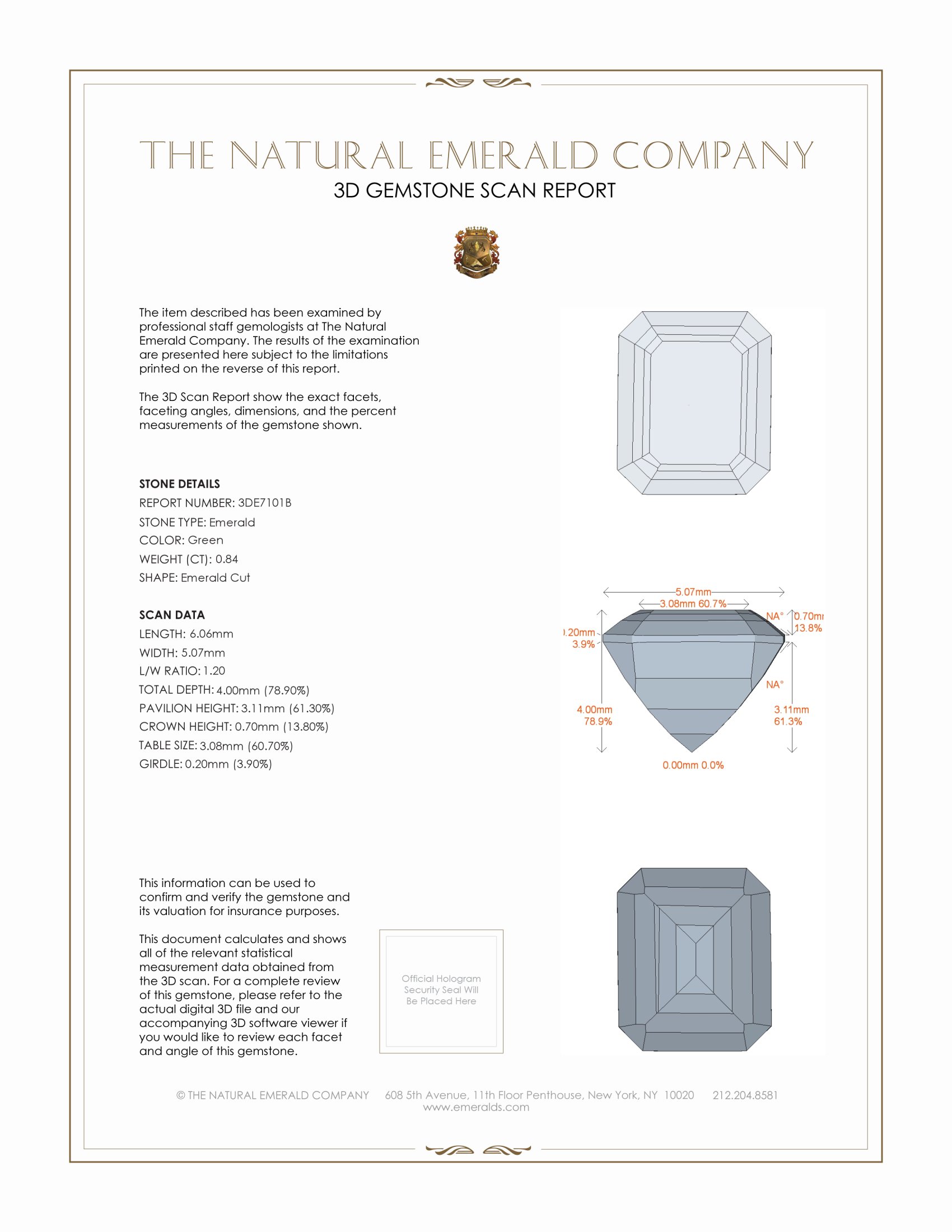
Dimensions (MM): help | Length: 6.06 Width: 5.07 Height: 4 |
Weight: | 0.84 Ct. |
Color: help | Green |
Color intensity: help | Light |
Clarity: help | Very Very Slightly Included |
Shape: help | Asscher - Octagon |
Cut: | Asscher Cut |
Cutting style: | Faceted |
Enhancements: help | Standard |
Origin: help | Russia |
Per carat price: help | $1,200 |
One beautiful transparent 0.84 carat asscher octagon shape green emerald is presented, with precise dimensions of 6.06 x 5.07 x 4.00 mm, clarity graded as very very slightly included at eye level, color described as light intensity, polish assessed as excellent, enhancement reported as standard, and origin documented as Russia. The asscher faceting and octagonal outline combine the hallmarks of classical step cutting with a compact rectangular footprint, yielding an object of both architectural presence and optical restraint. At 0.84 carat this gem occupies a sweet spot where proportions can be optimized to favor return of light without introducing excessive windowing, and the measured dimensions indicate an intentionally robust pavilion depth that contributes to strong internal reflection. The Natural Emerald Company offers this stone to connoisseurs who seek transparent material with controlled color and refined workmanship, and the technical presentation here emphasizes facets, proportions, and surface finish rather than subjective adjectives alone.
The asscher cut applied to an emerald is a disciplined exercise in step cutting, using parallel rows of concentric facets on the crown and pavilion to create a layered play of light and dark, often described as a hall of mirrors effect. The present stone shows classical asscher geometry, with squared outline and truncated corners that form an octagon in plan, and facets arranged to produce large, open planes that emphasize depth, tone, and clarity rather than dispersed brilliance. The measured depth of 4.00 mm relative to the average of length and width yields a depth percentage of approximately 72 percent, a dimension consistent with deliberate pavilion emphasis, which increases internal reflections and allows light to engage multiple facet planes before exiting through the crown. The refractive index typical for emeralds, approximately 1.57 to 1.60, interacts with step facets differently than brilliant cuts, producing broad flashes of return and linear scintillation along facet edges, and the asscher anatomy here has been executed to maximize those linear returns while minimizing leakage through the table. Meticulous facet alignment and symmetry are evident, and they are essential to the asscher philosophy, because even minute misalignments reduce the cascading mirror effect and break the disciplined light choreography that collectors prize.
Clarity has been evaluated at eye level as very very slightly included, a grade that communicates minimal impact on face up appearance for a transparent emerald, and the asscher step pattern further manages the visual behavior of inclusions by compartmentalizing the field into faceted planes that can either mask discreet internal features or present them as structured elements within the layered appearance. Typical emerald inclusions such as liquid filled channels, crystalline platelets, or thin growth fissures are given modest visibility by the light, and the excellent polish on pavilion and crown facets reduces surface diffusion and enhances contrast between facet planes, which in turn sharpens the mirror like reflections. The light color intensity specified as light indicates a paler saturation level, which benefits from the asscher cut because the stepped facets concentrate darker zones and maintain an even color distribution across the table, limiting patchiness that can occur with shallow or poorly proportioned cuts. Enhancement is standard, denoting customary clarity enhancement practices used to stabilize fissures and improve visual clarity, and the cut combined with the enhancement yields an appealing balance between natural character and finished appearance, preserving the stone's origin characteristics and ensuring predictable performance in jewelry.
From a mounting and use perspective, the asscher octagon form and compact proportions allow the gem to read larger face up than its weight might suggest, because the squared outline occupies visual space efficiently and the measured depth supports substantial light return. For settings, four or eight prong designs that secure the truncated corners preserve the geometric integrity and allow maximum crown exposure, while low bezel interpretations protect the corners from impact and maintain the disciplined step reflections. In solitaire applications the asscher geometry emphasizes the stone itself, revealing the layered reflections and controlled color, and in halo or architectural mountings the linear facet edges create pleasing rhythm with surrounding diamonds or complementary stones. The Russian origin contributes to the gemmatic profile, offering a cooler green tendency and a crystalline transparency that pairs well with step cutting. The Natural Emerald Company stands behind the workmanship and documentation provided for this example, and for experienced buyers who value precise proportions, conscientious cutting, and transparent disclosure, this asscher octagon emerald represents an opportunity to acquire a technically refined stone with predictable optical behavior and refined finish.


