
Colombian Emeralds Reach Europe
Colombian emeralds reached Europe in the 16th century, soon after Spanish conquistadors encountered the emerald deposits of the Colombian Andes: first at Chivor in 1537 and later in the territory of the Muzo people. From ports such as Cartagena, the stones crossed the Atlantic aboard Spanish galleons to Seville. From there they spread to European royal courts and then onward to the Ottoman, Persian, and Mughal empires. Their unmatched green transformed the global emerald trade, and Colombia’s reputation as the source of the world’s finest emeralds has lasted ever since.
Over the following decades, Colombian emeralds traveled through one of the first truly global trade networks, and their journey still shapes how we think about emeralds today.
Colombia’s Emeralds Before the Spanish
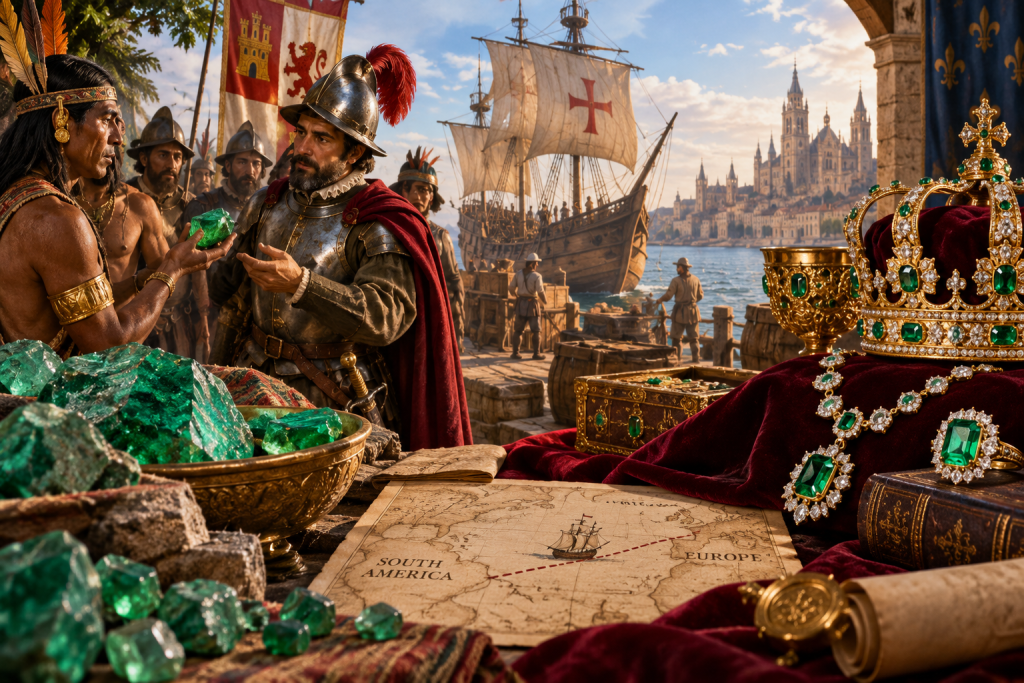
Long before Europeans arrived, Indigenous peoples in present-day Colombia mined and valued emeralds. The Muzo people controlled some of the richest emerald-bearing land in the region, and the Muisca used emeralds in offerings and traded them across parts of South America.
The Spanish quickly recognized that these stones were unlike anything known in Europe. They were larger and more richly green than the emeralds that had reached the Old World before.
Spanish Control of the Emerald Mines
In 1537, members of Gonzalo Jiménez de Quesada’s expedition learned of emerald deposits at Chivor, northeast of present-day Bogotá. The Muzo, by contrast, fiercely resisted Spanish rule for decades. The Spanish founded a settlement in the Muzo region in 1559, and by the late 16th century the Muzo mines had become the heart of colonial emerald production.
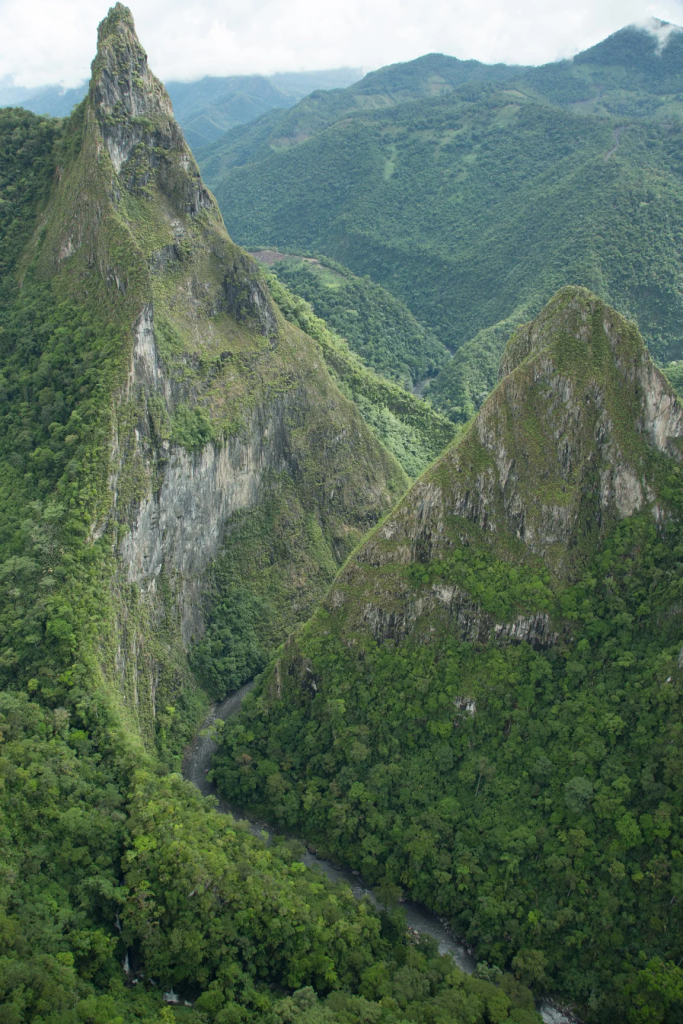
Once mining came under colonial control, emeralds became valuable commodities within Spain’s expanding empire. Stones were carried from the mountains to colonial trading centers before beginning the long journey to Europe.
Across the Atlantic on Spanish Ships
Spanish treasure fleets carried enormous quantities of goods between the Americas and Spain. Gold, silver, pearls, and gemstones traveled through this maritime network, and Colombian emeralds were among the most valuable cargo. Many shipments left from Cartagena on Colombia’s Caribbean coast and sailed by way of Havana to Seville, the official hub of Spain’s trade with the Americas.
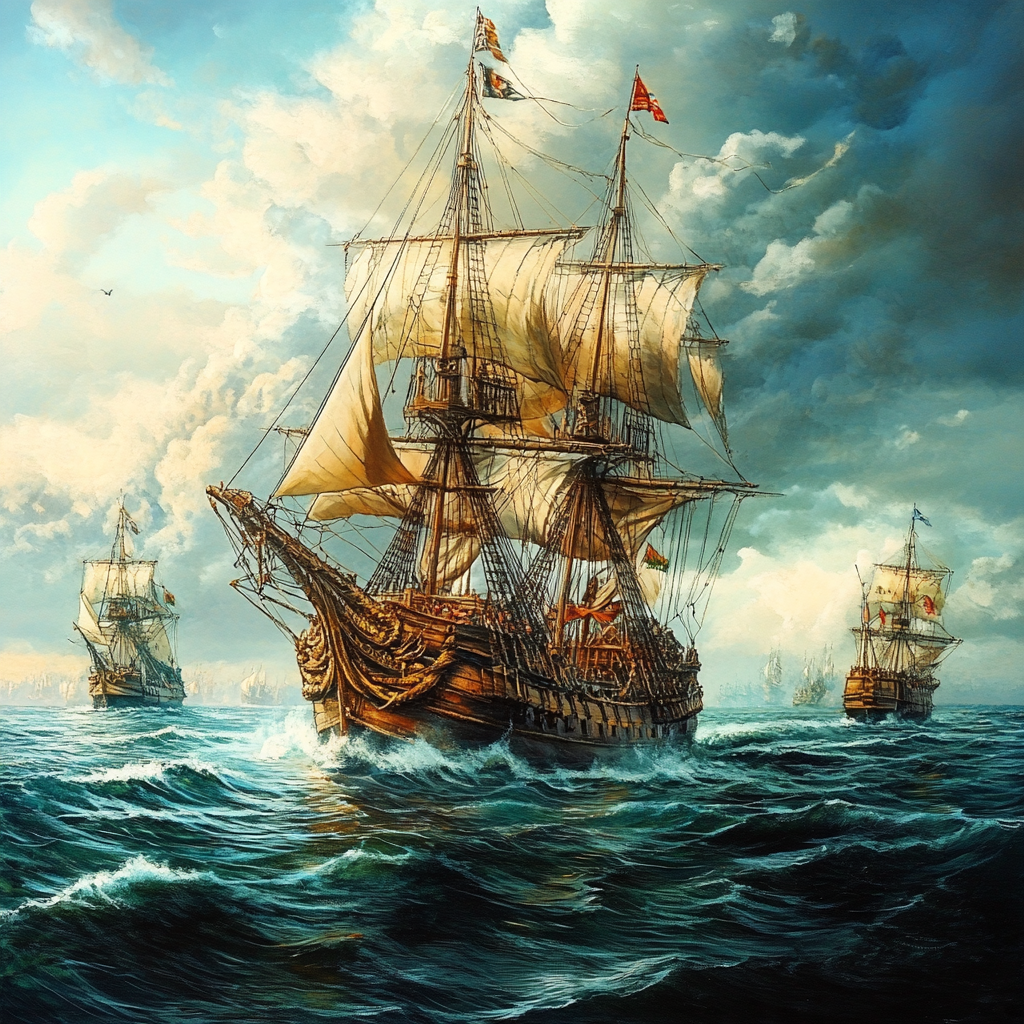
The voyage was dangerous. Ships faced hurricanes, navigation hazards, pirates, privateers, and enemy fleets, and some emeralds never reached Europe at all.
Emeralds Reach European Royal Courts
The emeralds that arrived safely quickly found wealthy buyers. Their rich green made them highly desirable among European royalty and aristocracy, and they appeared in necklaces, pendants, rings, religious objects, and ceremonial jewelry.
Spanish royalty had privileged access through colonial trade, but Colombian emeralds soon traveled far beyond Spain. Some of the most important emeralds ever sold at auction trace their history to this era. You can see examples in our article on the world’s most expensive emeralds ever sold.

From Europe to International Trade Routes
Interestingly, many of the finest Colombian emeralds did not stay in Europe. Through Spanish and Portuguese trade networks, including the Portuguese route to Goa on India’s west coast, emeralds traveled to the Middle East and Asia, where the Ottoman, Safavid Persian, and Mughal courts prized them above almost any other gem.
Mughal craftsmen carved large Colombian emeralds with flowers, inscriptions, and prayers, creating objects that combined South American gems with South Asian artistry. Discover that story in the emeralds of the Mughal Empire.
Why Colombian Emeralds Became So Famous
Colombia’s reputation grew because its mines produced emeralds of exceptional color and transparency. Fine Colombian emeralds are admired for a vivid, pure green, often with a slightly bluish tone.
Geographic origin alone does not determine quality, however. Color, clarity, cut, carat weight, treatment, and overall beauty remain essential when evaluating any emerald. To see how Colombian stones compare with another major modern source, read our guide to Colombian vs. Zambian emeralds.
Shipwrecks and Lost Emerald Treasures
Spanish maritime trade also created one of the most fascinating chapters in emerald history: lost treasure ships.
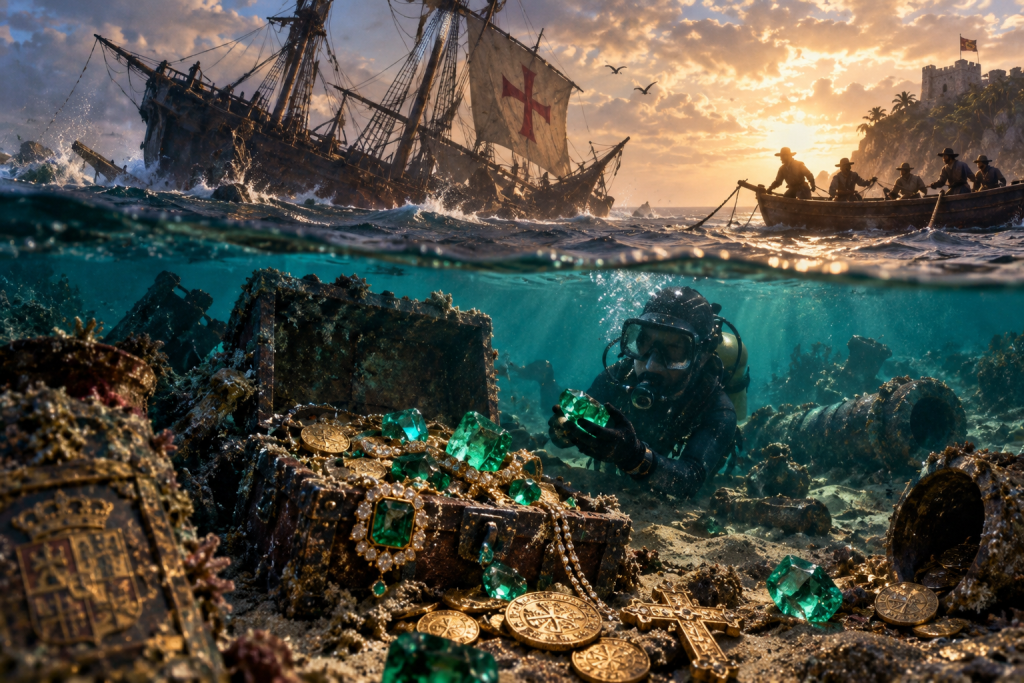
The best-known example is the Nuestra Señora de Atocha, a Spanish galleon that sank in a hurricane off the Florida Keys in 1622 while carrying silver, gold, and emeralds. When salvagers led by Mel Fisher located the main wreck site in 1985, the recovered treasure included Colombian emeralds, a physical link to the moment these gems first entered global trade.
A Gemstone That Connected Continents
The journey of Colombian emeralds shows how gemstones connected distant cultures centuries before modern transportation.
A single emerald could begin in a Colombian mine, travel through Spanish colonial territory, cross the Atlantic aboard a galleon, enter a European court, and continue to a royal treasury in Asia. Few gemstones illustrate the early growth of global luxury trade so clearly. Long before this, of course, emeralds already had a royal history in the ancient world. Read about Cleopatra and emeralds.
Final Thoughts
The arrival of Colombian emeralds in Europe during the 16th century transformed the international history of the gemstone. As Colombian Emeralds Reach Europe through Spanish trade routes, these brilliant green treasures became increasingly admired in royal collections and fine jewelry, eventually becoming part of a wider international trade network extending from Europe to Asia.
Today, Colombian emeralds remain among the world’s most celebrated natural emeralds. Behind their famous green color lies an extraordinary history of ancient mining, colonial expansion, ocean voyages, royal treasures, and global trade.
Discover the legendary beauty of Colombian emeralds and explore our collection to find an exceptional natural emerald of your own.