
Cleopatra and Emeralds: Why the Ancient Egyptian Queen Was Fascinatedby Emeralds
Cleopatra VII, the last active ruler of Ptolemaic Egypt (reigned 51–30 BCE), is famously linked with emeralds because Egypt controlled the most important emerald mines known to the ancient Mediterranean world. These mines lay at Mons Smaragdus, “Emerald Mountain,” in Egypt’s Eastern Desert near the Red Sea. For a queen who used luxury and image as tools of power, emerald’s vivid green, a color tied in Egyptian belief to fertility, rebirth, and eternal life, made it the perfect royal gem. Many of the most colorful stories about Cleopatra’s emeralds belong to later legend. Even so, her name has kept emerald linked with royalty, beauty, and power for more than two thousand years.
As with many stories from the ancient world, the history is more complicated, and more interesting, than the legend.
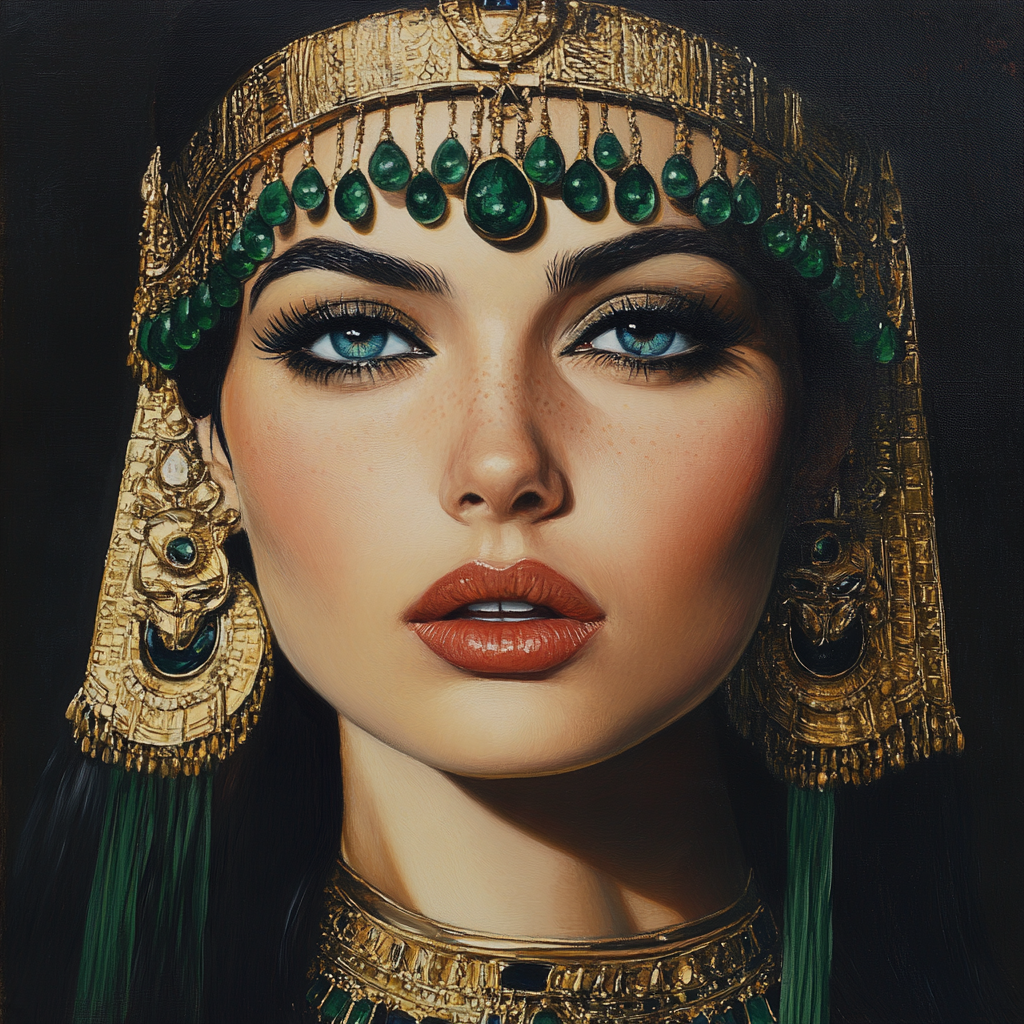
Why Was Cleopatra Fascinated by Emeralds?
Cleopatra ruled at a time when green gemstones were already highly valued around the Mediterranean. In Egyptian culture, green was the color of new growth, the fertile Nile, and rebirth, ideas closely connected with royal power and the afterlife.
Emerald offered the richest green of any gem available to the ancient world. Just as important, Egypt itself was its source. A queen who wore and gave emeralds was displaying a treasure that came from her own kingdom, a powerful statement for a ruler who worked hard to project wealth and legitimacy to Rome and the wider world.
Cleopatra is traditionally described as having a deep appreciation for emeralds, using them in her jewelry and as symbols of status. Few of those details can be confirmed from ancient sources, but the association has proved remarkably enduring.
Egypt’s Ancient Emerald Mines
Egypt’s emeralds came from a group of sites in the Eastern Desert, between the Nile and the Red Sea, around valleys such as Wadi Sikait. Greek and Roman writers called the area Mons Smaragdus.
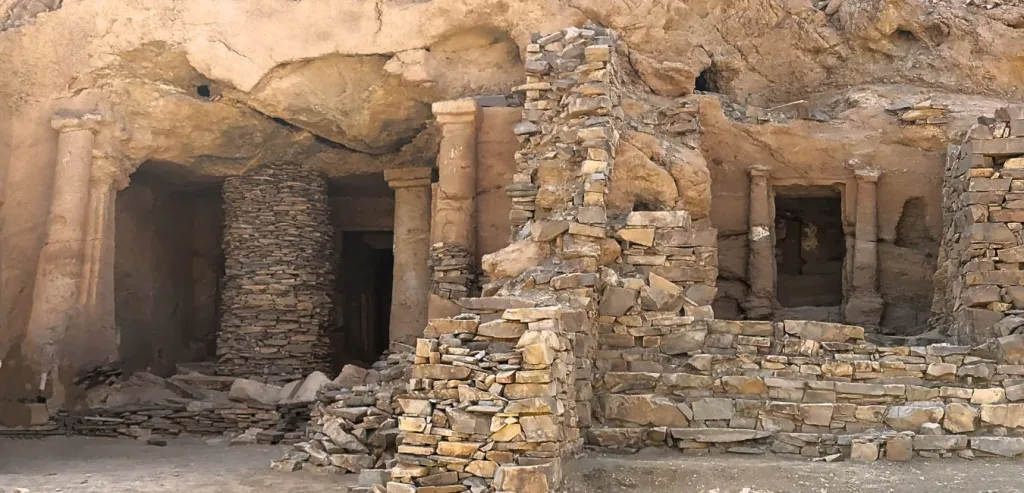
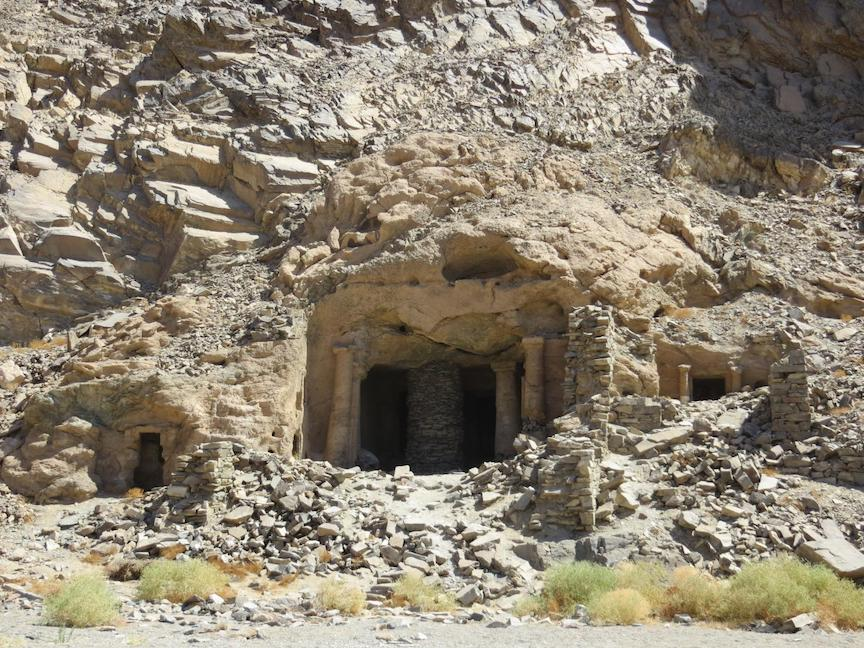
Archaeological evidence suggests that emerald mining there began under the Ptolemaic dynasty, Cleopatra’s own family, and expanded greatly during the Roman period that followed her reign. The workings later became popularly known as “Cleopatra’s Mines,” although the queen did not establish them.
The Roman naturalist Pliny the Elder wrote admiringly of emerald (smaragdus) in the first century CE, noting that no color was more pleasing to the eye. After antiquity, the mines were largely forgotten until the French explorer Frédéric Cailliaud located them again in 1816–1817.
Egyptian Emeralds vs. Colombian Emeralds
Egyptian emeralds were generally paler and more included than the finest emeralds known today. They were often worn as polished crystals or beads rather than faceted gems.
The deep, vivid green many people now picture when they think of emerald came later, after Spanish explorers encountered the emerald deposits of Colombia in the 16th century. You can follow that story in our article on how Spanish galleons carried Colombian emeralds to Europe.
Emeralds as Symbols of Royal Power
For Cleopatra, jewelry was more than decoration. A ruler’s appearance communicated wealth, authority, and political legitimacy.
Emeralds suited that purpose perfectly. Their green stood apart from other gemstones and echoed the Egyptian symbolism of fertility and renewal. Cleopatra understood the importance of royal imagery, and luxurious gemstones helped build the image of a powerful, divinely favored queen.
Did Cleopatra Give Emeralds as Gifts?
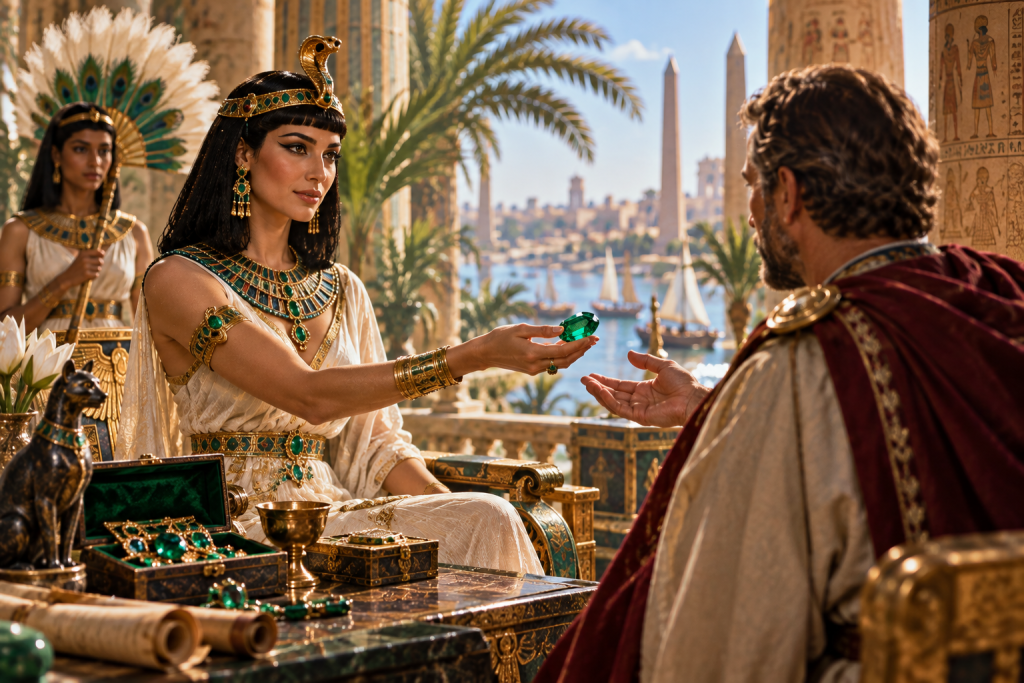
One of the most repeated stories claims that Cleopatra presented visiting dignitaries with emeralds, sometimes engraved with her portrait.
It is an intriguing idea, and it fits her reputation for political skill and luxury. However, there is little surviving ancient evidence for specific claims about Cleopatra’s personal emerald collection. Many details have been repeated and romanticized over the centuries, so it is best to treat them as legend rather than documented history.
Were All Ancient “Emeralds” Really Emeralds?
Ancient writers did not classify minerals using today’s scientific methods. The Greek word smaragdos and the Latin smaragdus could be applied to several green stones, not only true emerald.
That means historians must be careful when identifying gems mentioned in ancient texts. Still, genuine emerald deposits existed in Egypt, and emerald mining became an important part of the region’s history.
Why Cleopatra’s Emerald Story Still Matters
More than two thousand years after Cleopatra’s death, emeralds remain associated with elegance, prestige, and royalty. Her story helped shape the cultural image of emerald as a gem worthy of queens, an image carried forward by the Mughal emperors, the royal houses of Europe, and Hollywood icons alike. Meet some of them in our article on the world’s most famous emerald lovers, or see how emerald became an art form in the emeralds of the Mughal Empire.
Modern emerald jewelry looks very different from ancient Egyptian pieces, but the attraction is remarkably similar: a green so rich that it immediately commands attention.
Final Thoughts
Cleopatra did not introduce emeralds to Egypt, and some stories about her personal collection belong more to legend than to documented history. Yet her association with the gem has endured for centuries.
Ancient Egyptian emerald mines, royal symbolism, and Cleopatra’s extraordinary reputation combined to create one of gemstone history’s most memorable relationships. Today, emerald’s rich green still carries the same sense of luxury, mystery, and timeless royal beauty. If you are inspired to choose one of your own, our Emerald Buying Guide explains what to look for.
Discover the timeless beauty of these legendary green gemstones for yourself. Explore our collection of natural emeralds and find a remarkable stone with its own unique color, character, and story.