
- Stone13
- Reports3
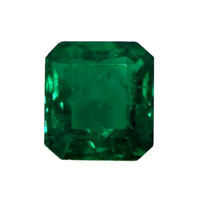
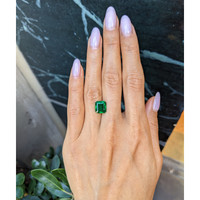
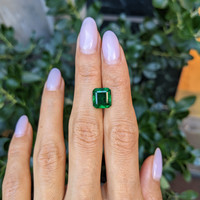


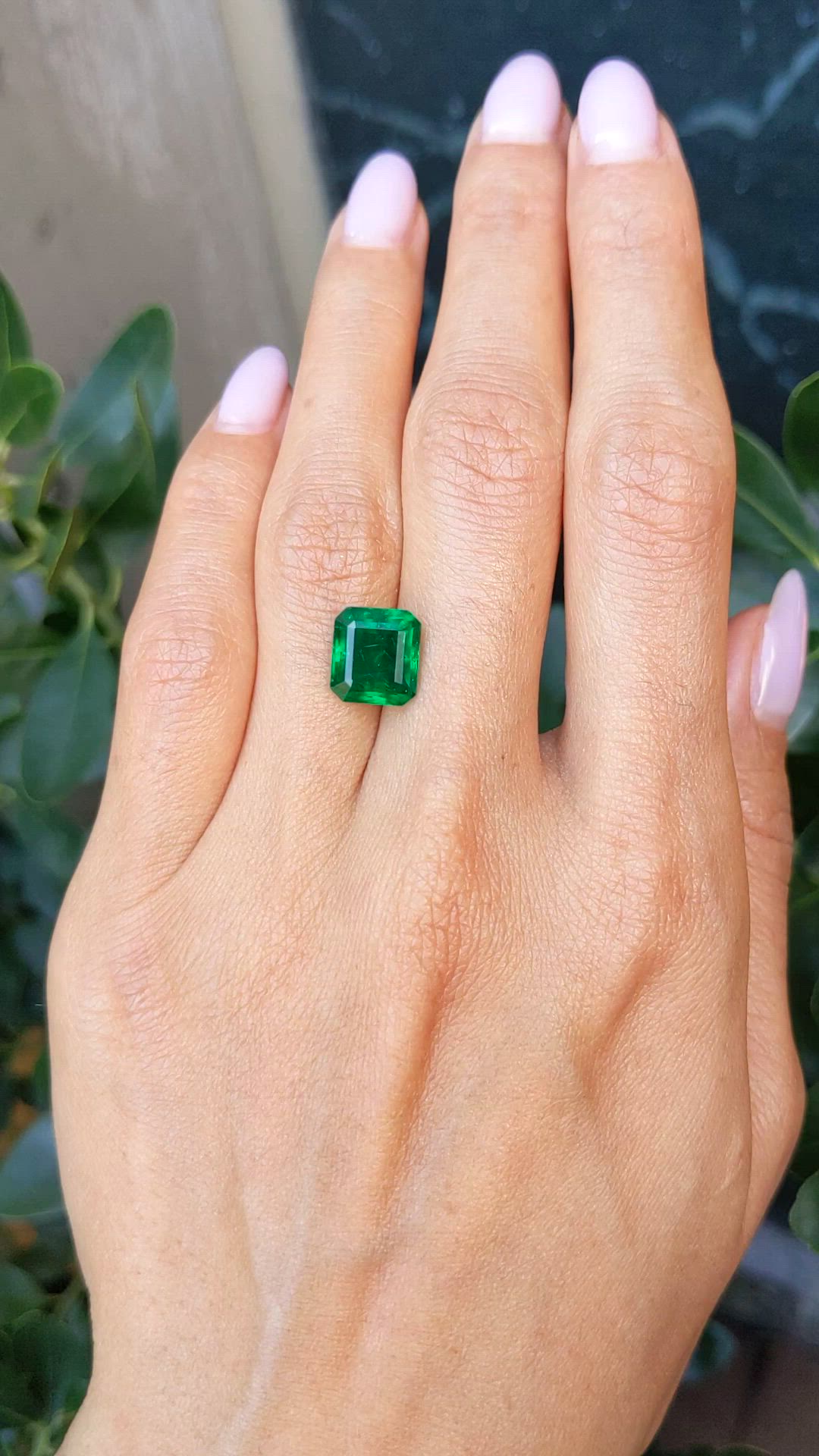
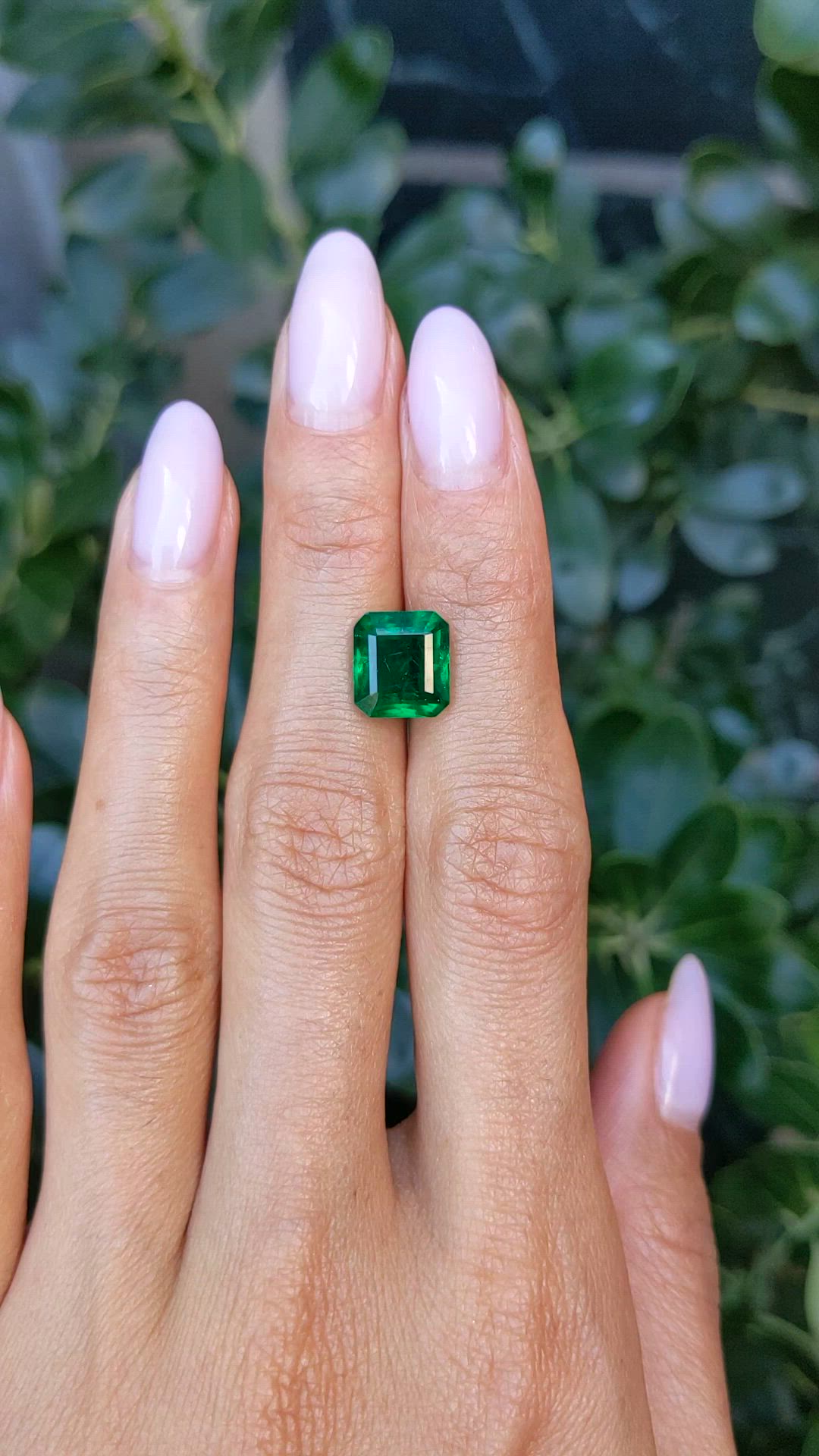
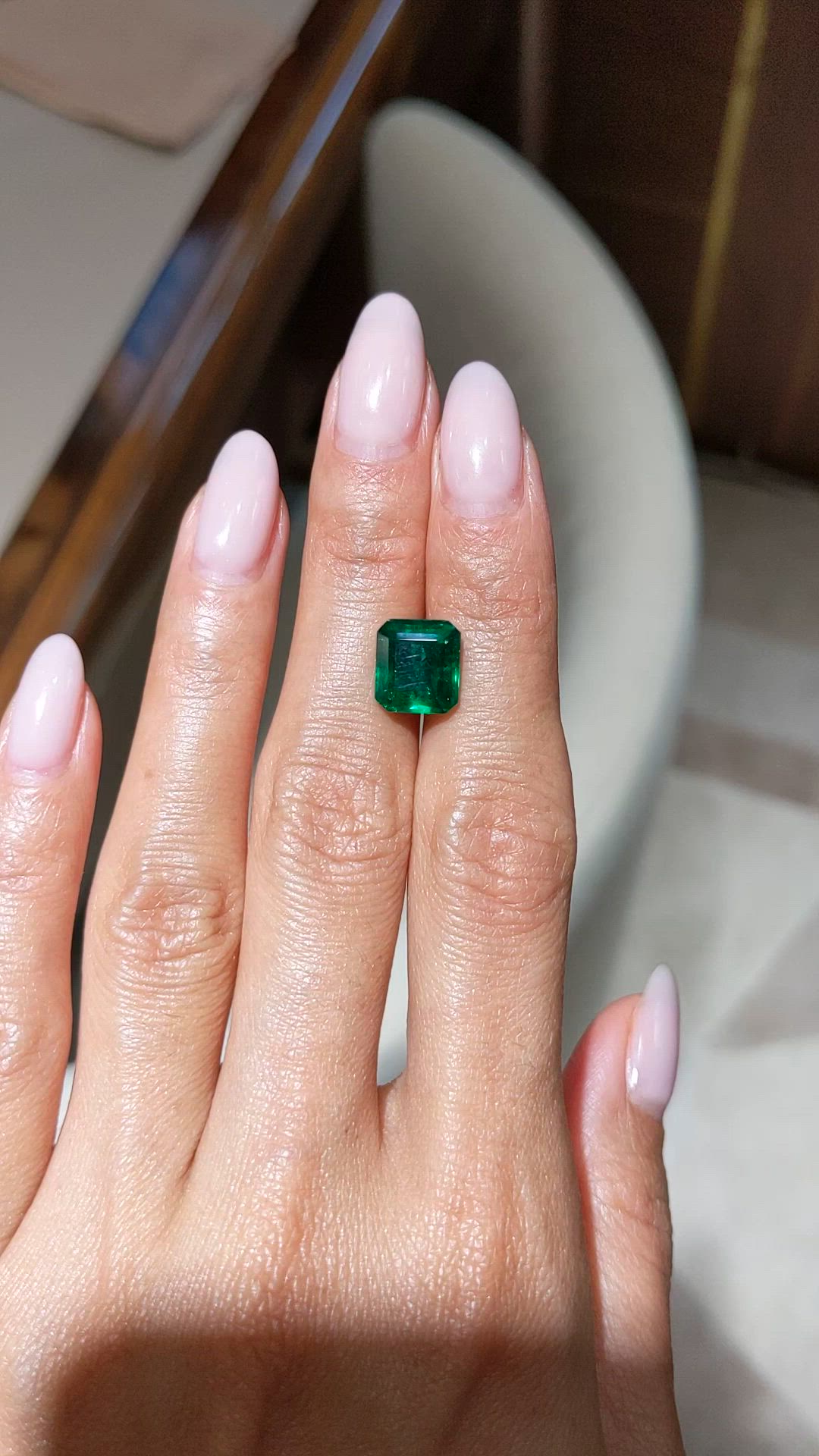



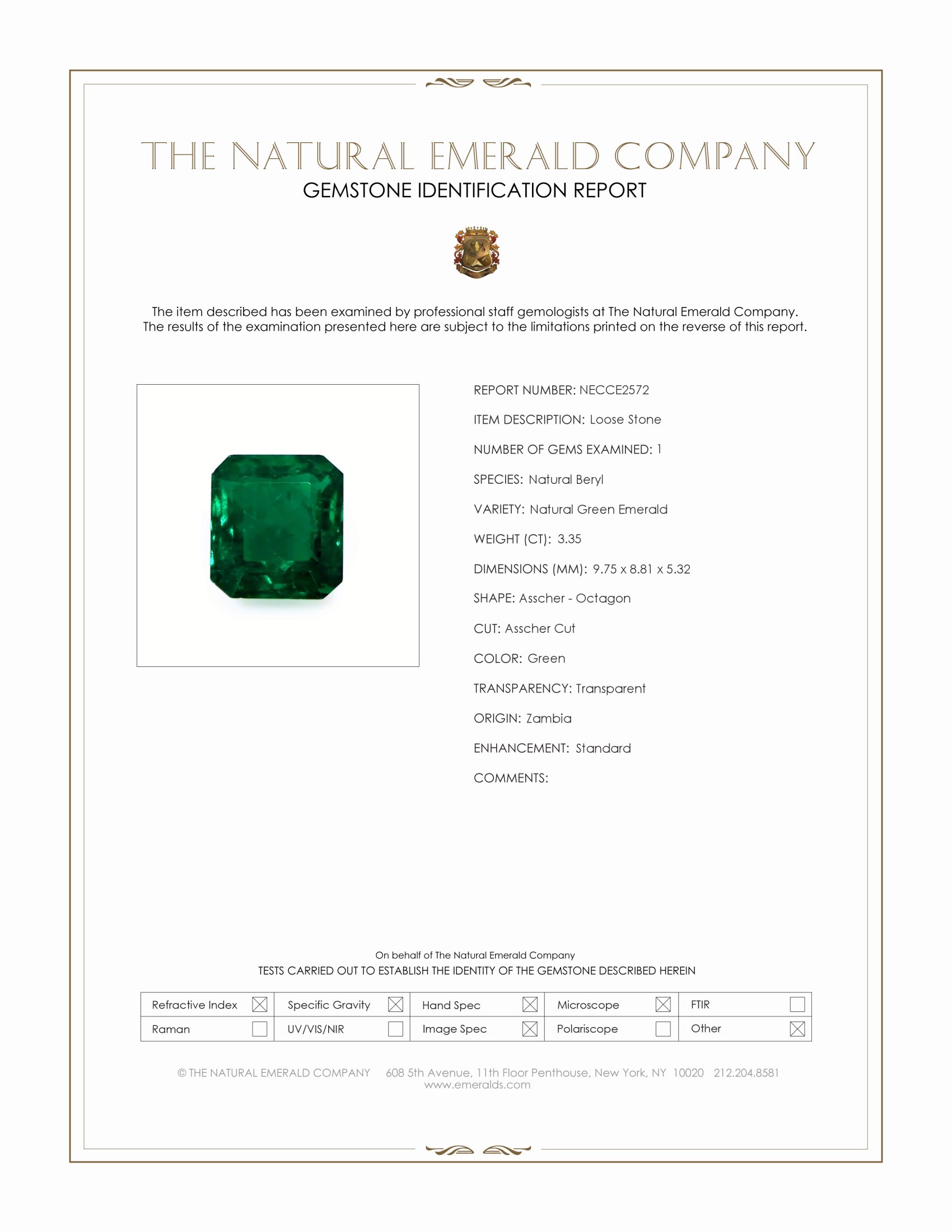
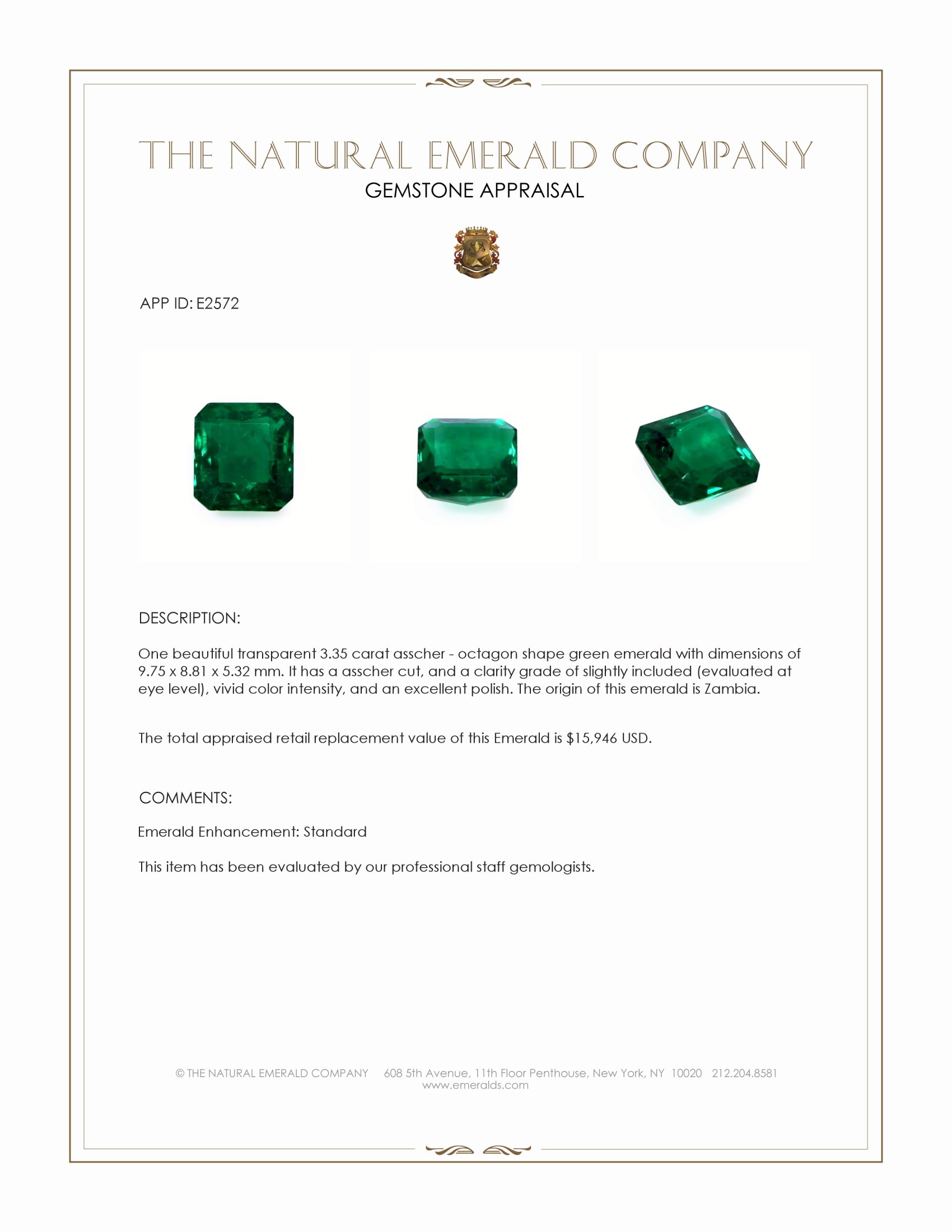
3.35 Ct. Emerald from Zambia
This loose stone is available to ship now
Item ID: | E2572 |
|---|---|
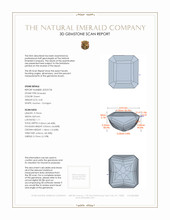
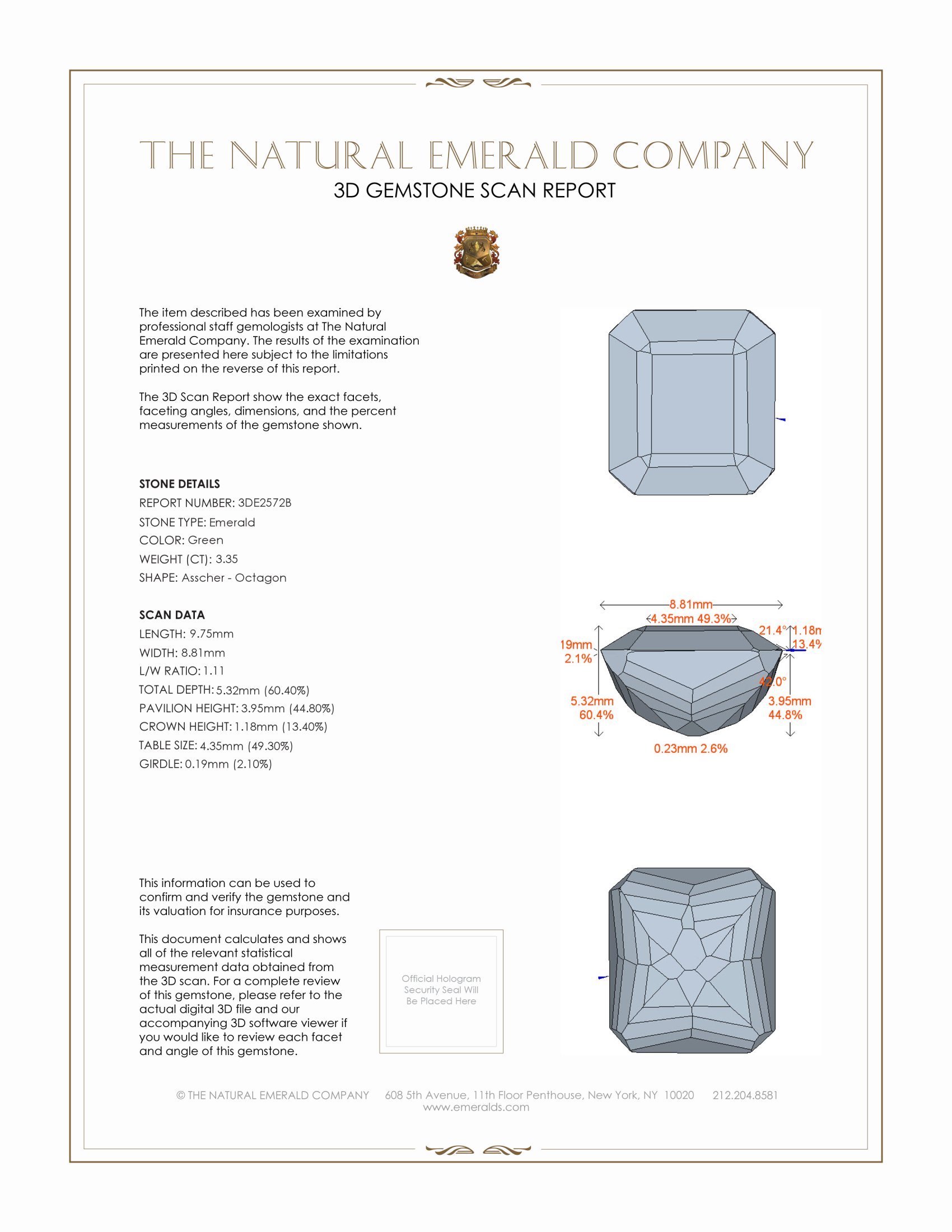
Dimensions (MM): help | Length: 9.75 Width: 8.81 Height: 5.32 |
Weight: | 3.35 Ct. |
Color: help | Green |
Color intensity: help | Vivid |
Clarity: help | Slightly Included |
Shape: help | Asscher - Octagon |
Cut: | Asscher Cut |
Cutting style: | Faceted |
Enhancements: help | Standard |
Origin: help | Zambia |
Per carat price: help | $4,760 |
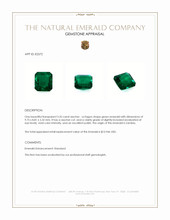
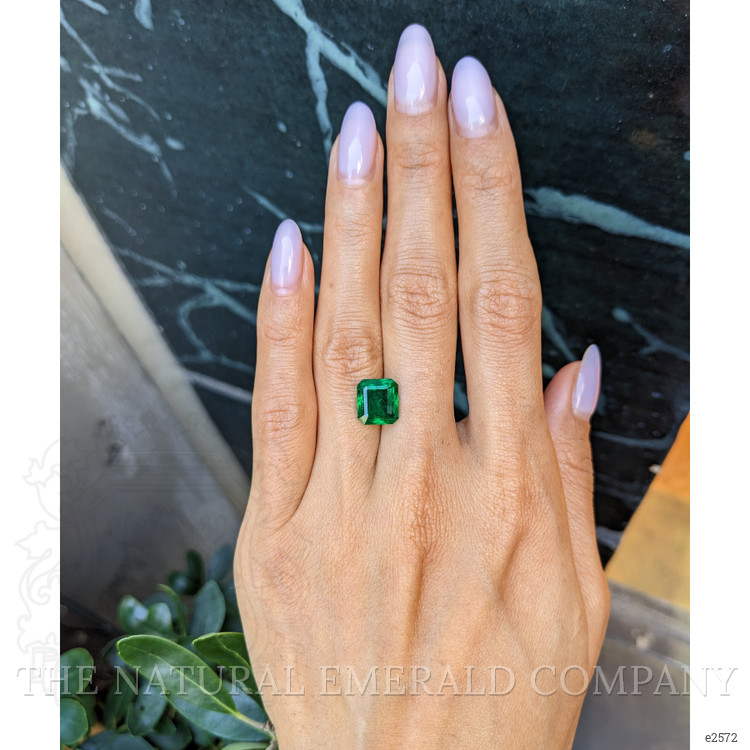
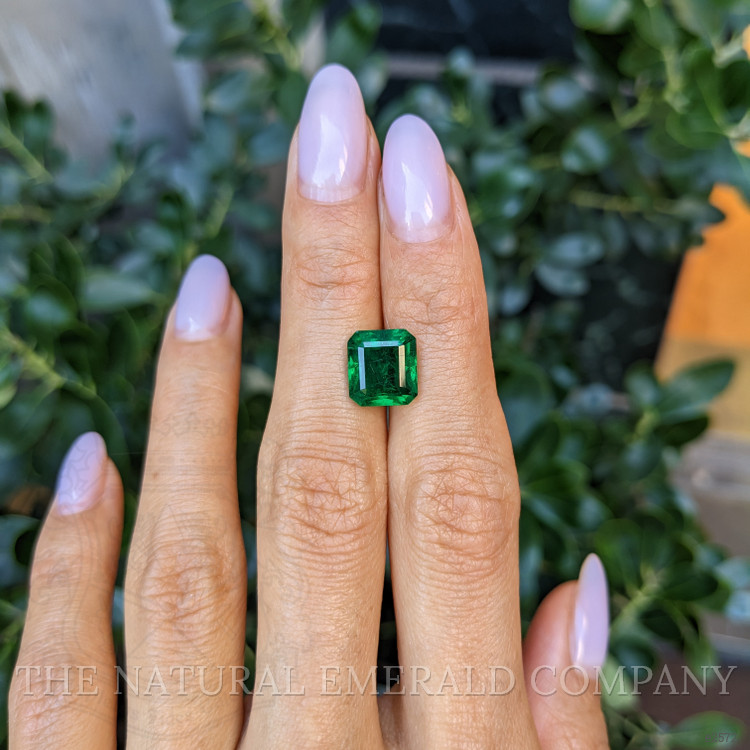
This transparent 3.35 carat asscher octagon shape green emerald measures 9.75 x 8.81 x 5.32 mm, presenting a substantial face up presence for its weight. The asscher cut has been executed in a classic step facet arrangement, producing an elegant, geometric outline with crisp cropped corners that read as octagonal in profile. The measured depth of 5.32 mm yields a depth ratio of approximately 57 percent relative to the average of the length and width, a proportion chosen to balance color saturation with internal light return. At this scale the pavilion depth and table dimensions have been calibrated to enhance the vivid color intensity that characterizes the stone, while preserving a robust pavilion for secure setting and optimal light performance. The combination of a clean transparent body, significant table area, and moderate depth produces an even face up color, allowing the vivid green to command attention without appearing unduly dark or windowed. The overall dimensions and proportional design make this gem an excellent choice for a principal center stone in a fine jewelry setting, where both presence and refined faceting can be appreciated by a knowledgeable connoisseur.
The asscher cut is a faceted step cut that emphasizes parallel facet planes on the crown and pavilion, producing a hall of mirrors effect when proportions and symmetry are precise. In this example, the step facets have been cut with deliberate angles to promote contrast between broad flash reflections and deep color areas, allowing the vivid green to alternate with bright white flashes under movement. The cutter focused on maintaining parallel facet alignment across the crown and pavilion, ensuring consistent reflection return and minimizing asymmetry that can disrupt the visual rhythm of the steps. The excellent polish contributes to crisp facet junctions, aiding in the perception of clarity and color purity, while the facet bevels on the cropped corners reduce light leakage at the girdle. Asscher cuts require meticulous attention to pavilion angles and table size to avoid excessive windowing or darkness, and this stone demonstrates an optimized balance, where the step architecture supports controlled light penetration, maximizes color depth, and reveals the internal character of the emerald in a structured, architectural manner.
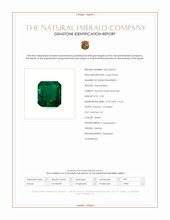
Clarity has been graded as slightly included evaluated at eye level, a classification that denotes visible inclusions of limited impact on overall transparency and brilliance. In emeralds, slightly included specimens commonly display characteristic internal features such as fine needles, small crystal inclusions, or thin fissures, features which in many cases testify to natural formation and origin. These inclusions interact with light to produce internal texture, and when combined with a high quality step cut and excellent polish, they contribute to the stone s individuality without detracting from its attractive face up presentation. The enhancement is standard, consistent with trade practice for emeralds, and typically involves conservative clarity enhancement agents such as oils or resins to unify fractures and improve visual clarity. Standard enhancement practices, when disclosed, are accepted within the market and do not diminish the gem s value when transparency, cut quality, and color remain strong, as they do in this specimen. The balance of slightly included clarity with a vivid color and precise cut yields a stone that reads as lively and natural, with internal character that will be appreciated by collectors who value authenticity and geological history.
The origin of this emerald is Zambia, and that provenance carries both gemological and market significance. Zambian emeralds are recognized for their rich, often slightly bluish green tones, a result of chromium and vanadium trace elements and the specific geological environment in which they form. Compared to other sources, emeralds from Zambia frequently exhibit strong color saturation and favorable crystal habits that allow cutters to retain weight while achieving excellent transparency, factors which can increase the finished stone s appeal and value. Provenance from Zambia also connects the gem to modern, large scale mining operations that supply consistently high quality material to the trade, supporting responsible sourcing initiatives and traceability programs valued by discerning buyers. At The Natural Emerald Company we document origin and enhancement clearly, and we present this 3.35 carat asscher emerald as an exemplar of Zambian material where vivid color intensity, step cut craftsmanship, and a transparent body converge. For collectors and designers seeking a balance of natural character and refined cut performance, this stone represents a compelling opportunity, suitable for a signature ring or bespoke pendant, where the asscher geometry and vivid Zambian green will be visible and celebrated.


