
- Stone12
- Reports3
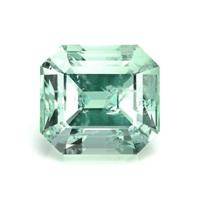
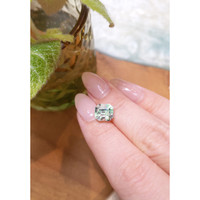
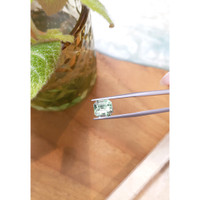
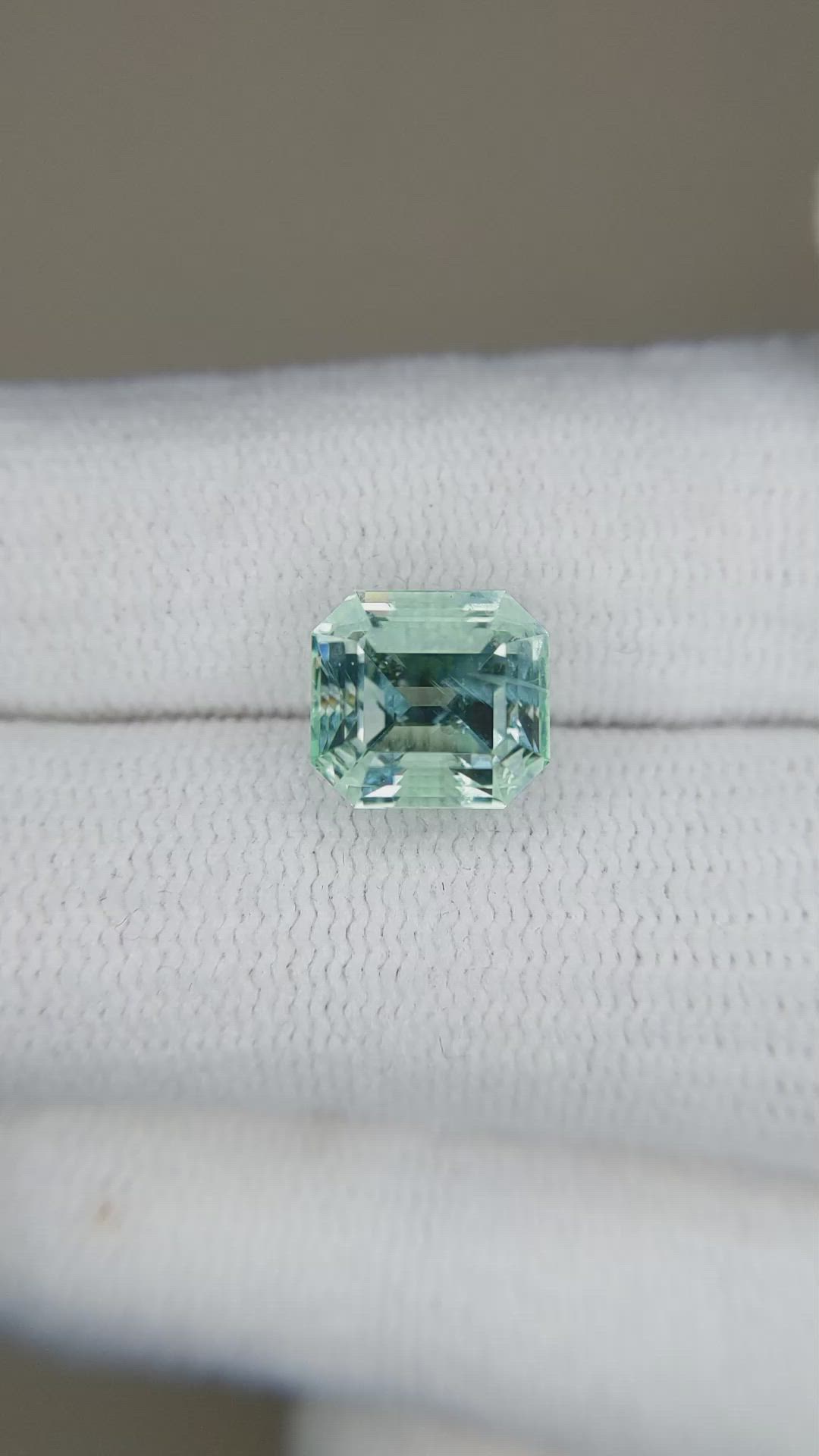
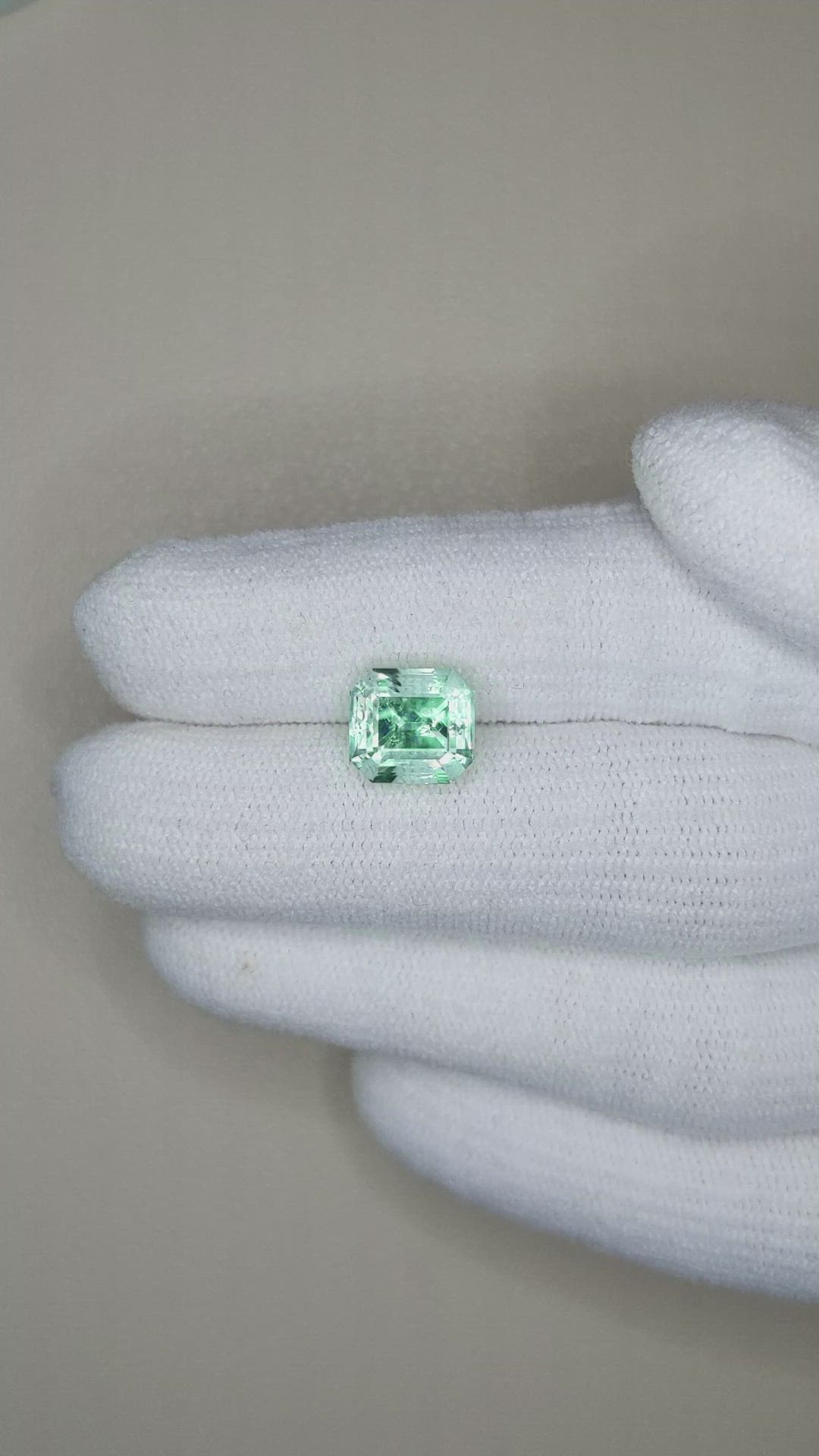
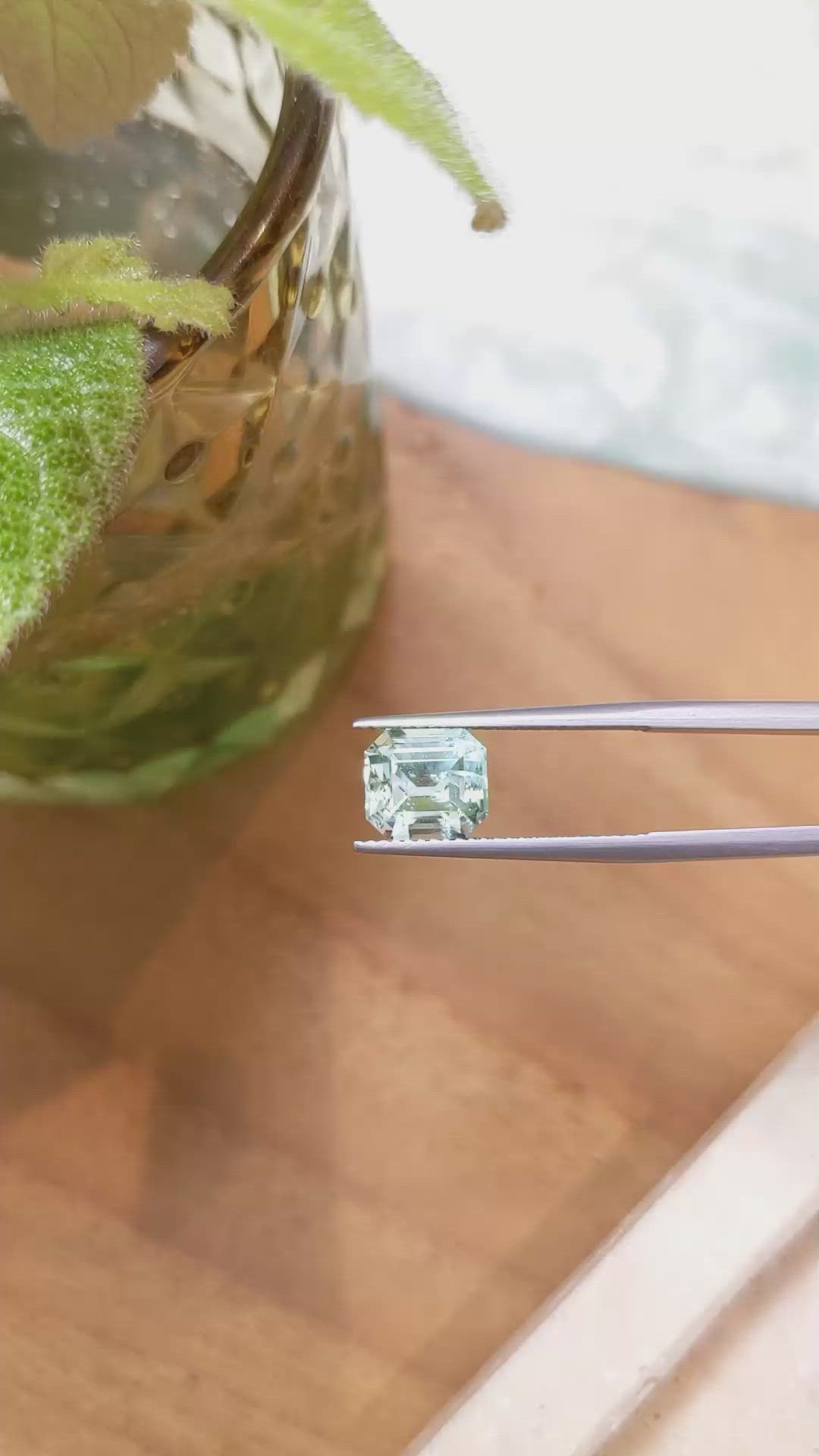
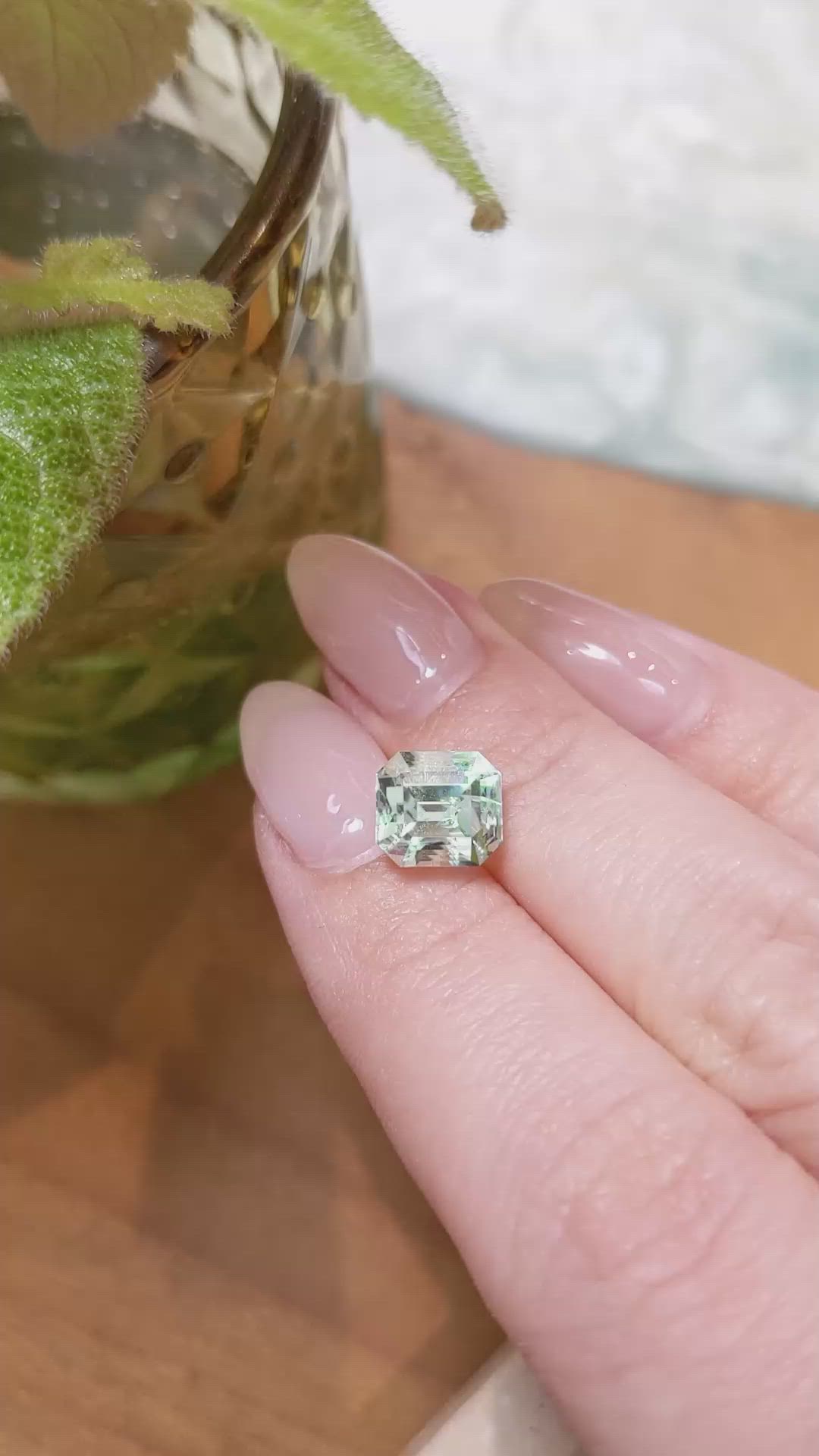


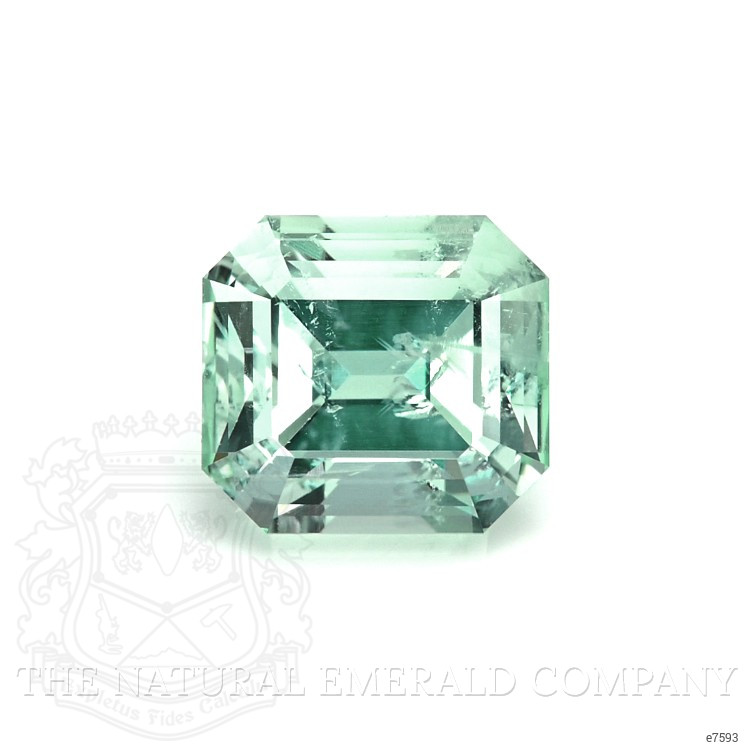
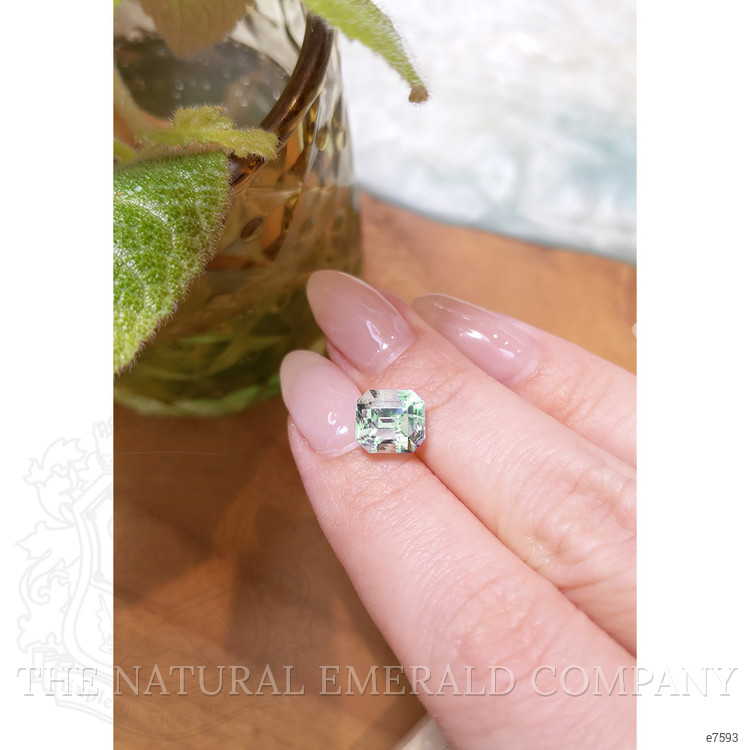
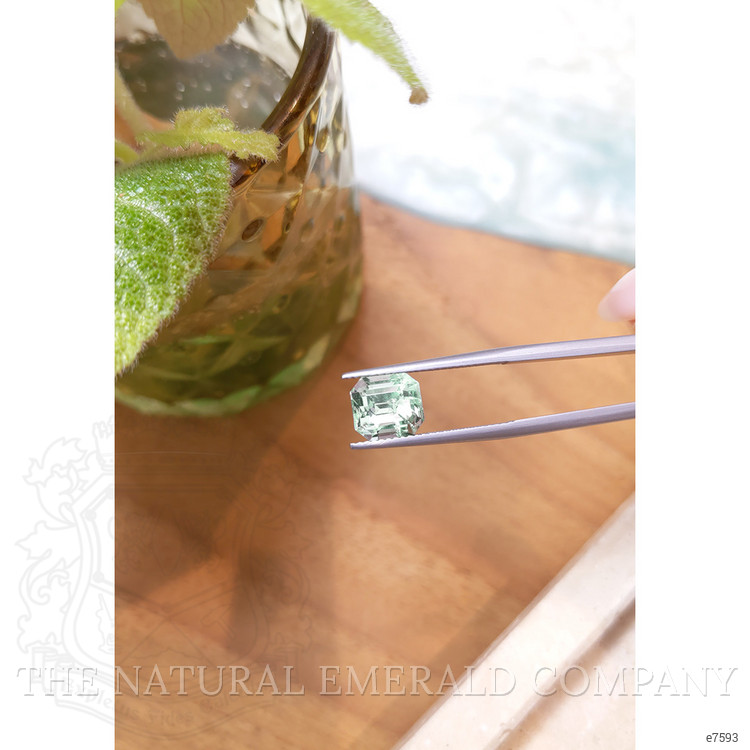


3.17 Ct. Emerald from Russia
Item ID: | E7593 |
|---|---|
Dimensions (MM): help | Length: 8.37 Width: 7.7 Height: 7.12 |
Weight: | 3.17 Ct. |
Color: help | Green |
Color intensity: help | Light |
Clarity: help | Very Slightly Included |
Shape: help | Asscher - Octagon |
Cut: | Asscher |
Cutting style: | Faceted |
Enhancements: help | Standard |
Origin: help | Russia |
Per carat price: help | $840 |
This transparent green emerald weighs 3.17 carat, with exact dimensions 8.37 x 7.70 x 7.12 mm, presented in a classic asscher octagon outline. The asscher cut emphasizes broad, concentric step facets that produce an architectural facet pattern, and the stone displays a light color intensity with consistent distribution across the table and pavilion. Measured depth relative to the average of the length and width yields an approximate depth percentage of 88.6 percent, a proportion that reflects a deep pavilion designed to maximize internal reflection in a step cut profile. Clarity is graded as very slightly included, evaluated at eye level, which indicates minimal disruption to transparency when viewed unaided, and the overall transparency remains high. The polish has been executed to an excellent standard, delivering crisp facet junctions and mirror like facet planes that enhance both brilliance and the characteristic hall of mirrors effect associated with asscher cutting. Enhancement is recorded as standard, consistent with industry practice, and the documented origin is Russia, a source known for producing emeralds with a lighter green to mint tonal range and fine crystalline clarity when well cut.
From a lapidary perspective, this asscher cut emerald exhibits technical decisions made to balance color, clarity, and weight retention. The asscher cut used here employs larger step facets on the crown and pavilion that are aligned concentrically, creating parallel facet planes that emphasize depth and internal architecture rather than dispersion. The truncated corners produce the octagon perimeter, which reduces stress concentration compared to a square profile and improves durability for faceted jewelry applications. The cutter appears to have oriented the rough to preserve color saturation along the stone axis while minimizing the visibility of natural fractures, an approach that typically results in lower clarity invasions at table level. The excellent polish and precise facet symmetry are evident in the way light travels through the stone, producing a controlled pattern of contrast flashes and broad reflections rather than pinpoint scintillation. Given the reported standard enhancement, the stone has been treated using customary clarity enhancement methods employed in the trade to improve apparent clarity and surface luster, and this treatment is compatible with conventional care practices when handled appropriately by a qualified jeweler.
Alongside its gemological characteristics, this Russian asscher emerald carries the traditional metaphysical associations attributed to emeralds across cultures, described here in precise terms to inform discerning buyers. Emerald is historically linked to the heart chakra, and practitioners commonly attribute properties such as emotional equilibrium, enhanced compassion, and a capacity to facilitate clear, balanced communication between thought and feeling. The stone is also associated with heightened mental clarity and insight, supporting focused decision making and the recovery of mental acuity after periods of stress or fatigue. In energetic terms, the emerald is believed to encourage renewal and growth, symbolically aligning with fertility and abundance, and it is often used in meditative practice to stabilize mood and promote a sense of calm persistence. Physical correspondences found in traditional systems include supportive effects for the eyes and the circulatory system when used as part of a broader regimen of holistic care, and these correspondences are cited within cultural frameworks rather than as medical claims.
For practical use and long term enjoyment, we recommend settings that protect the deep pavilion and the girdle, given the asscher cut geometry and the stone depth, and conservative bezel or prong designs can be employed to safeguard the truncated corners. Cleaning should avoid ultrasonic and steam methods due to the standard enhancement, with warm soapy water and a soft brush being the preferred maintenance routine, and periodic inspection by a professional is advised to monitor the enhancement condition. The Natural Emerald Company stands behind the provenance and technical details of this gemstone, and we invite serious buyers to request high resolution images, a full gemological report, or a consultation regarding custom mounting and insurance appraisal.


