
- Stone11
- Reports3







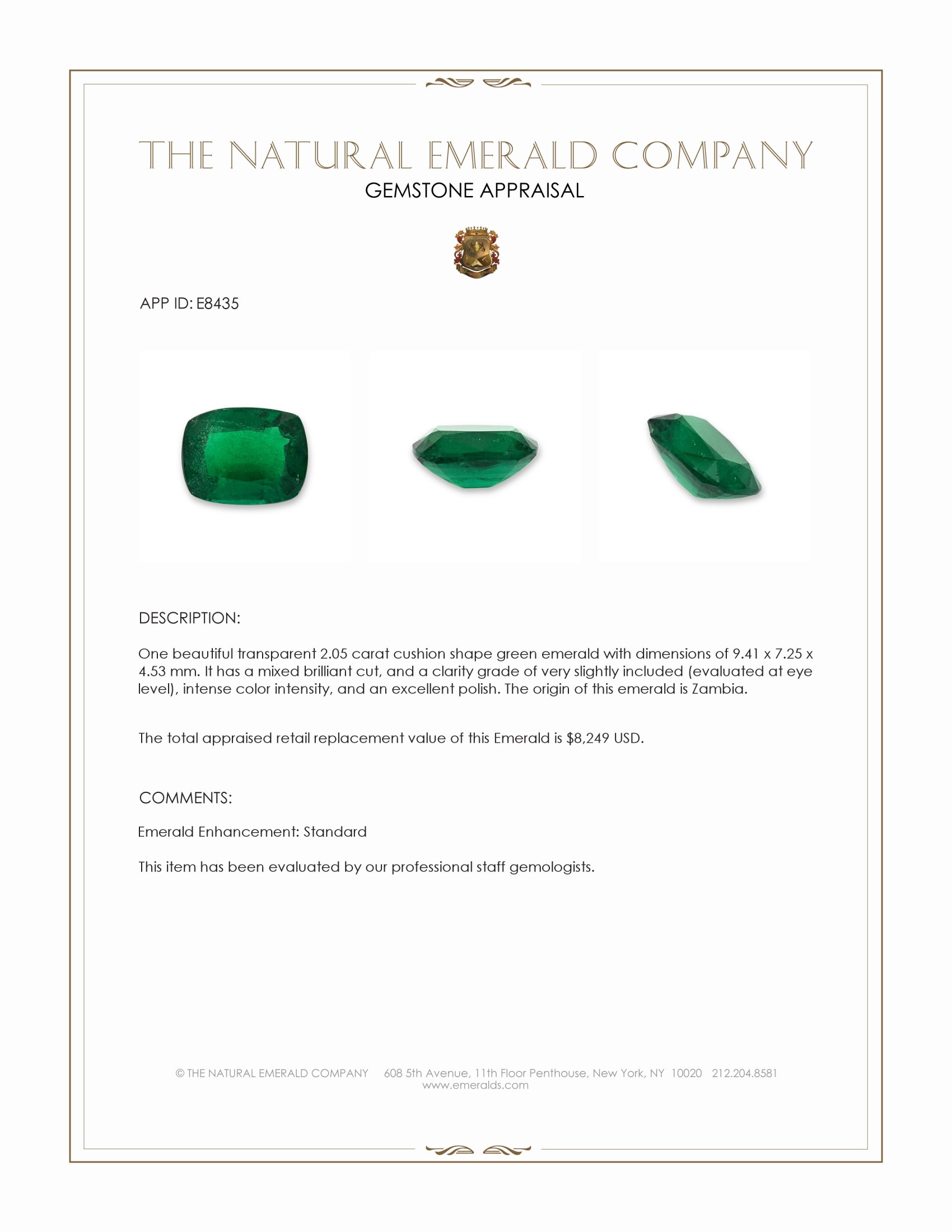
2.05 Ct. Emerald from Zambia
This loose stone is available to ship now
Item ID: | E8435 |
|---|---|
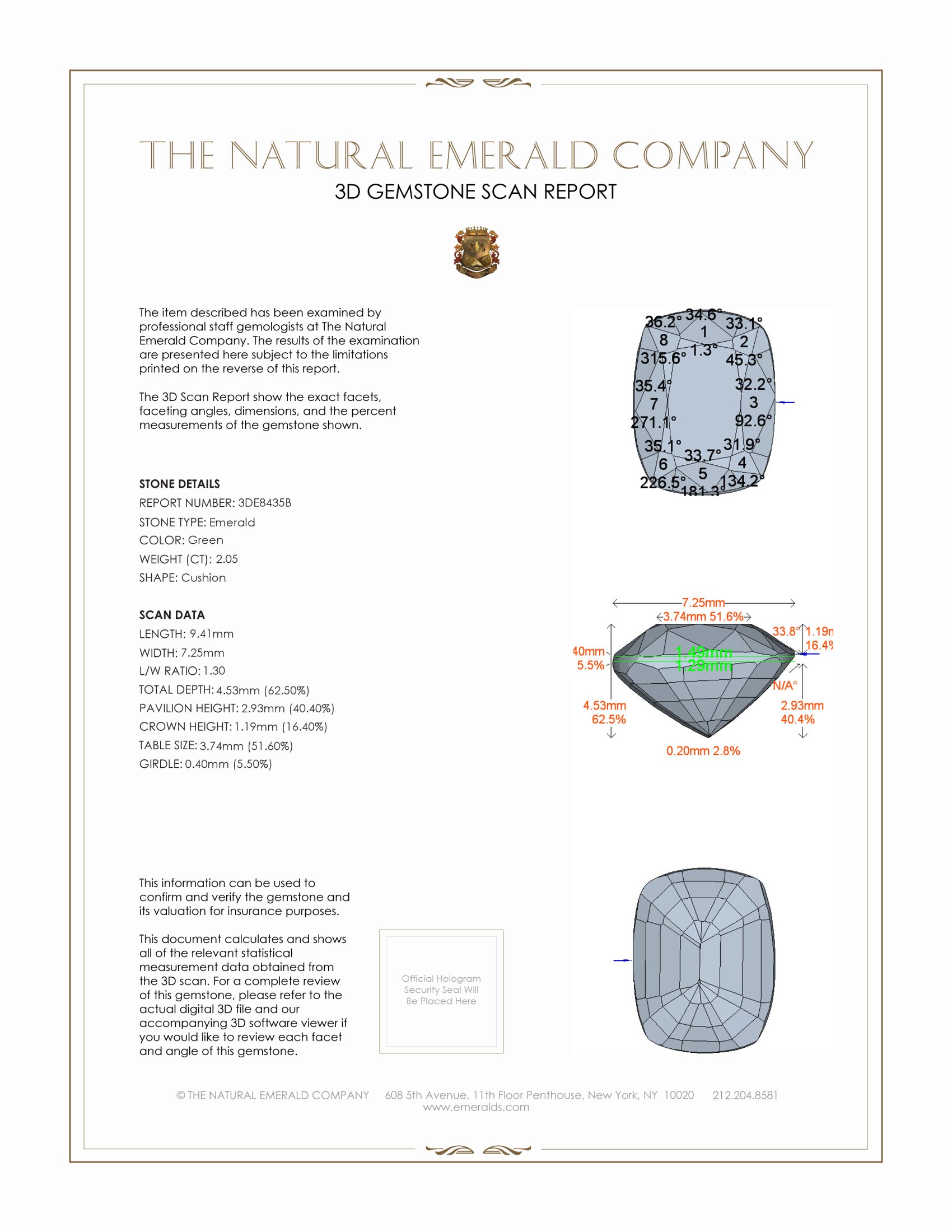
Dimensions (MM): help | Length: 9.41 Width: 7.25 Height: 4.53 |
Weight: | 2.05 Ct. |
Color: help | Green |
Color intensity: help | Vivid |
Clarity: help | Slightly Included |
Shape: help | Cushion |
Cut: | Mixed Brilliant |
Cutting style: | Faceted |
Enhancements: help | Standard |
Origin: help | Zambia |
Per carat price: help | $4,024 |
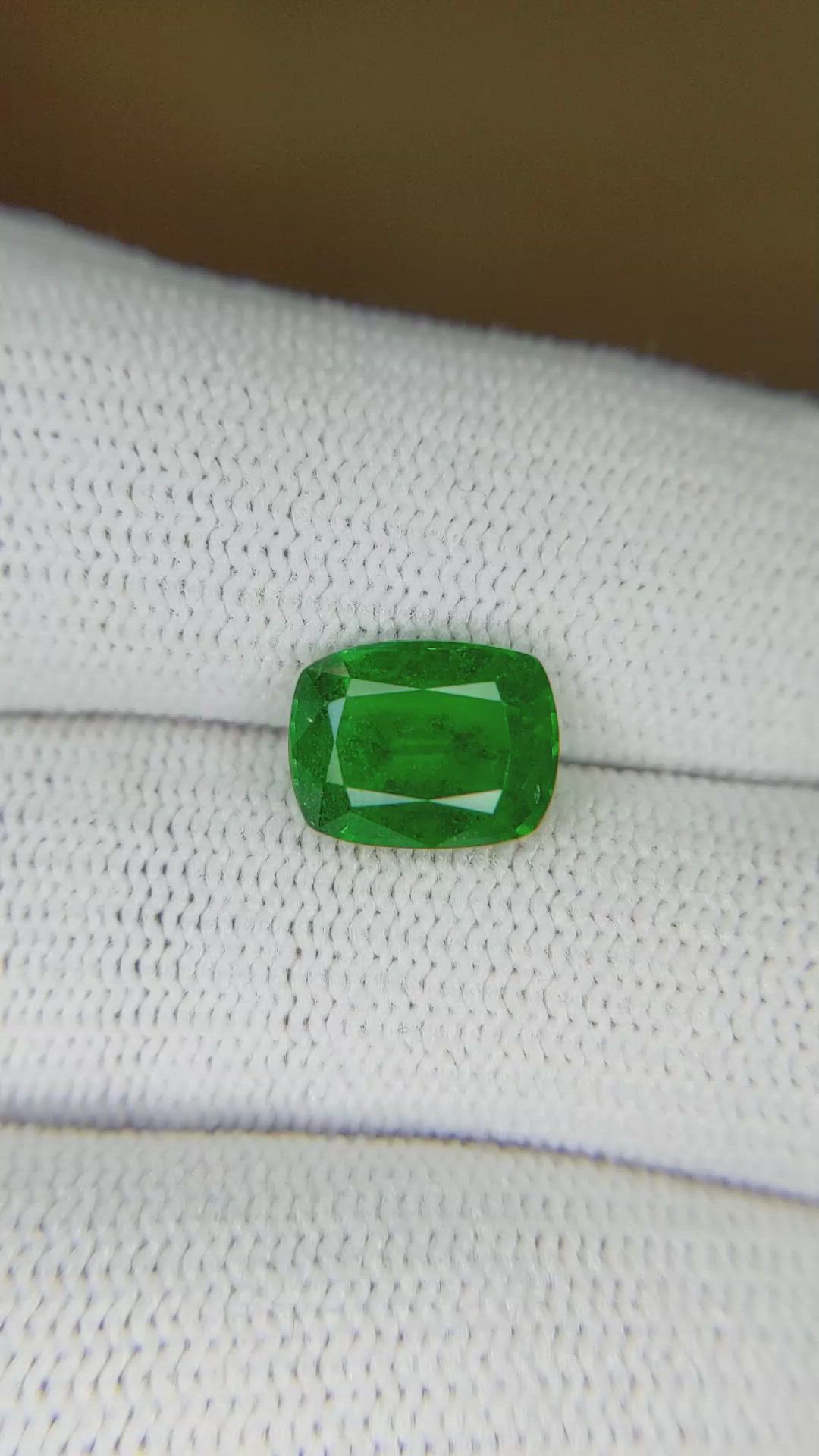
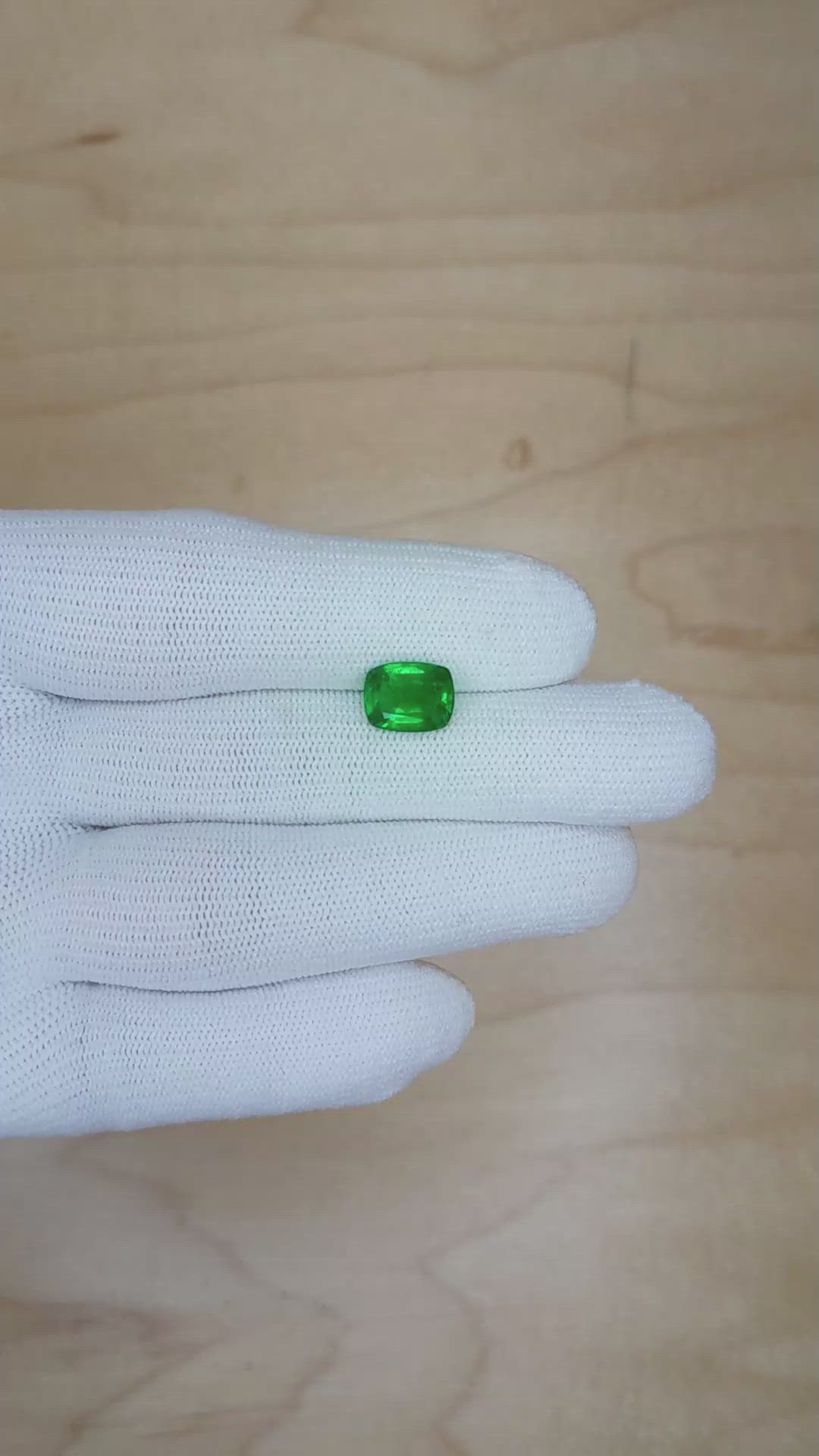
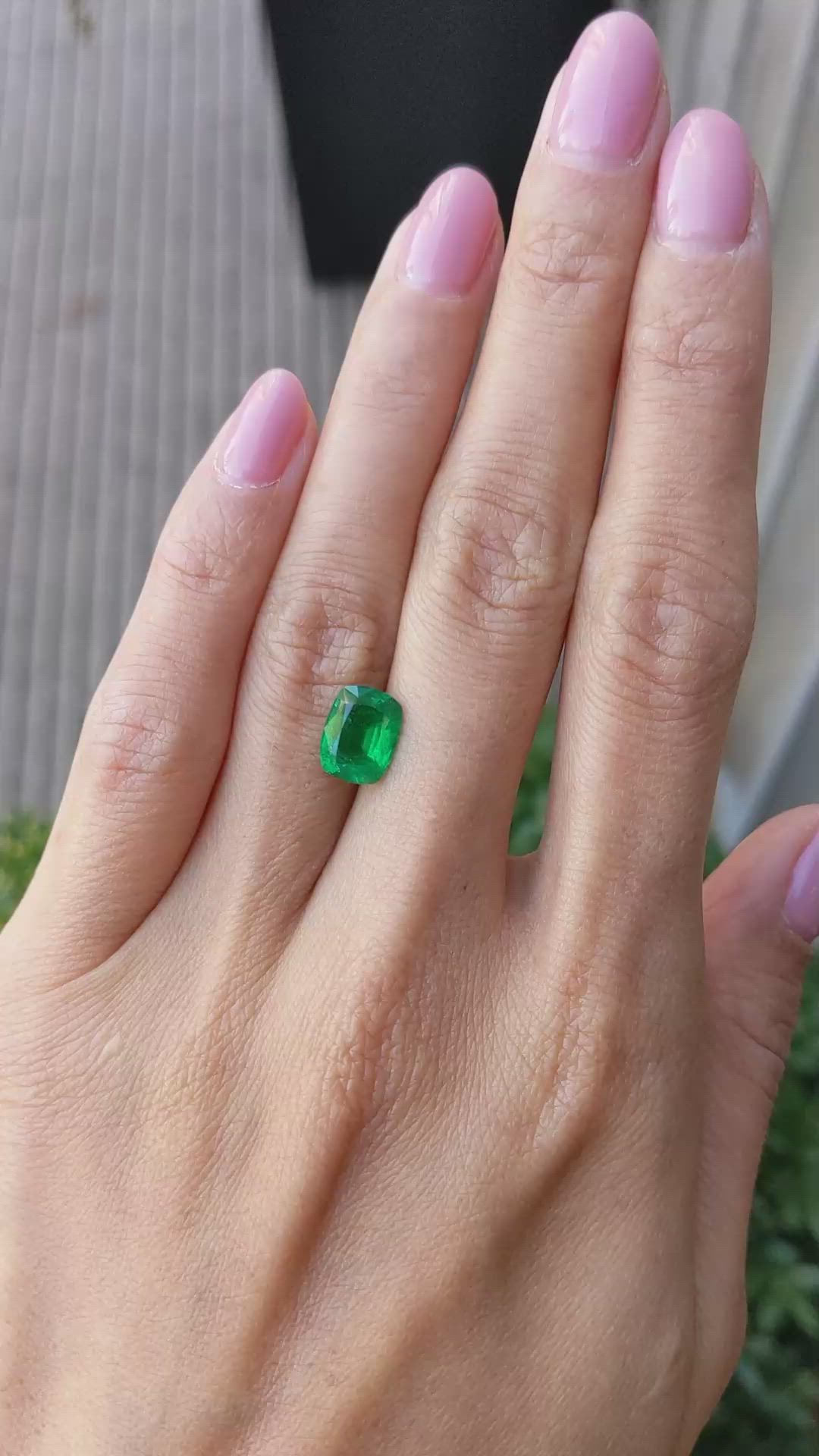
This transparent 2.05 carat cushion shaped green emerald measures 9.41 by 7.25 by 4.53 mm, it is expertly cut in a mixed brilliant style that balances faceting for lively brilliance with broader facets to display rich color, it carries a clarity grade of slightly included when evaluated at eye level, the color intensity is vivid, the polish is excellent, the enhancement is standard, and the origin is Zambia. At The Natural Emerald Company we present this stone as an example of how precise cutting and responsible sourcing come together to reveal the best of what nature provides. The carat weight places this specimen firmly in a category prized by collectors and connoisseurs alike, the cushion profile offers a classic silhouette that is both modern and timeless, and the mixed brilliant cut gives the gem a scintillation pattern that flatters the vivid green saturation without sacrificing depth. For an educated buyer who values both aesthetic performance and documented characteristics, these specifications communicate the stone both visually and technically, and they allow confident comparison to other stones by weight, dimensions, cut style, and clarity grading.
When discussing grading in detail it is important to be precise about what each term implies for appearance and durability. The clarity grade slightly included evaluated at eye level describes inclusions that are present under direct inspection without magnification, these inclusions do not dominate the gem and they often serve as proof of natural origin, they can also act as identifying fingerprints for certification and future provenance. The mixed brilliant cut combines pavilion faceting patterns typical of brilliant cuts with a more open crown, this combination is especially effective in colored gems where the goal is to allow light to interact with color zones, the result is a lively face up that still communicates depth of hue. Excellent polish means facet junctions are clean, surfaces are smooth, and light returns are optimized, polish quality directly influences apparent brightness and the perception of cleanliness. Enhancement described as standard reflects common, well accepted treatments used in emeralds to improve clarity and stability, these procedures are industry standard when fully disclosed, and they do not detract from the gem when performed by reputable laboratories and dealers. The dimensions of 9.41 by 7.25 by 4.53 mm give the stone a pleasing table size and profile that will sit elegantly in a variety of fine jewelry settings, and the 2.05 carat weight is a meaningful size for an emerald with vivid saturation.
This emerald was formed deep within the earth over many millions of years, in a process governed by heat, pressure, and the slow circulation of mineral rich fluids, the genesis of emeralds requires a rare conjunction of elements, primarily beryllium combined with chromium or vanadium, and a suitable host rock. In the Zambian deposits that produced this gem, tectonic processes caused granitic intrusions to interact with sedimentary and metamorphic rocks, beryllium mobilized from magmatic sources met chromium and iron from the surrounding host, and hydrothermal fluids acted as transport agents, these fluids percolated through fractures and open cavities, cooling slowly as they migrated, at the molecular level aluminum and silicon combined with beryllium and chromium to form the hexagonal crystal lattice that defines emerald, the kinetics of formation favored relatively rapid growth in some zones and slower, more ordered crystallization in others, the result is a crystal structure that can trap minute mineral inclusions and fluid features, these inclusions are natural records of the conditions of formation, they tell a story of temperature gradients, pressure changes, and chemical environment dynamics that existed millions of years ago in what are now Zambian terrains. The deep green color characteristic of Zambian stones often reflects a balance of chromium and iron, iron contribution shifts the tone toward a slightly bluer green, and the particular vividness of this piece indicates an optimal combination of trace elements and crystal clarity, in short, this emerald is the final expression of a rare geological dialogue that took place on a timescale that dwarfs human history.
For the discerning buyer the value proposition of this gem rests on several measurable and observable qualities. The vivid color intensity is central, color is the primary driver of value in emeralds, and vivid saturation combined with good tone makes the gem immediately appealing to the eye under natural lighting. The slightly included clarity grade, when evaluated at eye level, signals that the stone retains natural character without obvious distractions, this is important because inclusions can provide evidence of natural origin and they often enhance the uniqueness of the gem, the mixed brilliant cut increases apparent brightness and manages light return to favor an even color distribution across the table. Zambian origin is recognized among connoisseurs for producing emeralds with strong, saturated green and good crystalline clarity relative to many other sources, provenance adds a layer of story and market recognition that educated buyers appreciate. From a practical point of view the dimensions and weight are ideal for a center stone in a high quality ring, pendant, or bespoke piece of jewelry, the excellent polish ensures that the workmanship will translate into immediate visual appeal once set. At The Natural Emerald Company we provide full disclosure about origin and enhancement, and we can supply certification or detailed documentation upon request. For care we recommend gentle cleaning with warm soapy water and a soft brush, professionals typically advise against ultrasonic or steam cleaning for emeralds with standard enhancement, routine inspection by a trusted jeweler will ensure settings remain secure, and reconditioning of enhancement treatments should be handled by specialists when needed. This emerald represents an intersection of geological rarity, technical refinement, and aesthetic excellence, it will reward an educated buyer with both immediate visual pleasure and the confidence that comes from transparent, knowledgeable presentation.


